

3.1 Packaging
One of the things that Innocent Drinks is well-known for in the UK – and this links with the company’s verbal identity – is the text it puts on its packaging. Instead of simple declarations like ‘Not made from concentrates. No preservatives’, which are common nowadays on food and drinks packaging, Innocent includes texts such as:
An innocent promise
We promise that anything innocent will always
taste good and do you good. We promise that
we’ll never use concentrates, preservatives,
stabilisers, or any weird stuff in our drinks.
And we promise to always wipe our feet.
Perhaps you can already see why Chris suggested that Innocent does verbal identity really well. Even in this short extract you can see how the brand ‘sounds’ very different from many others with a similar product range. The main speech act – what is being done with words – for example is that of promises rather than simple statements. The tone is friendly and informal, addressing (a potentially large group of) consumers as if it was an individual through the ambiguous use of you. And there is a quirky humour in the last sentence which implicitly suggests that Innocent are like (well-behaved) children.
While Innocent Drinks were an early adopter of a conversational tone, many other companies now use similar language. Examples include Aussie shampoo and conditioner (‘Aussie hair with more bounce than a joey?’) and Duolingo language learning app (‘Nagging isn’t my style but giving up on French now would not be cool’). Look out for similarly conversational language on products and services you regularly use. Do you find this engaging – or is it now so widespread it can be a little irritating?!
Activity 5 The Innocent Smoothie carton
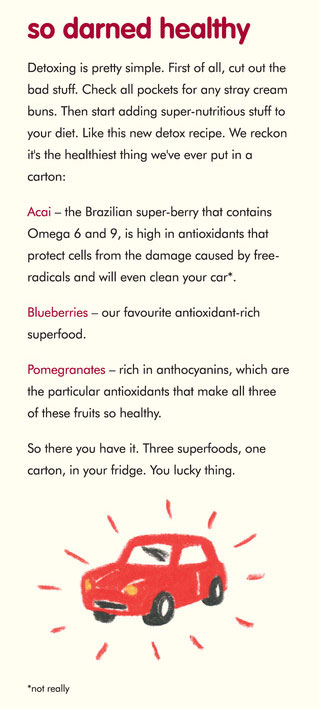
Now take a look at the text on the back of an Innocent Smoothie carton, shown below. Can you identify examples of informal linguistic features? Is there anything else about the language that stands out to you? Think about what you normally find on the back of drinks cartons.
Discussion
There are plenty of examples of informal language on the back of this carton: the absence of a capital letter in the first line, single-clause sentences, vague words like stuff, reckon, thing, discourse markers, contractions and direct address (in the form of commands and the use of ‘you’). Additionally, an element of humour is present at the end of the section on Acai and marked by the use of the asterisk and footnote ‘not really’. It’s a strange kind of absurdist humour that is similar to the example before. What also stands out in this example is the use of technical terminology like free-radicals, antioxidants, anthocyanins and maybe even Omega 6. These technical words are more typical of the health and pharmaceutical industries and might appear to be at odds with the rest of the tone. However, you could argue that they are in fact consistent with the health aspect of the brand that is being emphasised.