

1 Conversational rules of thumb
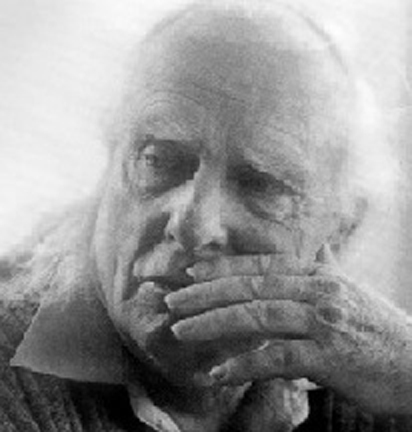
The philosopher Paul Grice (Figure 1) was interested in how people bridge the gap between what is said and what is communicated. For example:
Son: ‘Do you want to fly a kite?’
Father: ‘It’s raining’.
On the surface of it, the father’s reply could seem like an irrelevant outburst about the state of the weather, to which the son could rightfully reply ‘that’s nice, but do you want to fly a kite’? We might infer that the father doesn’t want to fly a kite in the rain, but that’s not what he said. How do we retrieve that inference? In this sense, Grice was more interested in what was left unsaid in conversation, but nevertheless mutually understood, and he proposed a set of conversational rules of thumb or ‘maxims’ that cooperative speakers tend to play by (Grice, 1975).
Activity 1 So many things left unspoken
Imagine you are trying to teach a robot how to understand human language by writing a code. Try to write down a series of steps (1, 2, 3 and so on) that would allow the computer to understand that ‘it’s raining’ means ‘no, I don’t want to fly a kite’ in this context. Nothing can be left to the imagination because the computer has no imagination, it just reads your code.

Discussion
You may have come up with a list such as this:
- ‘It’ refers to the weather outside.
- Flying a kite usually takes place outside.
- Raining involves getting wet.
- Getting wet is unpleasant in this context.
- People don’t usually voluntarily put themselves in unpleasant situations.
- The father does not want to go kite flying in the rain.
This is far from an exhaustive list, and it is difficult to write a series of steps that makes all the assumptions explicit. You may have noticed that it begins to resemble a legal document where the definitions try to make the language as unambiguous as possible (‘I’ the aforementioned, where ‘I’ refers to…and so on). This type of ambiguity is everywhere in language and getting to the right conclusion – the one the father intended in this case – relies on making a number of inferences drawn from a vast bank of common sense, something which has traditionally been really difficult to teach computers. Of course, children do not have time or space in their brains to learn a separate set of commands like this for each situation, and would be baffled by any new situation if they did so. Instead they make generalisations about behaviour based on categories of experience.
Listen to any naturalistic conversation, and it won’t be long before one or all these maxims are broken. Grice’s point wasn’t that people do or even should adhere to these rules, it was that when they break them, they usually do so for a specific purpose. Because most people in conversation have an implicit understanding of this cooperative playbook, the meaning of the message can be recovered despite or because the rules have been broken. You’ll now take a closer look at some the maxims themselves.