

3 Diversity
There is a need for research to better represent the diversity of cultural contexts that children grow up in around the world, using more heterogeneous and generalisable samples (Henrich et al., 2010). While the need for diversification is now part of the consciousness of many researchers, in many cases progress on these issues has been slow to non-existent since the time they were first raised (Singh et al., 2023). The study of language development is a case in point. Despite decades of research, we have only begun to understand how language acquisition works in a minority of the 7,000 languages of the world, typically with an over reliance on English (Kidd and Garcia, 2022).
This situation is made more urgent by the rate at which languages are disappearing. It is estimated over 40 per cent of the world’s approximate 7,000 languages are at risk of extinction. Not only does this represent an enormous loss of cultural identity, values, heritage, wisdom, accumulated medical, ecological and technical know-how, from a scientific perspective, it severely limits our understanding of what language can be and what makes us human (Blasi et al., 2022), as can be seen in Figure 3.
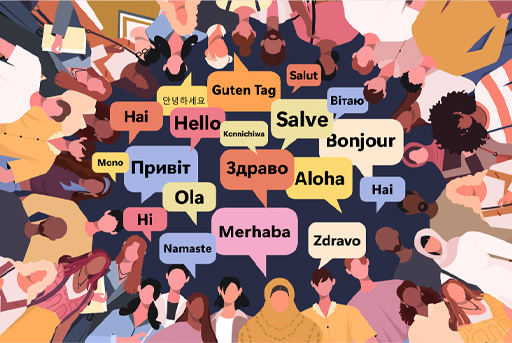
This insistence on diversity is not done just in the anthropologist’s spirit of documenting variety – not doing so can lead to pursuing some theoretical dead-ends. For example, based largely on studying English examples, it has been argued that there is a fundamental division of labour in language between rule application (e.g. ‘word+ed’ to form the default past tense) combined with memorised exceptions to the rules (e.g. swim→swam). When the proposal was tested in a wider range of languages with richer morphological systems (e.g. Polish and Finnish), such a strict division between the default and the stored form was harder to maintain. The broader point is that accounting for diversity is hard, detailed, incremental work, but essential if we are to build a universal theory of language acquisition.
These issues mean there is more than enough work to keep developmental psychologists and linguists busy for years to come. Researchers of the future we need you!