

2.1 Interacting and communicating non-verbally

Figure _unit3.2.1 Figure 1 This small boy points to indicate something in the sky that interests him, and to engage his mother’s attention in the same object. Children with autism often lack this kind of pointing and drive for joint attention.
At the age when typically developing children start to play together and make friends, an autistic child may prefer to play alone; the play may seem rigid – for instance a child may prefer to line up his play figures rather than using them for a pretend game, such as a tea party.
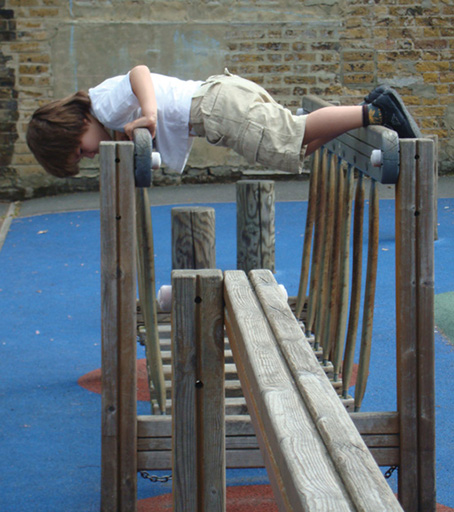
Figure _unit3.2.2 Figure 2 Children with autism often seem happiest playing alone, rather than joining in with other children.
Further differences that may impact on social interaction at any age include problems with