

 free course icon
level 3: advanced icon
free course icon
level 3: advanced icon
Science, Maths & Technology
Drug development process: combating pain
Drug development process: combating pain, is a free course offering a brief introduction to the process of new drug discovery; from identification of a suitable candidate drug molecule to the development of a commercial drug product available in the clinic for pain relief or as an anti-inflammatory.
 video icon
Society, Politics & Law
Smart Cities in the Making: Learning from Milton Keynes
Why research Milton Keynes? Professor Gillian Rose introduces a study of how cities are increasingly using digital data to improve their management and create new ways of living.
 video icon
Society, Politics & Law
Milton Keynes and the roots of 'Smart' transport
Learn about MK’s unique history of transport innovation, and how The Open University has been a part of the experiment.
 free course icon
level 1: introductory icon
free course icon
level 1: introductory icon
Science, Maths & Technology
What do genes do?
This free course, What do genes do?, explores how information contained in DNA is used, explaining the flow of information from DNA to RNA to protein. Also introduced are the concepts of transcription (as occurs between DNA and RNA) and translation.
 video icon
Money & Business
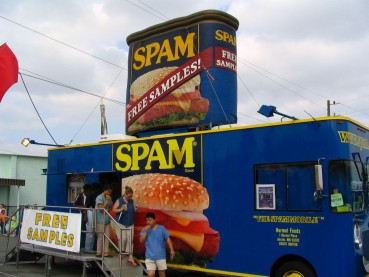
An American Classic: How Spam became a success
Fritter away a few minutes with the story of how chopped meat in a tin became a branding success. What can we learn from the constant reinvention of a staple?
 article icon
Society, Politics & Law
The Curious Geography of Weetabix: A Cereal Tale for Our Times
Where is Weetabix actually from? Prof. John Allen investigates.
 video icon
History & The Arts
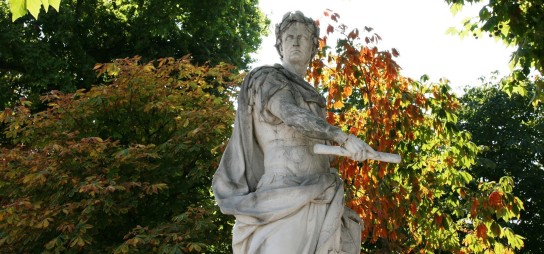
Shakespeare: For All Time?
A current production of Julius Caesar is causing controversy in the USA for allegedly depicting Donald Trump's murder, but what does this tell us about the nature of Shakespeare's plays?
 free course icon
level 3: advanced icon
free course icon
level 3: advanced icon
Society, Politics & Law
The body: a phenomenological psychological perspective
The body has traditionally been treated as a biological object in psychology. However, is there more to our bodies than that? Some psychologists recognise that we relate to other people and the world about us through our body. This free course, The body: A phenomenological psychological perspective, explores the theoretical perspective on ...
 video icon
Nature & Environment
Earth In Vision: A Collection
The Earth in Vision project explores the BBC archives of environment themed television and radio programmes from the last 70 years, looking at the potential of these archives as a digital resource as well as to illustrate the potential of digital broadcast archives for researchers.
 video icon
Science, Maths & Technology
Challenge: Make paper and ink
Could our stricken scientists make their own paper and ink? It required undestanding of the processes involved.
 activity icon
Society, Politics & Law
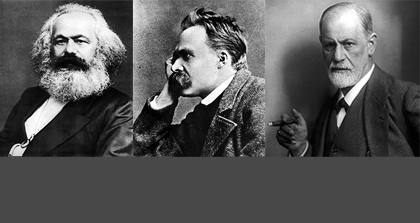
Timeline: Marx, Nietzsche and Freud
Explore the lives and works of Karl Marx, Friedrich Nietzsche and Sigmund Freud with our interactive timeline.
 audio icon
History & The Arts
Thoughts on creativity
Andrew Cowan shares his perspective on the creativity, his creative process - and beating writer's block.