You can start learning at any time. By signing up and enrolling you can track your progress and earn a Statement of Participation upon completion, all for free.
Welcome to our introductory course on motor neurone disease (MND). It has been designed for all health and social care professionals who would like to find out more about this disease.
Click here to show/hide video transcription
Hello, and welcome to An Introduction to Motor Neurone Disease, or MND.
This course has been designed for health and social care professionals who are new to working with MND. The course will provide you with an overview of the disease and help you build confidence in supporting your patients, their carers, and families.
By the end of the course, you should be able to explain how MND is diagnosed, describe the effects of MND on the mind and body, and have an increased understanding of the psychological impact of a diagnosis.
You will also hear personal reflections from people living with the disease and members of their families.
To progress through this content, click on the topic headings under each unit to watch a video or read information, and then successfully complete the task at the end of the unit to unlock the next one.
Course structure
The course is divided into eight sections:
Introduction to MND
Diagnosis of MND
Limb symptoms
Bulbar symptoms
Respiratory symptoms
Cognitive change
Psychological impact
Palliative and end of life care
Each section begins with a short video, followed by additional useful resources, quizzes and other content to support your learning. Later content will unlock as you work your way through the course.
For queries relating to MND, please contact our MND Connect helpline. Call 0808 802 6262 or email mndconnect@mndassociation.org.
Looking for more information?
A wide range of information and resources for health and social care professionals is available on our website: www.mndassociation.org/professionals
This course is part of a collection
This course is part of a collection of courses called The Motor Neurone Disease Association. There are 5 courses in this collection so you may find other courses here that maybe of interest to you.
To enrol on this course, sign in and create your free account
To enrol on this course, sign in and create your free account
If this is your first visit to this site, you need to register for a free account, then login on this site and click on the Enrol button for this course.
This unit will introduce you to key facts about motor neurone disease. We will explore what MND is and its causes, the different variants of the disease, and who it affects.
We will also give you an overview of the support available from the MND Association — both for health and social care professionals, and for people affected by MND.
Objectives
By the end of this section you will be able to describe:
what MND is
who it affects
its causes
This course includes personal reflections from people living with the disease and members of their families.
To progress through this course, click on each of the topic headings under each section to watch a video or read information, and then complete the task at the end of the section to unlock the next one.
This book resource will introduce you to motor neurone disease (MND), a progressive and life-limiting neurological condition. You'll learn what MND is, who it affects, how it presents, and the different forms it can take. This foundational knowledge will support your understanding of the challenges faced by those living with the disease.
This five-minute video introduces us to an expert in MND, alongside some people living with the disease who will be sharing their experiences throughout this course.
This animation shows how MND can affect people in very different ways. By following the journeys of Arthur, Bina, and Perry — each living with a different form of MND — you’ll see how symptoms can begin, how they may progress, and the impact this has on daily life and life expectancy.
Congratulations on completing this unit! Now it’s time to put your knowledge to the test. The following quiz is designed to help you review and reinforce what you’ve learned.
Don’t worry if you don’t get everything right on the first try — this is an opportunity to learn and grow. Take your time, think through each question, and remember: this is just one step on your journey to understanding MND.
You must pass this quiz in order to gain access to Unit 2.
Many people with MND experience delays in receiving a diagnosis. In this unit, we will explore the signs of MND, the importance of an early diagnosis, and the tests involved in confirming the condition.
You will also be introduced to a simple tool used by GPs to assess patients for the possibility of an MND diagnosis.
This section deals with the process of diagnosing MND, from recognising initial signs through to confirming the diagnosis. As part of this, we will hear more personal recollections from Sarah, David, Ricardo and Jan — people with MND who were introduced earlier in the course. You will also be introduced to a common tool used by GPs to assess patients for the possibility of an MND diagnosis.
Objectives
By the end of this unit, you will:
understand how someone is diagnosed with MND
appreciate the importance of a timely diagnosis
be familiar with the Red Flags tool to support diagnosis
Complete the tasks at the end of this section to unlock the next one.
Not available unless all are satisfied: The activity Unit 1 Quiz is marked complete
When messages from the nerves reduce in MND, the muscle they connect to is used less and tends to waste. This causes weakness and can affect balance and posture, with the risk of falls and pain.
By the end of this unit, you will have considered the causes and impact of muscle weakness, and equipment, aids and adaptations that people with MND may use to help with mobility problems.
This section deals with the physical effects that MND may have on someone. This will be supported by brief personal recollections of this aspect of living with MND from Jan, David, Ricardo and Sarah.
Objectives
By the end of this unit, you will:
understand the effects of MND on the limbs and movement
have been introduced to aids, adaptations and physiotherapy
recognise the impact of pain
At the end of the section there is a task which must be completed in order to unlock the next section.
Not available unless all are satisfied: The activity Unit 2 Quiz is marked complete
With MND, weakness can affect the muscles in the throat, tongue, and mouth. These muscles are known as bulbar muscles.
In this unit, we will explore the effects of bulbar muscle weakness, including difficulties with speech, difficulties with swallowing and saliva management, and the support available to help manage these symptoms.
Bulbar weakness can affect the muscles in the throat, tongue and mouth, causing difficulties with speech and swallowing. This section will explore the effects of bulbar weakness.
Objectives
By the end of this unit, you will:
understand how MND affects swallowing
have been introduced to saliva problems in MND
recognise some of the speech and communication issues MND can cause
You will need to achieve a minimum score in the activities for this section to unlock the next.
Not available unless all are satisfied: The activity Unit 3 Quiz is marked complete
Most people with MND will develop problems with their breathing because the muscles involved in the voluntary control of breathing can become impaired.
This unit will introduce you to the signs and symptoms of breathing difficulties, some of the management options available, including assisted ventilation, and the risks of using oxygen in people with MND.
This section focuses on the effects that MND can have on breathing, and will include some of the options available for managing related symptoms, including assisted ventilation. We'll also hear some more personal stories on these themes from Ricardo, David and Jan.
Objectives
By the end of this unit, you will:
gain insight into the impact of MND on breathing
explore the role of assisted ventilation
recognise the risks that oxygen therapy can pose to someone with MND
Completing the final task will unlock the next section.
Not available unless all are satisfied: The activity Unit 4 Quiz is marked complete
6. Cognitive change and frontotemporal dementia (FTD)
Video transcript – Cognitive Change and Frontotemporal Dementia
Welcome to Unit Six: Cognitive Change and Frontotemporal Dementia.
There is now an increased awareness that MND does not only affect the body. Around half of people with MND will experience changes to their thinking and behaviour, known as cognitive change. A small proportion will go on to develop frontotemporal dementia, known as FTD, which is a more severe form of cognitive change.
At the end of this unit, you will have been introduced to and explored cognitive change and frontotemporal dementia, and have an understanding of the impact they can have on people with MND and their families.
There is now an increased awareness that MND does not only affect the body. Around half of people with MND will experience changes to their thinking and behaviour, known as cognitive change. A small proportion will go on to develop frontotemporal dementia (FTD). This can have a significant impact on people with MND, their carers, and families. This section will explore these symptoms.
Objectives
By the end of this unit, you will:
understand how MND affects cognition
be introduced to frontotemporal dementia (FTD)
explore the impact of these conditions on the person with MND and their family
You will need to achieve a minimum score in this section’s activities to unlock the next.
Not available unless all are satisfied: The activity Unit 5 Quiz is marked complete
A diagnosis of MND can be devastating, both for people living with the disease and everyone around them.
This unit will encourage you to think about the psychological impact of an MND diagnosis, the range of emotional reactions people may have, and avenues for support.
We will also discuss a symptom called emotional lability, where a person with MND may experience inappropriate laughing or crying.
A diagnosis of MND can be devastating, both for people living with the disease and everyone around them. This section will encourage you to think about the psychological impact of MND.
Objectives
By the end of this unit, you will:
recognise the emotional impact of an MND diagnosis on individuals and their families
understand the range of emotional responses that may arise at different stages of the disease
identify professionals who can offer emotional and psychological support
Completing the final task will unlock the next section.
Not available unless all are satisfied: The activity Unit 6 Quiz is marked complete
Video transcript – Palliative Care including End of Life Care
Welcome to the final unit: Palliative Care, including End of Life Care.
Palliative care offers physical, emotional, and practical support to people with a terminal illness.
Palliative care starts from the point of diagnosis, as it is about living as well as possible with a disease.
For some people with MND, death can be very sudden, before an obvious end stage is reached. Others experience a longer final stage, which can last many weeks.
By the end of this unit, you will have an understanding of the role of palliative care services, the importance of planning ahead for the end of life, death in MND, and bereavement.
As MND is rapidly progressive, it is crucial that end of life is sensitively discussed and planned for. This section will explore the benefits of early referrals to palliative care services, planning ahead for the end of life, and bereavement.
Objectives
By the end of this unit, you will:
have an understanding of the role of palliative care
have been introduced to advance care planning, and its role in supporting people with MND
This is the final section of this course. You will need to achieve a minimum score in the activities in this section combined with your results from the other sections to officially complete the course.
Not available unless all are satisfied: The activity Unit 7 Quiz is marked complete
To enrol on this course, sign in and create your free account
To enrol on this course, sign in and create your free account
If this is your first visit to this site, you need to register for a free account, then login on this site and click on the Enrol button for this course.
We invite you to discuss this subject, but remember this is a public forum.
Please be polite, and avoid your passions turning into contempt for others. We may delete posts that are rude or aggressive; or edit posts containing contact details or links to other websites.
Course reviews
MND Introduction
Sarah Hill6 July 2026 3:03
I found this course very informative and comprehensive in discussing the physical and psychological factors related to MND diagnosis.
Introduction to MND
Anita Nelson13 June 2026 12:25
I found the course to be very informative, and very helpful in my understanding of MND, which will help me in my role as a carer of a paitent with MND.
To enrol on this course, sign in and create your free account
To enrol on this course, sign in and create your free account
If this is your first visit to this site, you need to register for a free account, then login on this site and click on the Enrol button for this course.
Any third-party materials featured in this course are used with permission and are not ours to give away. These materials are not subject to the Creative Commons licence. See the
terms and conditions and our FAQs. Please see the course acknowledgements for further information about copyright details.
For further information, take a look at our frequently asked questions which may give you the support you need.
You can start learning at any time. By signing up and enrolling you can track your progress and earn a Statement of Participation upon completion, all for free.
Any third-party materials featured in this course are used with permission and are not ours to give away. These materials are not subject to the Creative Commons licence. See the
terms and conditions and our FAQs. Please see the course acknowledgements for further information about copyright details.
For further information, take a look at our frequently asked questions which may give you the support you need.
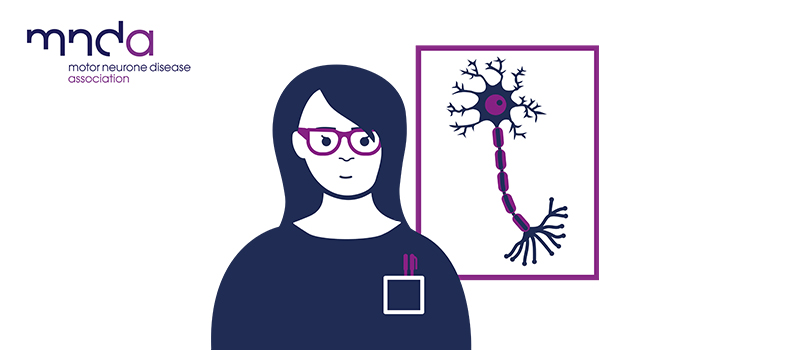
 This book resource will introduce you to motor neurone disease (MND), a progressive and life-limiting neurological condition. You'll learn what MND is, who it affects, how it presents, and the different forms it can take. This foundational knowledge will support your understanding of the challenges faced by those living with the disease.
 This five-minute video introduces us to an expert in MND, alongside some people living with the disease who will be sharing their experiences throughout this course.
 This animation shows how MND can affect people in very different ways. By following the journeys of Arthur, Bina, and Perry — each living with a different form of MND — you’ll see how symptoms can begin, how they may progress, and the impact this has on daily life and life expectancy.
 Congratulations on completing this unit! Now it’s time to put your knowledge to the test. The following quiz is designed to help you review and reinforce what you’ve learned.