
You can start learning at any time. By signing up and enrolling you can track your progress and earn a Statement of Participation upon completion, all for free.
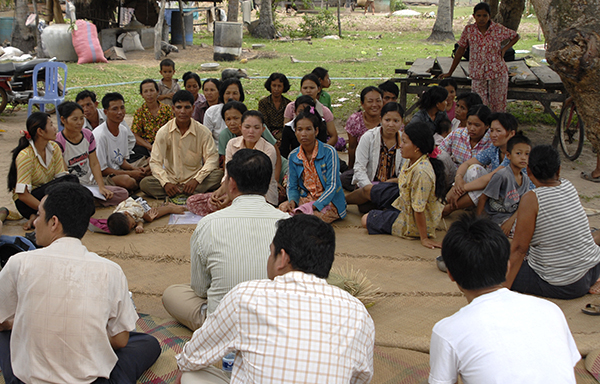
Engaging all members, voices and opinions within a community is vitally important when developing solutions to social and environmental challenges the community face. This unit discusses the core concepts behind how you engage with your wider community or engage with another community to identify solutions. The most effective community solutions are ones that benefit the community, are fair and do not impact negatively on the environment. The aims of this unit are to introduce the following: how to follow an action learning approach to engagement and management; why community engagement is important and approaches to successful engagement; the concept of community owned solutions; and how to determine impact.
This course is part of a collection of courses called Community Environmental Management. There are 7 courses in this collection so you may find other courses here that maybe of interest to you.
To enrol on this course, sign in and create your free account
If this is your first visit to this site, you need to register for a free account, then login on this site and click on the Enrol button for this course.
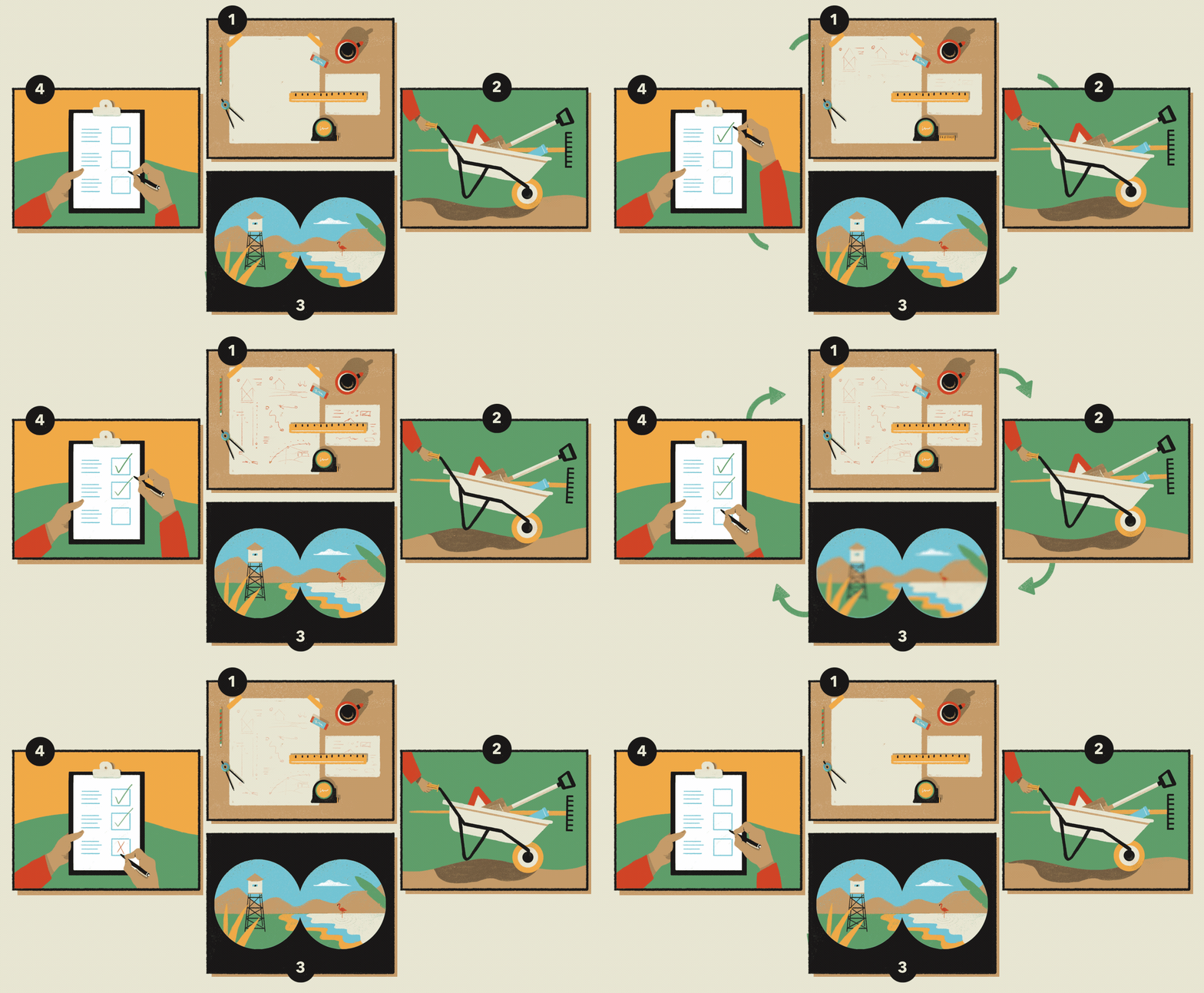
Action learning is a fundamental process that underpins your engagement with this online course and your community or a community you want to engage with. When we practice action learning, we start off with a goal, an idea, or an issue that needs to be addressed, and develop a plan of action. Then we actually do what we planned and take action. Out of this experience, we observe and evaluate the impact of the actions and the appropriateness of our plans. We then formulate new plans for improving the situation further. We then carry out another phase of acting, where we put our new plans into action. This generates experience, which provides an on-going cycle of action learning: observe, evaluate, plan, act, observe, evaluate, plan, etc.
Action Learning Cycle
1 – Plan
2 – Act
3 – Observe
4 - Evaluate
Learning Journal
A learning journal is a way you can record the ideas and concepts you will learn on this course. You can use a notebook or create an electronic document to record your learning on the computer or other digital devices. We encourage you to keep a learning journal as it is an important first step to take when completing the course as it enables you to write and create diagrams about what you are learning as you engage in the various course activities. Some entries may be short and specific whereas others will allow you to reflect on what you have read or learned. Noting your reflections can deepen your learning experience. The key is to make it a fun and interesting experience rather than a chore.

In the course there are other interesting exercises that will stimulate your learning such as activities and quizzes. Do engage with them and make your learning fun and interesting.
Students must
Mark as done
Activity 1
In your community, which current issues could be addressed using an action learning approach? For one issue, write down the different activities you could do in the four action learning steps; Plan, Act, Observe and Evaluate. You might want to include a couple of cycles of action learning to show how a plan can be updated and improved.

For example, an issue facing your community could be water pollution of a lake. As a community the activities you could do are:
Plan - develop a plan to identify the sources of pollution by talking to people around the lake;
Act – carry out interviews with people from various households, shops and factories to locate pollution sources;
Observe – observe whether the plan is working by seeing if you have identified all of the pollution sources;
Evaluate – evaluate how successful the interviews have been at locating all pollution sources;
Plan – amend your plan to improve identification of pollution sources by undertaking water quality monitoring etc.
Click on the book icon below to visit the course section on community engagement.
To help your community or other communities to identify, share and implement community owned solutions good engagement or facilitation skills are essential. Key is the ability to encourage active participation by individuals or groups, and to promote communication that is open and honest.
Read the list of ‘good facilitation skills’ and reflect on them. Group them for yourself according to things you are already familiar with and feel happy with, things you need to focus more attention on and things that are entirely new to you.
Think about your community and engaging with them - which ethical considerations are most likely to become an issue?
Reflect on the concept of community viability in your learning journal - which elements are the most or least clear for you?
Look at the Community Viability Maps in the file below. For you and your community, which strategies are relevant to the situation in your community? If a strategy is not relevant, then remove it. Consider whether any strategies are missing and should be added or not. Draw a new diagram for you.
Watch this video and write down the key benefits for using Community Owned solutions:
Examples of a community viability maps collected from Indigenous communities across the Guiana Shield of South America and a community viability map example of different survival strategies that could be employed by a community group living alongside urban wetlands in Colombo, Sri Lanka.
Now after completing this section you will have some more appreciation for the need of engaging diverse community members, voices and opinions during community engagement. You will also now be familiar with different tools and methods you can use for engaging with community members and for identifying solutions for social and environmental challenges. Using an action learning approach to underpin your engagement and management is really crucial and will support you in identifying community owned solutions as well as determining the impact of your engagement. These fundamental skills can be used for addressing a whole range of social and environmental challenges and to help ensure your community engagement is ethical and sustainable from both a social and environmental perspective.
To enrol on this course, sign in and create your free account
If this is your first visit to this site, you need to register for a free account, then login on this site and click on the Enrol button for this course.
We invite you to discuss this subject, but remember this is a public forum.
Please be polite, and avoid your passions turning into contempt for others. We may delete posts that are rude or aggressive; or edit posts containing contact details or links to other websites.
To enrol on this course, sign in and create your free account
If this is your first visit to this site, you need to register for a free account, then login on this site and click on the Enrol button for this course.
This course is made available under CC BY-NC-SA 4.0: Cobra Collective
Any third-party materials featured in this course are used with permission and are not ours to give away. These materials are not subject to the Creative Commons licence. See the
terms and conditions and our FAQs. Please see the course acknowledgements for further information about copyright details.
For further information, take a look at our frequently asked questions which may give you the support you need.
You can start learning at any time. By signing up and enrolling you can track your progress and earn a Statement of Participation upon completion, all for free.
This course is made available under CC BY-NC-SA 4.0: Cobra Collective
Any third-party materials featured in this course are used with permission and are not ours to give away. These materials are not subject to the Creative Commons licence. See the
terms and conditions and our FAQs. Please see the course acknowledgements for further information about copyright details.
For further information, take a look at our frequently asked questions which may give you the support you need.