Part 5: Plant reproduction
7. Seed to seedling
Search on YouTube for ‘seed germination timelapse’ and watch a range of videos which show seeds germinating, concentrate on the order in which the germination happens.
1. Radicle emergence
When you have sown seeds, the first indication you will get that they are germinating is the appearance of the radicle which protrudes from the seed and starts to grow down.
To start with, the radicle growth is caused by cell elongation, but as the radicle continues to grow the cells start to divide at the growing tip.
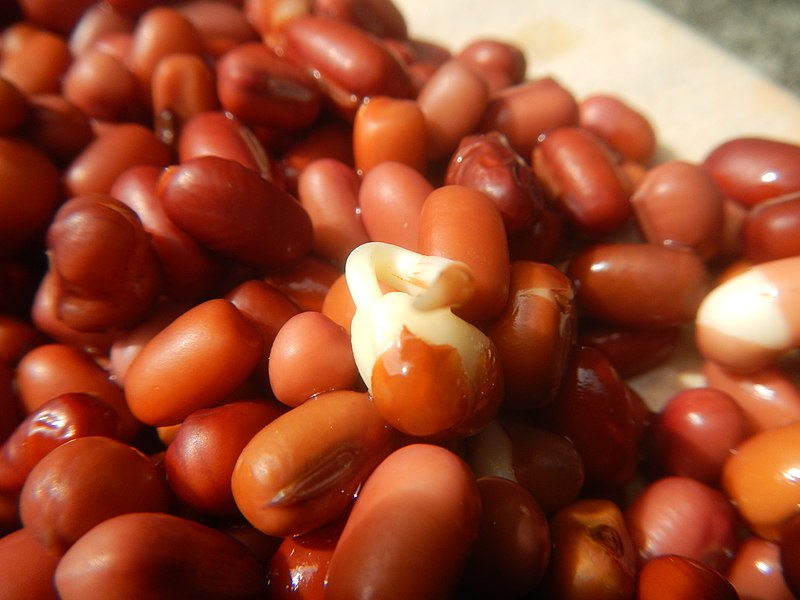
Germination of Adzuki bean
Judgefloro / CC0
2. Shoot emergence
Once the radicle has emerged and started to grow down into the soil, the shoot begins to emerge.
The emerging seedling uses food reserves from the endosperm and cotyledons to grow the hypocotyl region which lengthens the seedling stem and pushes it out of the seed and towards the light.
The cotyledons (single cotyledon if it is a monocotyledonous plant) then unfold and you can see your seedling.
The epicotyl then starts to develop, and you see the first true leaves begin to develop and the seedling can then start feeding itself through uptake of nutrients and water from the soil through its roots and photosynthesis in its leaves.

Amber Crowley UHI / Public domain
Heterotrophic growth
This is when the germinating and developing seed is feeding from organic material, i.e. using the stored food in the endosperm and cotyledons.
Autotrophic growth
This is when the seedling is old enough and can feed itself from water and nutrients taken up through its roots and photosynthesis.