
OER 4 Digital and tech for language and learning
3.2 Artificial Intelligence (AI)
Artificial Intelligence (AI) can be defined as: ‘technologies that mimic human behaviour to conduct tasks normally done by people’ (Edmett, 2023, p. 24).
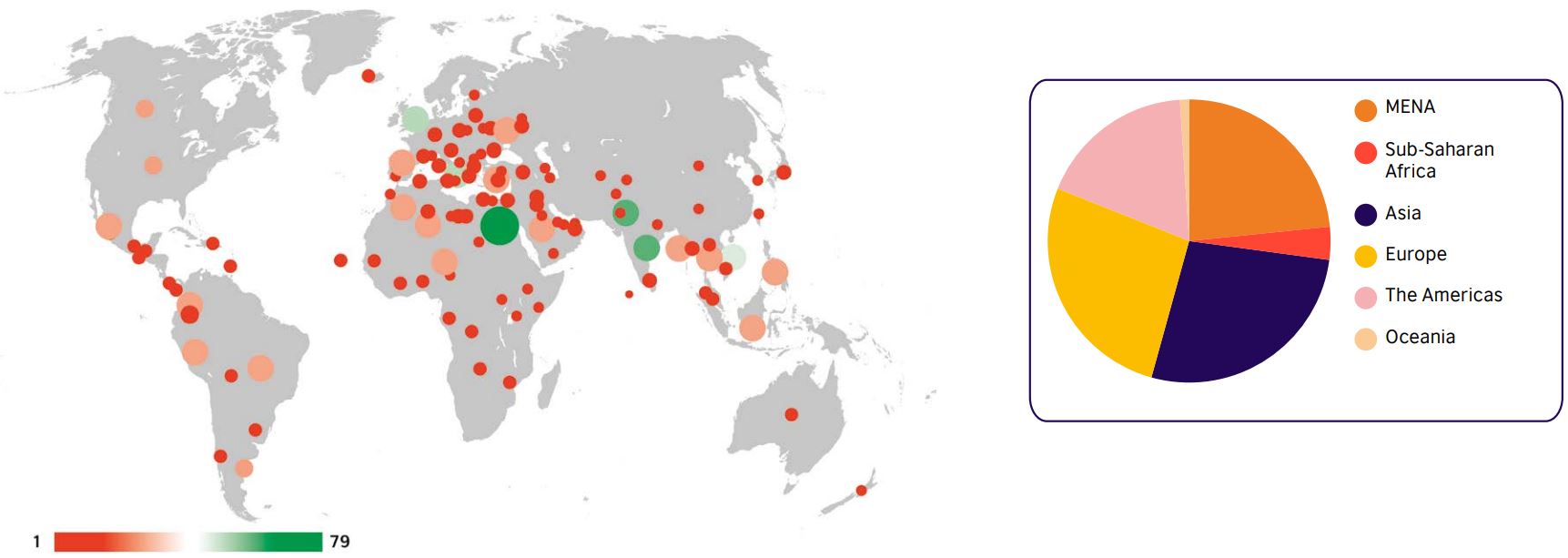
In 2023, the British Council surveyed 1,348 secondary school and university English language teachers from 118 countries and regions about their uses of artificial intelligence (AI) (Edmett, 2023).
33 per cent were teaching in state schools, 23 per cent in private or fee-paying schools, and 22 per cent at a university.
27 per cent of the teachers were from Asia, 27 per cent from Europe, 23 per cent from the Middle East and North Africa, 18 per cent from the Americas, and 4 per cent from Sub-Saharan Africa.
The teachers said that what AI tools they use and how they use them.
Here is what they reported. Do you use any of these tools? Do you know if your teachers use any of these?
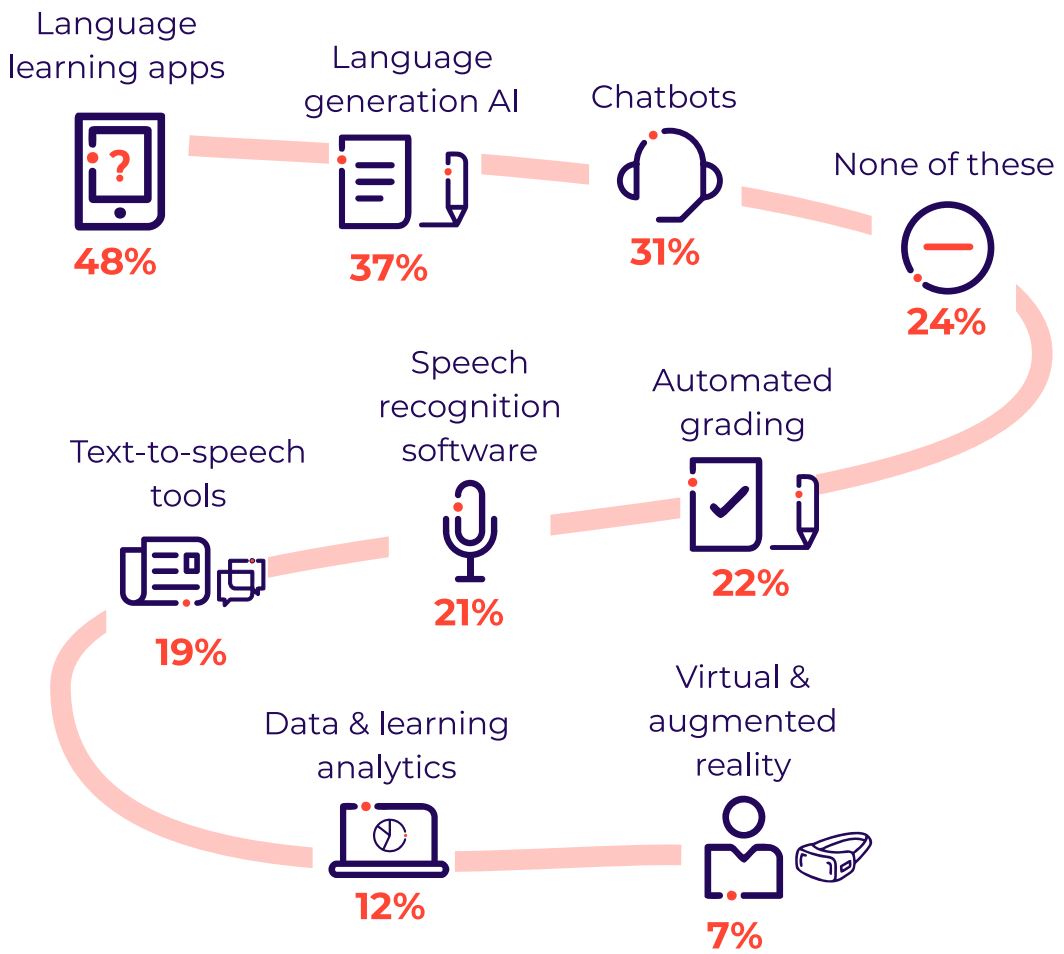
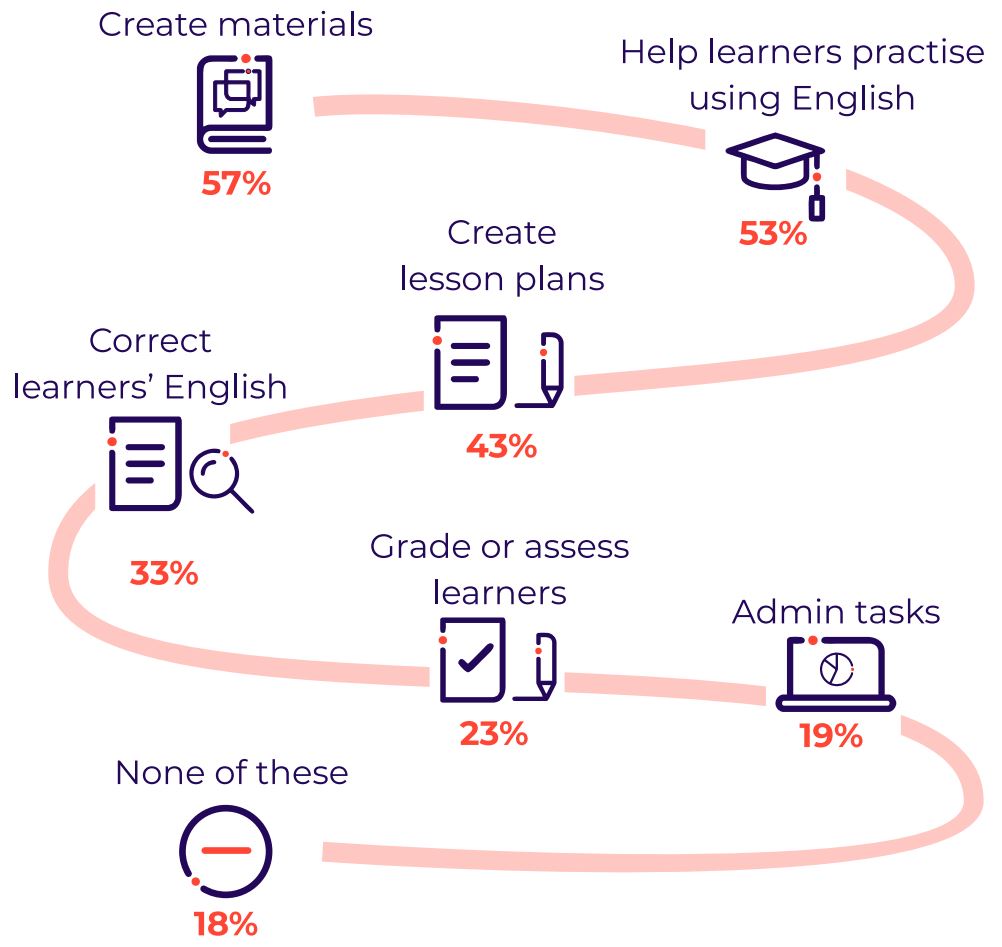
The majority of teachers in the survey felt unprepared to use AI in teaching, but many are educating themselves:
I am trying to learn as much as I can by myself.
I have completed online […] courses to develop my knowledge of AI in teaching.
(p. 30)
AI is evolving rapidly and it is likely that you and teachers use AI tools already, such as:
- spell- or grammar-checking that automatically corrects errors
- a chat bot that answers basic questions
- a language app to learn or practise.
There are organisations, such as the British Council, that offer ‘digital badges’ for completing courses, so teachers increase their digital skills and their professional practice at the same time.