Unit 2: Senior Learners and the Concept of Wellbeing

5.0 Unit 2 Tutorial
You are invited to attend the Unit 2 online tutorial, where you will meet your tutors and fellow students to discuss the concept of wellbeing in connection with language learning in older age and begin planning your own language learning activity.
This is an overview of the programme for the Unit 2 online tutorial:
b) What is a person-centered approach to social care? Why do your environment and the context matter when you are learning? To prepare for this aspect of the tutorial, read pages 9-12 of this document: Person Centred Thinking with Older People.
c) What are criteria for good practice in social care?
- In Unit 1 you started collating criteria for good practice in social care. Bring your criteria to the tutorial.
- To further prepare for this aspect of the tutorial reflect on the standards for social care you have engaged with in this unit and consider whether these really capture what you personally believe are suitable criteria for good practice in social care.
As preparation for this tutorial...
- think about which language/s you would like to try learning with your learners.
- think about an individual learner whom you could start your language learning journey with as a first step.
- discuss some options for learning a language together with this learner.
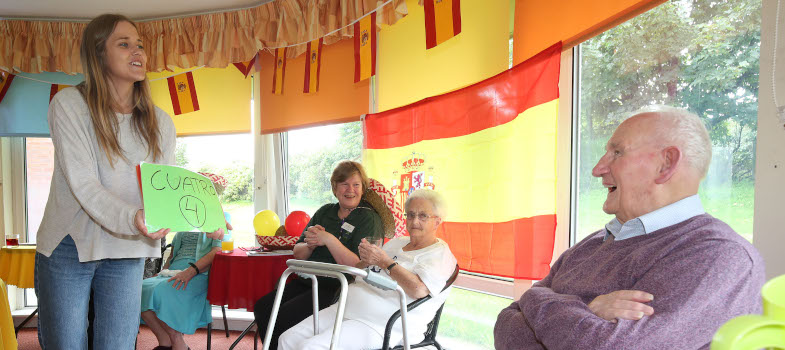
- come up with a first small language learning activity you would like to try out with your leaner. This should be just a short and easy activity, for example learning how to greet another person in the language you are learning. The activity could also start with reminiscing using an object like a photograph of washing drying on a washing line: you could talk about what that reminds your learner of, you could name the clothing on the washing line in the other language as a final step.
In the further engagement section of this unit you will find two guest lectures by Thomas Bak and Brittany Blankinship who work in the centre for Neuroscience Studies at the University of Edinburgh. You can listen to their thoughts and ideas to help you prepare for this aspect of the tutorial.
To help you with your language choice and prepare your language learning activity, you can engage with some of the many free language learning resources available, eg.
- Scots Language and Culture
- The Open University offer a range of free language courses - see the full catalogue:
-
There are also free apps you could use such as Duolingo, Memrise, Quizlet, Busuu.
-
You may also find inspiration on Youtube, Spotify, iTunes or work with a free online course on edX.