Lesson 4.3: Care & Survival in Exile
This topic explores aspects of survival and political resistance that are often intangible—emotional support, informal care, and everyday acts of solidarity—but we will anchor these in concrete examples to try and grasp them. We learn how care, friendship, and solidarity networks sustain life in exile and become the infrastructure of political agency. In contexts where institutions fail, these acts of mutual support are not simply emotional responses - they are political practices that make survival possible.
5. EXTRA: Russian Journalists in Exile

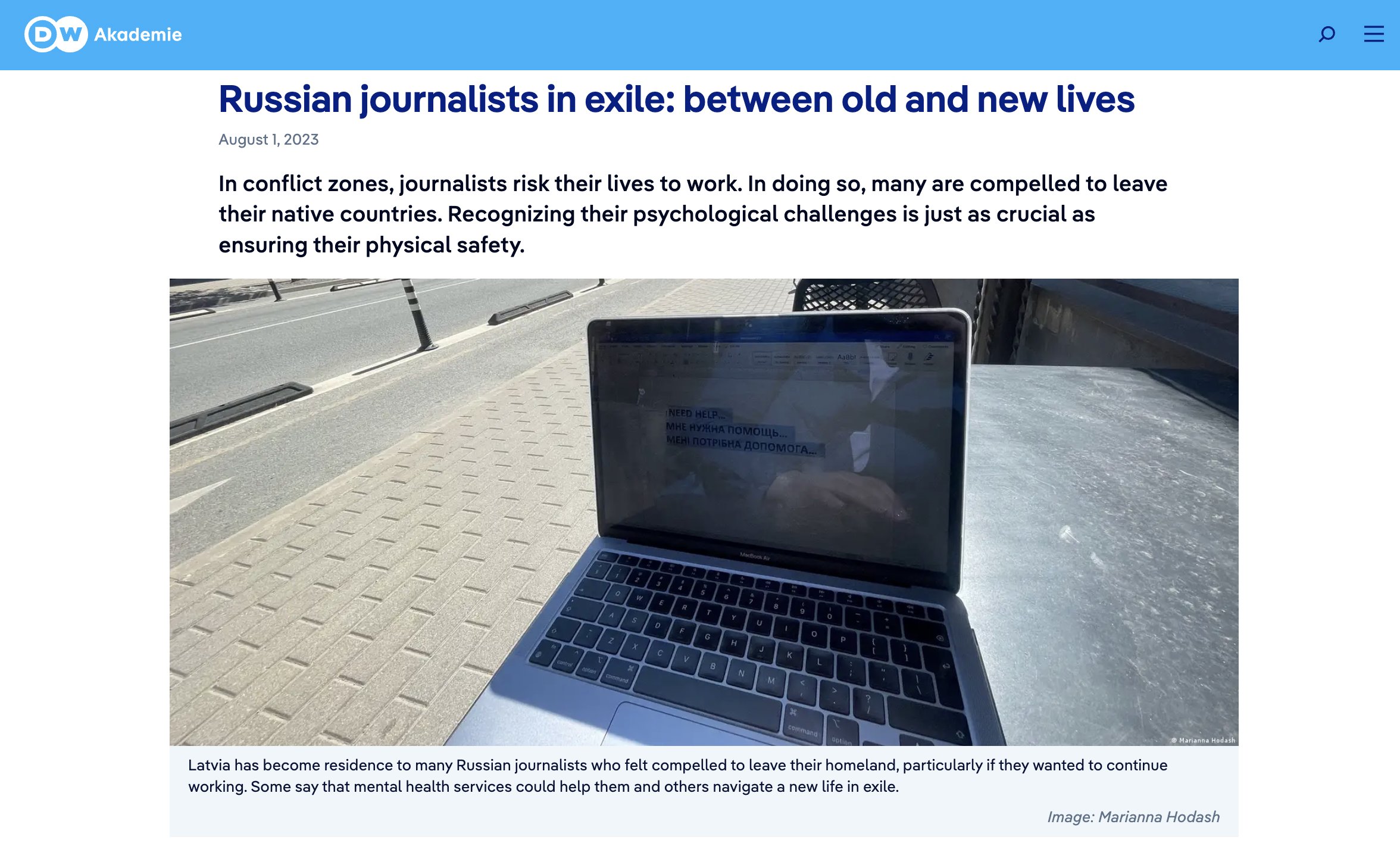
Read The DW report on Russian exiled journalists
https://akademie.dw.com/en/russian-journalists-in-exile/a-66300308 The DW feature on Russian Journalists in Exile offers a powerful complement to RESIST findings by showing how authoritarian repression affects people working in public communication roles — reporters, editors, and cultural producers whose work depends on visibility, networks, and trust. While these journalists are not part of the RESIST sample, their experiences mirror many patterns we have identified across feminist, queer, and human rights activism in exile. Four themes in the reading will help you reflect on broader dynamics of precarity and survival: |
|
Identity crisis in exile ‘The exiled journalists’ identity crisis is real… they’ve become despised in their countries… even their closest connections often label them traitors.’ Exile as ‘social death’ This term is widely used in migration studies to describe the erasure of social identity and belonging when uprooted from one’s networks and publics. In RESIST, queer and trans migrants described this as ‘suspended life’ or ‘living in limbo’, which the article vividly corroborates. The importance of community and mental health support This finding strongly reinforces Topic 3, where care, solidarity, and grassroots mutual aid are presented as key infrastructures of survival. It also shows that emotional support is not merely personal, but political: a tool against isolation imposed by authoritarian repression. Leaving violence behind, but facing new burdens Journalists describe new challenges after arrival: career disruption, language and cultural barriers, insecurity, and bureaucratic uncertainty. This corresponds to RESIST findings where exile replaces immediate danger with new forms of structural and emotional precarity. As Topic 2 notes, safety is not the same as stability, and escaping violence often introduces new vulnerabilities. |