Model Answer Unit 4.3 Activity 2A
These are our answers to questions i-v. You might have noted down other aspects or views.
-
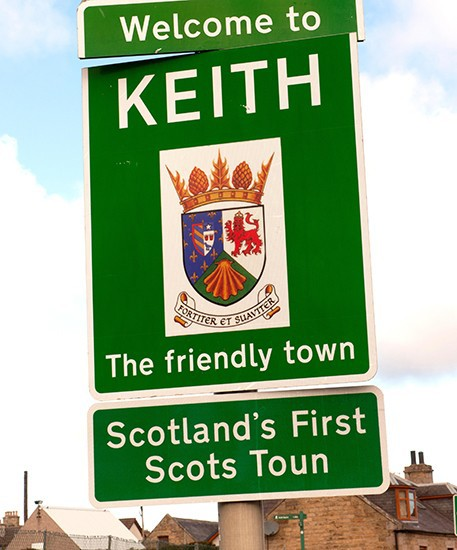
James Robertson is clearly critical of the erosion of original place-names from and their replacement with more anglified and gentrified versions. He wants the original names to remain, so that the meaning can be better understood. He discusses the power relations between languages, that the official language overrules the unofficial one. He gives the of Baxter Wynd example in St Andrews being renamed Baker’s Lane. He wants more towns to greet visitors with Scots names and retain Scots on street names (The town of Keith won a ‘Scots toun’ prize for its efforts in using Scots signage for a series of vennels and promoting the language).
He notes that unofficial names for places may exist in the spoken and heard word but this is made invisible through anglicised signage. He posits the argument that maybe the unofficial nature of names has kept them in people’s heads and hearts. He says that Gaelic on signs is much more clearly different from English, whereas it would sometimes be hard to know how far to go with Scots words very similar to English. He foresees committees having to make decisions about each name and suggests there should be a balance between respect for indigenous names and functionality. He welcomes the debate regarding Scots place names.
-
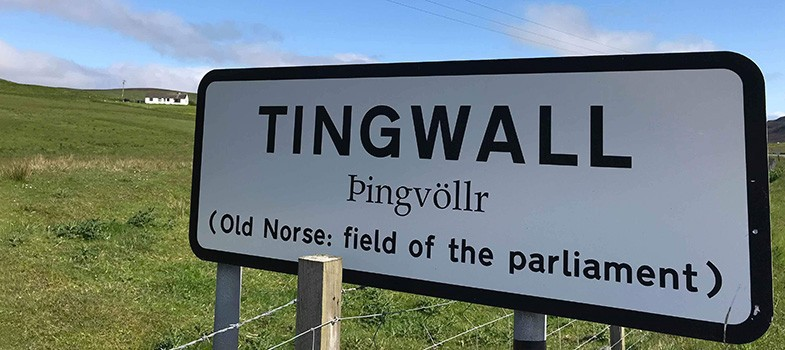
Yes, I think there should be more Scots words and names on road signs, street signs and shop and service signs. Tourists now are keen to learn local words and are interested in local history and language. Having Scots on signs shows respect to Scots speakers living in the area and travelling around Scotland. If names are visible as well as spoken and heard, they will have greater official status. I like, for example, the course image on the OU’s Scots course part 1, which is taken in Shetland, and which not only features the Scots place name Tingwall, but also give an explanation if the origin and even the Old Norse spelling. I will use this example in my class, because I can teach them about Shetland, language development and other alphabets.
-
Banff possibly comes from banbh, and old Gaelic word for a piglet! Bin of Cullen is a hill nearby – Bin is a smaller version of Ben, from the Gaelic beinn for a mountain. There are many burns (streams) Burn of Durn, Burn of Boyndie. There is a small village called Todhills – maybe after Tod, Scots for fox. If there is no local theory – come up with one! Or even better, let your pupils do that after some research in the DSL.
-
A local village which is called Aberchirder on map and sign, is usually called Foggie, or Foggieloan. Crovie is pronounced Crivvie. Many more examples in the video clip. Why not contact a local history or local language group to learn more about your local area? This is an excellent way of making connections with the Scots community beyond your classroom.
-
Learners could investigate local names and then design and construct road- signs highlighting Scots names or spoken names that are usually hidden from view. Work with the technology department to construct robust signs and place them around the school. Study the etymology (origin and meaning of words) using online dictionaries, and make up interesting names which have local significance, like Braescunner (made up of Brae, for hill or brow, and scunner (for being fed up walking up the Brae)! Explore the excellent Scots Language Centre resources on Scots place names, including the Scots map of Scotland and digital sign maker.
Return to Unit 4