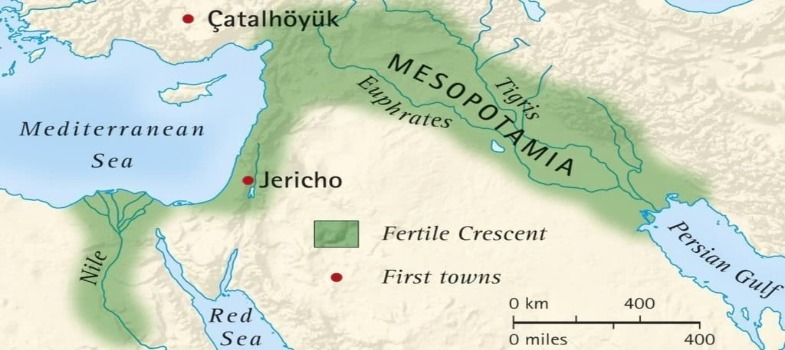
Characteristics of Tigris and Euphrates
Contrary to what happens with the Nile, a flowing river, but
with a peaceful current and periodic floods, which man quickly learned to take
advantage of and even to control, the Tigris and the Euphrates are tumultuous
rivers, with frequent and sudden floods, impossible to predict and that, in
antiquity, they often caused catastrophes.
Man has never managed to dominate the course of these rivers and to take advantage of their flow, he has always had to fight with them, exposing himself to their unpredictable and disastrous floods. There is no doubt that the irregularity of the Tigris and Euphrates floods and the difficulties inherent in their use for agricultural purposes, despite the fertility that they undoubtedly provided in the lands they watered, inhibited man from being able to organize himself to obtain better use of its waters.
And if we admit that, as was the case in Egypt, the organization of man for the use of hydraulic resources demanded the emergence of superior political forms, of centralized states, controlling vast expanses of territories with the inherent human potential, we will have to accept that both Tiger and Euphrates were responsible for the fact that in Mesopotamia, these superior political forms, which were the great empires, only emerged later, and in an unstable manner, with the inherent delay in their political development, compared to Egypt.
However, it is also certain that this was not the only cause. The presence of bellicose nomads, both in the desert and in the mountains, with their traps, raids, looting and almost constant invasions, contributed remarkably to further disorganize the always disunited and, therefore, vulnerable Mesopotamians. Only later did they learn to organize effectively, having come to build empires, increasingly solid and stable.