
20 years ago, when OpenLearn was launched, I was beginning my PhD at Charles University in Prague. As I entered the research world, exploring gerontology, age-related change and falls in later life, I also considered what kind of researcher I wanted to be and just knew that supporting people’s learning would be central to my work.
Very early on, I felt profoundly certain that to help people meaningfully get what they need, these very people needed to be part of co-creating that solution. So, when I started my own research projects, people with lived experience of the studied condition were naturally part of the journey. This approach was far less common 20 years ago, because as a researcher, you were the project lead.
You were asked how good and impactful your research could be in the real world, but people with lived experience were not naturally part of shaping it.
This commitment shaped educational interventions such as the Aging Well Public Talk Series (AWPTS) and later the Take Five to Age Well (Take Five) initiative. These were co-designed, co-produced and co-disseminated with people with lived experience of ageing, living with long-term condition(s), carers, patients – while also innovatively involving clinicians, practitioners and professionals who support the ageing and caring populations in their professional roles.
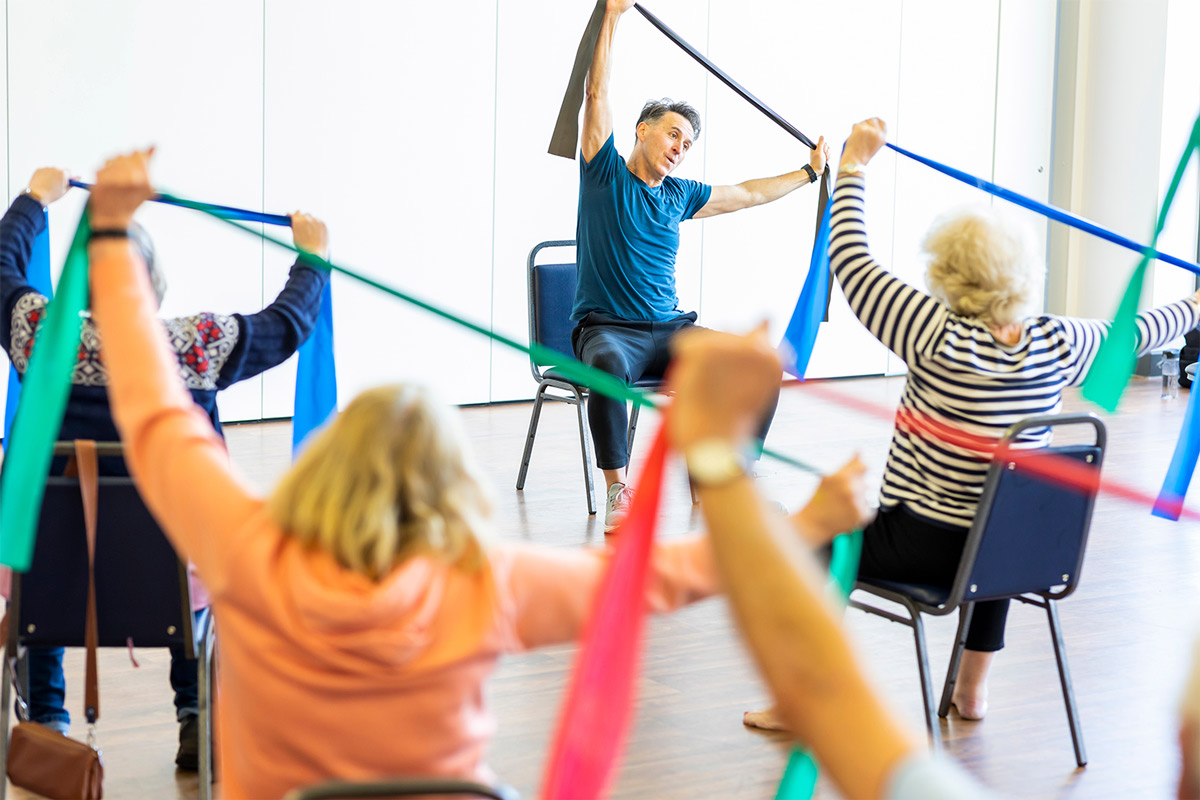
Blending everyone's views and approaches was not always easy, but it is something I never disregarded. Not only does it work really well, but it is also an enormous privilege to listen to people bringing solutions to the real-life problems they face every day.
All we had to do was listen and then, together, creatively use all the evidence base and rigour the research can offer while staying focused on their daily real-life problems. As academia is quite a hierarchical place, this approach may not be everyone’s cup of tea; however, when you put people with lived experience in the driver’s seat, it empowers them to look for solutions to everyday problems.
And while working with researchers, they also learn about the frameworks the research must follow to simply uphold the standards of rigour and value of the evidence base it brings. I am delighted that over 20 years later, this method of inclusive working with people with lived experience has become far more widely accepted, with safe, inclusive spaces increasingly recognised as essential when tackling complex health and social care challenges.
A major shift
There has been a major shift towards involving experts by lived experience in research and knowledge exchange. Individuals and communities are increasingly invited to shape responses to the inequalities and challenges affecting society.
The Applied Research Collaboration Thames Valley (ARC TV), recently funded by the National Institute for Health and Care Research and joined by The Open University as a partner, represents an important next step. Its commitment to building capacity across communities is embedded throughout its work. I am privileged to contribute to ARC TV’s capacity-building strategies and support inclusive co-creation across the Thames Valley.
This partnership demonstrates how far academia has progressed in embedding inclusive, participatory working from the start of co-creating solutions that make health and social care more accessible and available for all. I look forward to working with Open University, OpenLearn and NIHR ARC TV partners to co-create more accessible health and social care solutions—with everyone who needs to be involved.
Public impact, reach and recognition
The Open University and OpenLearn have been important partners throughout. OpenLearn provided a flexible platform for engaging diverse communities, particularly important in multicultural societies and in promoting equal access to opportunities to age well.
OpenLearn gave AWPTS a home when it began in 2018–19, and helped establish the ‘Participatory Public Engagement’ as a route to real-world impact. Now with over 50 items, including articles, free courses, collections, and interactives, the AWPTS has made a distinctive contribution to the OU’s formal and informal curricula.
What began as a commitment to inclusion, developed into a globally recognised knowledge-exchange model:
- serving diverse communities
- developing tailored courses for new markets
- supporting early-career researchers including outputs and income generation
- upholding the OU’s excellence in knowledge exchange
The AWPTS was a runner up in the Research Excellence Awards (2022) and generated global partnerships and discourse through social media, YouTube, OpenLearn, the BBC, and The Conversation (engaging over 530,000 worldwide). It also facilitated KYN326 OU students’ learning and was cited as ‘good practice’ in UK Parliament briefings in the Centre for Social Justice policy report.
When co-designing Take Five, we followed the same inclusive process leading to it becoming a national public health campaign in 2023 and 2025. Take Five was co-developed to enhance understanding of effective teaching and learning approaches, while driving improvements in health literacy, self-management, and attitudes and behaviours among individuals and organisations.
By creating and nurturing a network of more than 600 UK collaborators, Take Five helped shift public perceptions of ageing. Close partnerships with Age Scotland, Age UK, BridgitCare, NHS Inverclyde, and many others supported the co-creation of a vast collection of pioneering digital and non-digital resources.
Now multi-award-winning, Take Five is included as part of the evidence in the Health and Social Care Committee’s Healthy Aging 2026 report for helping people learn in an accessible way. It is a distinctive example of a large-scale, innovative multi-agency intervention designed with communities to strengthen engagement and address inequalities, reflecting the missions of both OpenLearn and The Open University.
Explore the other articles in this collection...
-
20 years in… What’s changed?
Read now to access more details of 20 years in… What’s changed?A lot can change in 20 years! From scientific discoveries and technological advances to shifts in society and culture, explore how different subjects have evolved since OpenLearn first launched in 2006.

Level: 1 Introductory
On this page you’ll find real stories from participants and partners sharing, in their own words, what they learned and the difference Take Five has made in their lives and communities. Take Five to Age well has been nationally/internationally recognised for its impact in the following categories/Awards Learn about ageing well with our collection of free learning resources including expert insights, recorded talks, podcasts, interactives and courses.Learn more about Take5 and Aging Well...
Take 5 to age well - case studies
Take 5 to age well - awards
Ageing Well Collection

This free course on money and retirement planning has been produced by The Open University in collaboration with Legal & General. Introducing your Midlife MOT. Your midlife years – that is, when you’re between about 40 and 60 – will probably be a very hectic time indeed. You might have ended up in a challenging job, or you might be working hard to get one. You could be looking after the kids, your parents or maybe both. Maybe you’re putting time and energy into a whole new... Whether you are a parent or sibling caring for a relative with a learning disability, this free course, Caring for an older family member with learning disabilities, is designed to help you navigate the system as they grow older. It has been developed from a cutting-edge research project that explored how to improve the care and support for ...Explore related content...
Retirement planning made easy

Midlife MOT: wealth, work and wellbeing

Caring for an older family member with learning disabilities

Rate and Review
Rate this article
Review this article
Log into OpenLearn to leave reviews and join in the conversation.
Article reviews