
.jpg)
Find out more about The Open University's Criminology and Psychology courses and qualifications.
Have you ever wondered what it takes to police a major football match? From the packed stands inside the stadium to the busy streets, police officers play a crucial role in planning, coordinating, and keeping everyone safe. Their work extends far beyond the match itself, involving careful preparation, real time decision-making and collaboration with partners as they work to protect fans, local residents and the wider community.
On 5 May 2026, I accompanied the Metropolitan Police Service on the Arsenal vs Atlético Madrid UEFA Champions League semi-final public order operation. I’ll be upfront: I support the police and think they do a good job. Seeing them in action before, during, and after the match reinforced that view. Their focus on public safety, protection of property, awareness of wider risks, and ability to adapt quickly as situations evolved was phenomenal. I cannot praise them highly enough.
The day began with a briefing five hours before kick-off. The bronze commander gave a clear, practical overview of officer roles, current fan locations, and expected movements. Earlier incidents were noted, alongside legislation that might be relevant for officers during the operation. There was a strong emphasis on proportionate use of powers and a need for clear documentation of decisions.
I accompanied the bronze commander, his runner (supporting coordination and communication), and loggist (recording events in real time) for the day. From the car, we monitored activity, observed officers on the ground, and assessed the mood on the streets. Communication was constant, with the commander, runner, and loggist maintaining contact up and down the command chain.
There was a strong emphasis on proportionate use of powers and a need for clear documentation of decisions.
When away fans gathered unexpectedly in a neighbourhood pub, officers anticipated community complaints about noise. They responded pragmatically, adjusting plans to minimise disruption while allowing fans to enjoy the pre-match atmosphere. The bronze commander had to quickly replan the away fan march to the stadium. He did so prioritising safety, managing traffic patterns, and crucially keeping home and away fans separate, and away from football team coaches. Radio communication intensified as plans were adapted.
Inside the stadium, I observed operations from behind the stewards and in the control room. During several incidents, officers made measured decisions about whether to arrest, eject, or de-escalate, again demonstrating a clear commitment to proportionality. This was reinforced in a mid-game briefing, where police, stewards, ambulance, fire services, community representatives, and Spanish police worked collaboratively to maintain safety.
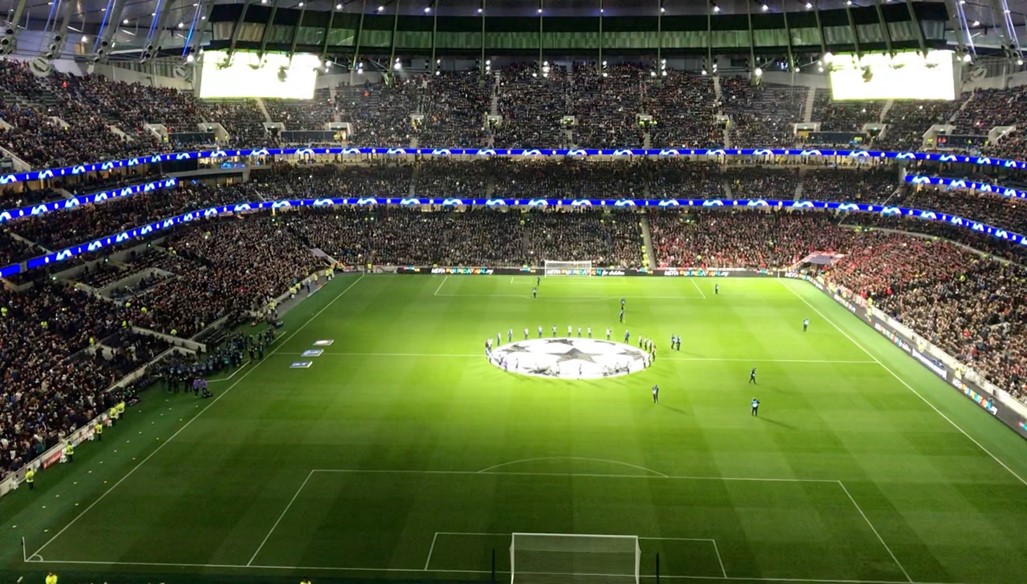
After the match, at the away turnstiles, officers responded quickly to emerging altercations, often stopping them as quickly as they began. Alongside enforcing order, they acted as peacekeepers by separating fans, keeping movement flowing, and giving directions to the underground. I heard only one officer raise his voice and that was directed towards a home fan who was instigating trouble.
Between high-pressured moments, there was clear camaraderie among officers. This was a group of colleagues supporting one another through demanding and sometimes risky work and enjoying working together. I witnessed the aftermath of an officer being struck by a thrown object; he was taken for medical attention and will likely need stitches. It was a stark reminder of the risks the police face.
Policing is a difficult job, and the police do it well. My thanks to the officers I accompanied—for their professionalism, for keeping me informed, and most importantly, for keeping me safe.
Like this? Try a FREE course
-
The business of football
Learn more to access more details of The business of footballIf you are fascinated by men's and women's football and interested in discovering more about business and management, then this engaging and stimulating course is for you.

-
Innovation in policing
Learn more to access more details of Innovation in policingThis free course, Innovation in policing, explores the concept of innovation from the perspective of police and policing. It considers the ways in which innovation can apply in policing and how those working in policing and related fields can become more innovative.

-
Justice, fairness and mediation
Learn more to access more details of Justice, fairness and mediationThis free course, Justice, fairness and mediation, considers the concepts of justice and fairness from various perspectives but mainly focuses on effective policing and community empowerment.

Explore our Policing practice and leadership collection
-
Policing practice and leadership
Learn more to access more details of Policing practice and leadershipGrow your knowledge and understanding of policing with this collection of free learning resources, bought to you by the Department for Policing at The Open University.
Rate and Review
Rate this article
Review this article
Log into OpenLearn to leave reviews and join in the conversation.
Article reviews