

Further learning
Session 1
Something to read
1. Give peace (education) a chance
Peace educators Shelley McKeown Jones, Janet Orchard and Julia Paulson consider the similarities and differences between peace education and the UK’s Prevent programme.
Something to watch
This video, on the Education for Global Peace website, was created by PATRIR (Peace Action Training and Research Institute of Romania). It gives a brief history of peace education in the Global North and revisits many of the concepts you have covered in this session. As you watch, consider how the ideas in the video compare with those you have encountered in this course.
Session 2
Something to read
1. The Museum of Peace at the University of St. Andrews in Scotland has been founded to help people explore and visualise peace. Their website notes that:
We aspire to peace, we idealise it – but we don’t spend as much time exploring and reflecting on it as we do with war.
The website has much to explore, but for now you may find it helpful to explore the section Pockets of Peace, an idea that might be useful as you and your educational community explore what peace means to you.
Something to watch
1. This video from Peacemakers gives an overview of peace education, including an explanation of peace keeping, peace making and peace building:
2. This video about feelings and mindfulness was made for BBC Children in Need in 2021. If the video itself is not suitable for your group to watch, it explains three mindfulness strategies that you might like to share with them.
Session 3
Something to read
1. Page 12 of the report Peace education: making the case contains more information about the peace competencies developed for this report and used in this course.
Something to watch
1. This TED Talk by neuroscientist V.S. Ramachandran explains the concept of the mirror neuron and how it relates to human empathy.
The Neurons that Shaped Civilization
Session 4
Something to read
1. The full version of the United Nations Convention on the Rights of the Child can be found here:
Convention on the Rights of the Child | OHCHR
Further information on UNICEF’s Right Respecting Schools initiative can be found here:
UNICEF’s Right Respecting Schools
2. The UNICEF site includes case studies of Rights Respecting Schools across the UK which can be found here:
Rights Respecting Schools case studies
Something to watch
1. This multilingual video, from UNESCO, contains young people’s reflections and opinions on human rights from 10 countries around the world. It’s a useful starting point for thinking about how rights are understood by young people. As you watch, consider how the young people discuss some of the topics you have encountered in the course so far, and what human rights means to you as a peace educator.
Education for Human Rights… Young People Talking
Session 5
Something to read
1. To support this session, you are recommended to read pages 32–37 of Peace at the Heart. This section offers a valuable overview of peace education as a critical pedagogy.
2. The Oxfam publication Teaching Controversial Issues: A guide for teachers is available as a download from the Oxfam website.
Something to watch
1. Watch this video from Education Scotland where two of the seven Glasgow Girls talk about their experiences of campaigning for better treatment of asylum seekers in the UK.
You can find education resources to support the use of this story in the classroom at Education Scotland . Further resources about the girls’ work can be found on the Educational Institute of Scotland website.
Session 6
Some of these resources require a fee to access.
Something to read
1. For an introduction to the theories and practices of Peace Education:
Positive Peace in Schools (2017) Hilary Cremin and Terence Bevington
2. This is a useful book for middle to senior school managers with chapters written by many leading figures in education and peace about their experiences building peace in schools.
The Peace Education Network is a fantastic resource. It includes the Teach Peace packs for primary and secondary schools
Learning for Peace: A Guide to Developing outstanding SMSC in your Primary School
3. School level book from Peacemakers (also known as West Midlands Quaker Peace Education Project). Includes a toolkit of activities, a whole school curriculum for Peace for the primary age range and activities for five layers of Peace.
4. This book by Kristine Høeg Karlsen and Margaretha Häggström has stories which can be used in peace education.
Teaching through Stories: Renewing the Scottish Storyline Approach in Teacher Education
5. The Peaceful Schools website includes resources to help schools plan their peace journey. They also run a Peaceful Schools Award Scheme.
6. Peer Mediation Network (PMN)
7. How to be a Peaceful School: practical ideas, stories and inspiration (2018) edited by Anna Lubelska.
Something to watch
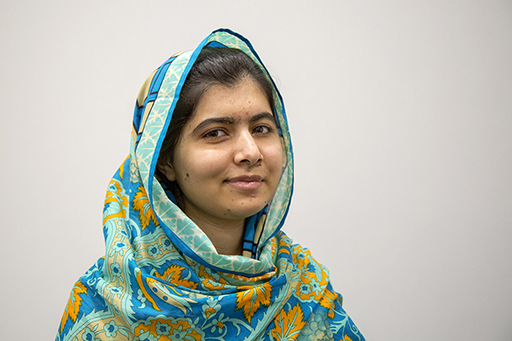
Malala Yousafzai began her activism for girls’ education in 2009 aged 12. Despite being shot for her activism in 2012, Malala continues her activism now, having won a Nobel Peace Prize in 2014. You can watch an interview with Malala Yousafzai on the importance of education: