
The ‘We’re all the same’ approach
A worldview that focuses on assimilation (fitting in) or homogeneity (being the same as others) might downplay the importance of racial and ethnic differences. This approach, often called ‘colour blindness’ or ‘colour evasiveness’, suggests the best way to end discrimination is by treating all children exactly the same, without regard to race, culture or ethnicity.
You may have seen or heard a ‘colour-evasive’ statement before. You will see some examples below.
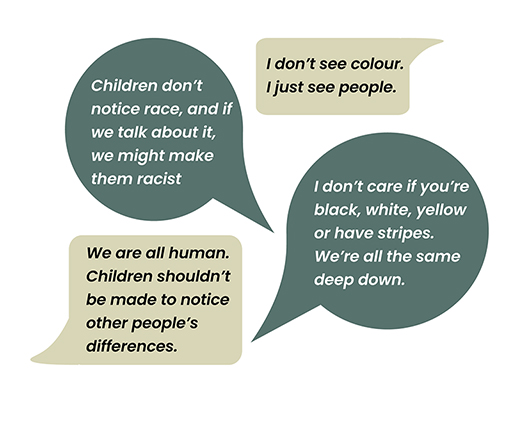
Colour-blindness is a racial ideology that suggests the best way to end discrimination is by treating individuals ‘the same’, without regard to race, culture or ethnicity (Williams, 2011). In this course, you’ll also see this referred to as ‘colour-evasiveness’ as this highlights the active nature of avoiding or evading discussions about race rather than simply not noticing racial differences. In one video, our expert Dr Shaddai Tembo refers to this ideology as ‘colour-avoidance’. All of these phrases refer to the embrace of the idea that ‘everybody is the same’ and therefore racism will disappear if you ignore and never discuss racial differences (Bonilla-Silva, 2013). This worldview often expects children from minority backgrounds to assimilate into the dominant culture rather than celebrating diversity.
While these statements may come from good intentions, this approach can actually harm children from minority backgrounds because it:
- dismisses the lived experiences of children who face discrimination
- ignores the reality that racism affects children’s daily lives
- assumes that not talking about differences makes problems disappear
- can make children feel invisible or unvalued when their identity is ignored
- places the burden on minority children to ‘fit in’ rather than creating inclusive environments.
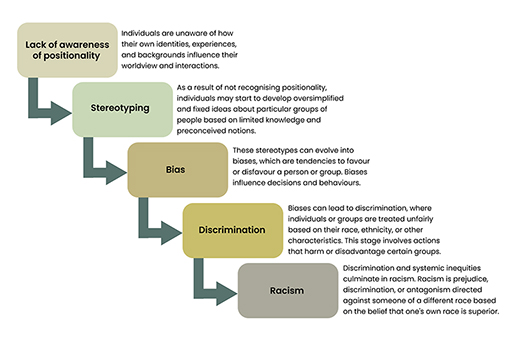
Your approaches and worldview demonstrate why it is crucial to understand our positionality as it is the beginning of recognising the biases you may hold, including those you weren’t previously aware of.
For example, you may hold oversimplified ideas about groups of people that develop into stereotypes. In educational settings, these might include assumptions that certain children are naturally good at maths or sports, or that others come from families who don’t value education. When these stereotypes begin to influence actions, this can be called bias. For example, asking certain children to answer questions more often, having different behaviour expectations, or making assumptions about academic ability based on background.
Holding biases can directly affect children through:
- which children get chosen for leadership opportunities
- how you interpret and respond to behaviour
- the expectations you set for different children
- how you communicate with families.
Biases can lead to behaving in way that negatively impact certain groups. This is called discrimination and is the unfair treatment of individuals based on their race, ethnicity or other characteristics. Children experience discrimination when they:
- are excluded from activities or friendship groups because of their background
- receive harsher punishments than peers for similar behaviour
- have their cultural practices dismissed or forbidden
- are made to feel their family traditions are ‘wrong’ or ‘strange’.
Racism is prejudice, discrimination or antagonism directed against someone based on race, combined with the power to act on those prejudices. Children and young people experience racism through:
- being told they ‘don’t belong’ in certain spaces or activities
- having their achievements attributed to Equality, Diversity and Inclusion (EDI) agendas rather than ability
- facing lower expectations from adults in authority
- experiencing disproportionate discipline or surveillance.
Even very young children notice racial differences and can internalise racist messages from society. You will see in the next session that research shows children as young as 3–4 years old already show racial bias in their play preferences and friendship choices.
Figure 7 summarises how our lack of awareness about positionality can create a harmful progression that ultimately impacts the children and young people you work with.
Reflection prompt
Take a moment to reflect on the following question: Why are our positions important when understanding race and racism?
Consider how your own positionality affects your understanding of the key concepts you have discussed. How does recognising your own biases and assumptions help you better support and work with racially minoritised children and young people?