
3 Applying positionality in practice
Understanding positionality involves ongoing reflection and learning. Both practitioners and parents can use this awareness to inform their interactions with children and young people, adapting their approaches to be more inclusive and sensitive to each child’s unique background. This reflective practice helps in building strong, trusting relationships with children, making them feel seen, heard and respected.
In practice, this means continuously examining how our identities, cultural influences, biases and power dynamics shape our interactions. For example, when planning lessons, activities or family routines, consider how different cultural perspectives can be integrated and how to provide equitable opportunities for all children.
To see how this reflective practice works in real professional contexts, you’ll now hear from thecourse experts who will share how their own positionality shapes their work with children and young people.
You will now be introduced to the experts for this course. In the following video, Dr Shaddai Tembo, Dr Siya Mngaza and Frances Akinde introduce themselves and their roles, sharing their experiences and how their positionality informs their work. While listening to each of the experts describe their different positionalities, you’ll hear how varied backgrounds and experiences lead to different insights and approaches to working with children and young people.
Activity 4 Learning from experts and action planning
Task 1 Expert insights
Watch the video where Dr Shaddai Tembo, Dr Siya Mngaza and Frances Akinde introduce themselves and discuss their positionality and work.
As you watch, note down the answers to the following questions:
- How do their backgrounds influence their approaches to working with children and young people?
- What specific examples do they give of adapting their practice based on their positionality?
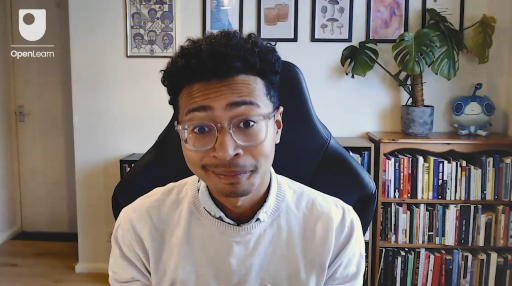
Transcript: Video 2 An introduction to the experts
SHADDAI TEMBO
So, like most men working in the early years, this wasn;t my first choice career. I actually failed my A-levels when I was 17 and had to drop out. So I was left with the decision of an apprenticeship in catering or childcare. Fortunately, I chose the latter and never looked back.
But as part of the early stages of my career, I was doing a lot of work around gender identity and the role of men within the early years. All of that culminated several years ago now in the Bristol men in early years network conference, where we got to a point within the sector where conversations about gender identity amongst profession were much more commonplace and happening on a broader scale.
However, I also felt that conversations about race and racial identity were being missed off the agenda a little bit. So it was at this time that I undertook my master’s research looking at the role of Black educators in early childhood settings.
Really that was reflecting on my own identity and my own professional experience working in nursery settings. I felt that as I said earlier, a of the conversation around gender identity was there, and we knew a lot about the role of men working in the early years.
But there were still questions around racial identity and what it means to be a Black educator, particularly working in more predominantly white settings. So as part of my master’s research, I did some qualitative data analysis on interviews with Black educators working across the UK in nursery settings.
And for me, that was incredibly insightful to understand their experiences of what it was like to be a Black and minoritised educator working in the early years. I guess from then, I’ve gone on to speak lots more about race and racism in young children’s lives linked to a social justice approach more broadly.
I guess that’s something that I’m still working on today in terms of my practice, but also my teaching. Trying to implement a more racially aware lens for practitioners to understand the effects of racism in the early childhood profession.
SIYA MNGAZA
Hi, Mel. I am an educational and child psychologist and I’m also a lecturer on a training course in educational psychology. So I’m based across London and Birmingham. I’m one of these people that tries to split themselves into many different pieces, and being at lots of different places at lots of different times.
Yeah, of course. So I work in educational psychology. And I suppose for me, working in educational psychology was a marriage of two of the areas that I’m quite interested in. So education and psychology.
I didn’t know that the role of an educational psychologist existed until quite late in the game. But what I did have was some experiences of working with young people who had been othered in some way, through either the education system or the support systems that they came into contact with.
So I’d worked as a teacher in a pupil referral unit. So that’s a school where children who’ve been permanently excluded from mainstream education go to get an education. So I worked as a teacher in a pupil referral unit. I’d also done some work with children with complex disabilities around-- it was a playworker. It was a really fun job.
And then I’d done some reading tutoring for children who had dyslexia with a literacy charity as well. And so I knew that I liked working in education, but I knew that it wasn’t necessarily a traditional teacher role that I wanted. And I’d done this degree in psychology. And then I realised that I could marry those up through the role of being an educational psychologist.
So I was really excited when I found out about the kind of career path. And I suppose the reason why racial identity and race became something that I’m really interested in, A, because of my own experiences and the experiences of my community through the education system.
I’m from an African and Caribbean background. Mum’s from Jamaica, dad’s from South Africa. So there were things around my own experiences of education that became important. But I was also very, very, very aware when I was working in these roles prior to doing my training in educational psychology that it was the children with compounding identities.
So children with special educational needs and disabilities or additional educational needs who were also Black or who were also from a global majority community who seem to have a really difficult time navigating.
And so I knew that I wanted to use my training in educational psychology as an opportunity to, I suppose, honour those experiences and give something back. So I went into my training with that sort of interest, and I did a placement in a really rural area whilst I was training.
And I ended up doing a thesis whilst I was training on the ways in which young Black people experience a sense of belonging when they attend predominantly white school settings. And so through that research, I had the wonderful opportunity of speaking to young people about their experiences, understanding the very sophisticated ways that they were developing a sense of belonging when they experienced challenges in predominantly white settings.
But because I was doing my psychological training, I was also learning a lot about racial identity development. I came across Cross’s model of racial identity development, and it was like a whole world opened up for me.
So I was learning about the psychology of Blackness. But I was also putting that research into practice with my own thesis. And so that grounding really gave me a foundation upon which to grow my interest in racial identity development and psychology.
FRANCES AKINDE
Hi. My name is Frances Akinde. I am an inclusion consultant specialising in intersectionality, race, and SEND. I am also a local authority inspector and advisor looking after special schools for a large local authority and generally giving advice around inclusion.
So I started my career in education as an art and design teacher and quickly moved into alternative provision, working with children with SEND. I trained up as a SENCO and mainly due to the experience I had supporting my own children.
So I ended up as a head teacher in a special school for learners with autism and associated difficulties. And I love school improvement. But I found it quite difficult working within the confinements of an academy.
I experienced some things there that weren’t so positive, but I wanted to stay within inclusion and school improvement. So the opportunity came up for me to become an inspector and advisor and also work within consultancy.
And within my last year of headship, I kind of built that up by going to conferences, doing articles, just really creating a network for myself and making some really, really good connections that really supported me with my transition out of school leadership and into consultation.
I think the area that I was in is not known to be a really inclusive area. And I think they were hoping that I would be this person that maybe changed the narrative a little bit around racism in that area. But they just weren’t ready for me at all. That I was a bit too open about my experiences.
And I was a bit too vocal around the importance of anti-racism in schools. And I just think in predominant white areas, sometimes they can find that really challenging. But I think the pivotal moment for me was when one of my students passed away. I had two students that passed away in the same year.
One was a white girl, absolutely wonderful girl. And the thing is, working within education, especially special education, when you work in specialist provisions, you do have a higher number of pupils that unfortunately have life-limiting conditions.
The first student, she was in care, very well looked after. Everything was found to be natural circumstances, no issues. The second pupil, I knew that there hadn’t been enough done to support him. He had autism. And as a Black student from a Nigerian family, they just found it really hard to access support.
And unfortunately, he didn’t get the support he needed-- his family didn’t get the support they needed to keep him safe. So unfortunately, he lost his life just after Christmas in January 2021.
That led me on a journey of really advocating for children, especially Black children, and talking about their experiences and their intersectionality between race and SEND because we see an overdiagnosis of SCMH within Black Caribbean boys in particular, but an underdiagnosis of underlying speech and language needs and things like that. So that was really the push that I needed just to fight and just to raise awareness of issues around intersectionality, race, and SEND.
Task 2 Applying to your practice
Drawing on insights from the expert video and your learning in this session, think about your current role working with children and young people. For each area below, identify one specific action you could take.
Recognising bias
- How will you monitor your own responses to different children?
- What systems could you put in place to check your assumptions?
Challenging discrimination
- How will you respond when you witness unfair treatment?
- What support do you need to feel confident intervening?
Creating inclusion
- What changes could you make to ensure all children feel valued?
- How could you better involve families from diverse backgrounds?
Promoting equity
- Where might children need different types of support to achieve similar outcomes?
- How can you ensure your expectations are equally high for all children?
Reflect on the insights shared by the experts and make notes about how their positionality influences their professional practice.
Discussion
The experts in the video demonstrated that understanding their own positionality directly influences how they approach their work with children, families and communities.
Your action plan represents your commitment to examining how your own worldview currently affects your interactions with children and young people. Whether you focused on recognising bias, challenging discrimination, creating inclusion, or promoting equity, you’ve identified concrete ways to put your learning into practice.
Remember that implementing these actions may feel uncomfortable at times. This discomfort often signals growth and learning. Start with small, manageable changes and build from there. The key is consistency in reflection and willingness to adapt your approach as you learn more about yourself and the children you work with.
The experts’ examples show that this work is ongoing; there’s no point where you ‘finish’ understanding your positionality. Each new child, family and situation offers opportunities to deepen your awareness and improve your practice.
Reflection prompt
Take a moment to reflect on what you’ve learned in this session.
How has understanding your positionality and its influence on your worldview changed the way you think about race, bias and discrimination?
Consider how these insights can help you develop more inclusive and equitable interactions with children and young people in your personal and professional life. Continue to review and update your notes on the specific actions you can take to apply this understanding moving forward.