
5 Case studies and practical applications
As you move forward in your practice, remember that supporting children’s positive racial identity development requires both individual awareness and institutional commitment. Early intervention and informed responses can make a significant difference in a child’s sense of self and wellbeing.
In this section, you’ll explore the story of Joshua, a four-year-old boy navigating complex feelings about his racial identity within a multicultural nursery setting. This case study highlights the influence of early socialisation on racial development, the impact of racial remarks, and the crucial role that Early Years educators play in supporting children’s understanding of race and identity.
This case study involves a young child experiencing racial bullying and anxiety. Some may find the content upsetting. This reflects real situations that practitioners may encounter.
Activity 5 Joshua’s story: a case study analysis
In this activity, you will analyse a real-world example of how racial identity development can be affected by peer interactions and institutional responses in Early Years settings. You’ll watch Joshua’s story, then analyse the key issues and responses using what you’ve learned in this session.
Task 1 Joshua’s story
You’ll explore the story of Joshua, a four-year-old boy of Black Caribbean and White British heritage. His experience shows how quickly racial identity issues can affect young children and highlights the crucial role that Early Years educators play in supporting or undermining children’s positive racial identity development.
Watch Joshua’s story.
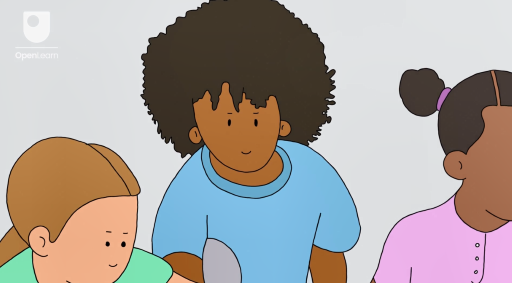
Transcript: Video 1 Joshua’s story
NARRATOR
Joshua is a four-year-old boy who attends nursery three days a week. He is of dual heritage, Black Caribbean and white British. He has dark-brown curly Afro hair and golden skin. He has attended a multicultural nursery since he was one years old. He had previously made close friends with two other Black boys who were from Nigerian and Mauritian heritage respectively. However, he was friendly with many other children of diverse ethnicities throughout the nursery.
Joshua is an energetic, fun-loving boy who loves cars, trains, and action heroes. However, he also likes to roleplay and sit quietly to paint or draw. After his two close friends left to go to school, Joshua began to have anxiety attacks at nursery, and became reluctant to attend the nursery.
At home, Joshua began to ask questions about his skin colour. He asked his father, who is Black, why his skin was darker than his brother’s, his mother’s, and his own skin. He began to worry that his skin would get darker, like his father’s. He also asked if there was some way he could get his hair to be straight and a lighter colour.
His mum and dad asked him why he was wondering about questions like this. He told them that there was a boy with yellow hair and white skin in his class who wouldn't be friends with him because his skin was too dark. Joshua’s parents became very concerned, as they had worked hard to celebrate the different cultures his family are part of. He regularly sees both his maternal and paternal grandparents, and has family friends of different ethnicities. In the house, he has access to a variety of books and cultural artefacts.
Joshua’s parents spoke with his key worker at the drop-off. His key worker was shocked, and stated that she'd never heard any of this type of conversation between the boys. However, she had noticed that Joshua was playing with the girls more, since his close friends had left the nursery. They were playing games like doctors, and nurses, and teachers. The key worker had noticed that the other boys had shown disappointment that Joshua wasn’t playing with them anymore.
After this, Joshua seemed OK for a while, until he began having anxiety attacks again. Joshua came home one day and said two boys had held him against the wall, and had told him that his skin and hair were ugly. Joshua also shared that the children had tripped him up on purpose. When his mother and father asked him whether he had told an adult about his experiences, Joshua said no, that he didn’t feel able to.
Joshua’s parents decided to schedule a meeting with the nursery’s manager, as they were concerned about the physical nature of this issue. In the meeting, the nursery minimised the incidents, stating that boys will be boys, and that children fall out all the time. Joshua’s key worker stated that they were doing work with the class focused on kind hands and kind words. The nursery did not say anything about the racialised nature of the incidents. After the meeting, Joshua’s parents decided to remove Joshua from that nursery.
Task 2 Initial reflection
1. How did you feel while watching Joshua’s story?
- Note your emotional reactions.
- Consider what aspects were most concerning to you.
Discussion
Many may feel anger at the nursery’s response, sadness for Joshua’s distress, and concern about how quickly his self-perception changed. These reactions highlight how deeply racial incidents affect both children and the adults who care about them.
2. What were the key turning points in Joshua’s experience?
- When did things start to go wrong?
- What made the situation worse?
Discussion
Joshua’s problems began when his close friends left, leaving him vulnerable to exclusion. The situation escalated when adults failed to recognise and address the racial nature of the incidents.
Task 3 Analysing the influences and responses
1. Who were the main influences on Joshua’s racial identity development in this story?
- List the different people who affected Joshua’s understanding of himself.
- Consider both positive and negative influences.
Discussion
Joshua’s problems began when his close friends left, leaving him vulnerable to exclusion. The situation escalated when adults failed to recognise and address the racial nature of the incident
2. What strategies did Joshua’s parents use to support his racial identity?
- What did they do well?
- What challenges did they face?
No comment for this one?
3. How did the nursery staff respond to the situation?
- What did they do when concerns were first raised?
- How did they handle the escalated incidents?
- What was missing from their response?
Discussion
The nursery’s response shows several concerning patterns including minimising racial incidents as ‘normal’ childhood behaviour, failing to recognise the specific harm of racial bullying, and not implementing appropriate interventions.
Task 4 Expert analysis
You’ll now hear from Dr Shaddai Tembo, our expert in Early Years practice, as he reflects on the key issues raised by Joshua’s case study.
Watch the video now.
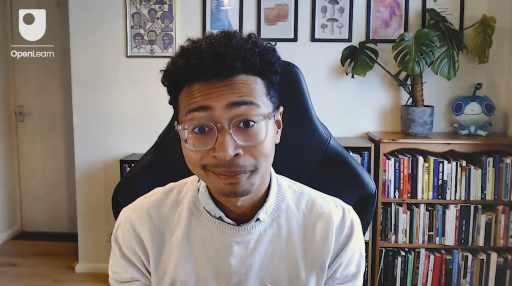
Transcript: Video 2 Analysis of Joshua’s story
SHADDAI TEMBO
We know from the research that, certainly amongst practitioners, the narratives of colour avoidance, where we don’t need to be discussing children's awareness of racial difference, are quite commonplace. But this case study is a really good example of how race really features in quite a fundamental way to Joshua’s early friendships. It seems quite important for him in those early years that he’s being drawn to children with a similar skin colour to him, which can be really important in developing and maintaining his own sense of a stable racial identity.
We talk a lot about attachment theory between the primary caregiver and the child. But in this context, there’s a real good attachment that seems to be happening with Joshua and his friends until they leave, of course. I think that’s really important to remember, how fundamental and important children’s peer cultures and peer friendships can be in maintaining their own sense of self-identity in a positive and affirming manner. Children are, of course, already well aware of differences from a really young age. So it’s great to see that Joshua was supported in his home environment but, of course, disappointing to see that that wasn’t carried through in the nursery.
I think really here, it’s important that the setting does take a bit more responsibility in supporting Joshua to maintain a positive sense of self. I also think that the parents of other children within that setting also have a responsibility, particularly when their children are less likely to understand and reflect on their own racial identity. They also have a responsibility to talk with their children about difference, about people who look different to them, and the value of being kind and perhaps challenging those broader stereotypes that we might see in the media about Black and minoritised people. So really, we’re thinking here about the responsibility of practitioners but also parents of all children within the setting to support that early socialisation of children’s positive racial identities.
In terms of the short-term effects on Joshua’s racial identity then and his sense of self-esteem and wellbeing, I think it’s very likely to evoke feelings of shame, of Joshua not feeling like he’s good enough insofar as he doesn’t have lighter skin or straighter hair like other children. That can therefore lead to poor feelings of self-esteem and ultimately an internalisation of these norms that he’s different and not as good as the other children.
It can often lead to a really poor and kind of reclusive kind of attitude about these sorts of issues, where Joshua might feel afraid to speak out in certain situations. It could affect his confidence and his ability to engage in an outward going manner with other children. All of this can lead to a long-term sense of racial trauma, I think, and a really internalised feeling of poor self-worth because of the racism that he’s experienced in his early life experiences.
Potentially, it could lead to a lack of wanting to engage academically. He might think that schooling isn’t for me because I’m bullied all the time, because I’m led to feel like I’m worthless. I think that’s a real long-term implication that we need to be aware of.
Practitioners would already be well versed on supporting children’s personal, social, and emotional development. I think there’s a real need to understand that through a racialised perspective and understand how young children come to develop their own sense of racial awareness and begin to notice difference in themselves and others. So we know from the research that from as young as three months old, babies tend to look at faces from their own familiar racial group of their primary caregiver compared to those from other different racial groups.
That differentiation only improves with age. So from around one to two years, children begin to use racial difference and skin colour and physical facial feature differences to differentiate themselves and others. As they begin to play together, they use those markers to create in-groups and outgroups in their play practices.
Actually, by the time that they’re three or four years old, research has shown that children of all races tend to hold pro-white biases in terms of peer friendships but also preferences for resources. And the doll test is a famous experiment of that that, I think, carries a lot of salient consequences even in today’s understanding of children’s play practices. So certainly training but with a specific racially aware focus for me is really important. What we’re trying to do here is ask educators to become more attuned to these sorts of issues in young children’s lives.
We can often come up against colleagues who are less willing to engage and more hesitant for a number of different reasons. So including the whole staff team can be really important in creating that holistic understanding. The ways in which you can do that is just by beginning slowly in your everyday practice to raise those questions about race and difference.
Begin to have those conversations. And begin to develop an open culture where it feels comfortable to have conversations about what it’s like to discuss race and racism with young children. These can be small, micro moments where it’s really important for practitioners who perhaps aren’t aware of these sorts of issues to begin to think about the nature of racial difference in young children’s lives. So certainly, having that training around the young children’s racial identity development and how that works from a young age but also ensuring that all practitioners within the setting are on board and feel confident to speak about how these sorts of issues play out with young children can be really, really important.
Parents are the first educators of children. So we know that they have such a significant responsibility in promoting their own child’s positive sense of racial identity. I suspect there’ll be lots of parents listening to this conversation now and reflecting on the training materials. They have a real responsibility to call out and call in their settings and really hold them to account with regards to the work that they’re doing.
They can be useful resources. So perhaps settings are a little bit unsure about what to do, what to say, what language to use. Parents and carers can be proactive in having those conversations with their nursery settings and ensuring that their child is supported with regards to their racial identity development in the home but also in the nursery environment.
Another thing that parents can do perhaps is talk to other parents, build those coalitions and those communities. It’s very likely that if you are living in the same community you might be facing similar issues with regards to the broader political context and what’s happening going on in that community safe space.
So building those coalitions, having those conversations with other parents. What sorts of issues are you experiencing with your young child? Are you seeing the same sort of thing? That can be really useful.
And it can often help those interactions between children. Because when the children’s parents are aligned on the importance of discussing difference, that can feed down into young children’s play practices. And perhaps there’s comments that they might have received from media or even parents or other adults in their lives might be mitigated against if parents are actively having those conversations with young children about the value of inclusivity.
I think that’s particularly important for parents of white children too. A lot of people and families can think that we’re all white here. Therefore, we’re all right here. And we don’t need to have these sorts of conversations.
Actually, it’s even more important for those families that they have those discussions about race and difference and people who are different to them within the world and ensure that they are supported to be proactive with those sorts of conversations. It can ultimately mitigate and challenge the racism that we might see in nursery environments, leading to all sorts of things in terms of poor self-esteem, poor confidence, and negative wellbeing that we discussed earlier with regards to Joshua.
1. What key strategies does Dr Tembo highlight?
- Note the specific approaches he recommends.
- Consider which concepts are new to you.
Discussion
Potential key strategies from Dr Tembo’s analysis:
- Training practitioners to be ‘racially aware’ rather than just following general equality guidelines.
- Including whole staff teams in anti-racism conversations, not just individual practitioners.
- Creating formal anti-racist policies and manifestos that outline specific actions.
- Making time for structured parent–practitioner conversations about race (coffee mornings, evening sessions).
- Using resources meaningfully – not just having diverse books but actively discussing difference, fairness, and unfairness with children.
- Taking an intersectional approach that considers both race and gender dynamics.
2. How do Dr Tembo’s concerns align with your own reactions to Joshua’s story?
- What did he identify that you missed?
- What solutions does he suggest?
No comment for this one?
Task 5 Application to practice
1. If you were Joshua’s key worker, what would you have done differently?
- Consider early intervention strategies.
- Think about environmental and policy changes needed.
Discussion
You may have suggested that you’d:
- recognise the racial significance of Joshua losing his close Black friends due to the loss of crucial racial identity support
- actively facilitate new friendships with other children from diverse backgrounds, not just accept the gender segregation
- document and report the racial comments from other children as serious incidents requiring intervention, not dismiss them
- engage in meaningful conversations with Joshua about his feelings regarding his appearance and identity
- work proactively with parents from the start about supporting racial identity, not wait for problems to arise
- challenge the ‘boys will be boys’ attitude from management and advocate for proper anti-racist responses
- ensure diverse books and resources are used actively in conversations about difference, fairness and identity
- create opportunities for all children to learn about and celebrate different cultures and appearances.
2. What policies or practices in your setting might need reviewing based on Joshua’s experience?
- For practitioners: Consider recording procedures, staff training, parent communication procedures.
- For parents: Think about home conversations, advocacy strategies, support networks.
Discussion
You may have suggested the following:
For practitioners
- Incident recording systems that specifically capture racial elements (not just treating them as general ‘behaviour issues’).
- Staff training on recognising racial dynamics in children’s play and interactions.
- Parent communication protocols that create structured time for discussing racial identity support.
- Anti-racist policies that go beyond general equality statements.
- Resources audit – ensuring diverse materials are used meaningfully, not in a tokenistic way.
For parents
- Daily conversations about race and identity at home (not waiting for problems to arise).
- Building relationships with other families who share similar experiences.
- Advocacy skills for challenging settings when they minimise racial incidents.
- Home environment review: look to include books, toys and media that support positive racial identity.
- Support networks – connecting with other parents facing similar challenges.
3. How might this experience inform your future practice?
- What specific actions will you take?
- What support might you need to implement changes?
Discussion
Consider these potential actions based on your role:
For practitioners
- Seek additional training on racial identity development and anti-racist practice.
- Advocate for policy changes within your setting or organisation.
- Build relationships with families from diverse backgrounds to better understand their experiences.
- Create opportunities for peer learning and discussion about race with colleagues.
- Develop confidence in having conversations about race with children and parents.
For parents
- Start or continue regular conversations about race and identity at home.
- Research and connect with support networks for families with similar experiences.
- Advocate more assertively when settings don’t respond appropriately to racial issues.
- Review and expand home resources (books, toys, media) that support positive racial identity.
- Build relationships with other families to create community support.
For all learners
- Recognise that supporting children’s racial identity development is ongoing work, not a one-time conversation.
- Understand that both individual and institutional changes are needed for lasting impact.
Joshua’s story demonstrates several critical concepts:
- Early vulnerability: Children’s racial identity can be damaged quickly when they lose supportive peer relationships.
- Institutional responsibility: How settings respond to racial incidents significantly impacts outcomes.
- The inadequacy of ‘colourblind’ approaches: Treating racial bullying as ‘normal’ childhood conflict fails to address the specific harm caused.
- The importance of proactive support: Early Years practitioners need specific training to recognise and respond effectively to racial identity issues.
In the next session, you will reflect on your own practice and consider concrete next steps for creating racially inclusive environments in both home and educational settings. This will help you apply the insights from this session to your professional or personal context and identify areas for further growth.