
1.1 The role of external influences
While children’s internal thinking develops rapidly at this stage, external influences become equally powerful. Friends, schools and the media all begin shaping how children understand racial differences.
Friendships, especially with children of the same race, can play a strong role in shaping a child’s sense of identity (Jugert, Leszczensky and Pink, 2020). By around age eight, children spend an average of two hours a day watching television (Chassiakos et al., 2016), where the characters and stories they see can either reinforce or challenge racial stereotypes.
Reflection prompt
Think about the media children in your care engage with. Include TV shows, YouTube, video games, books and so on.
What messages about race and identity do you think they might be picking up?
Are these messages positive, neutral or harmful?
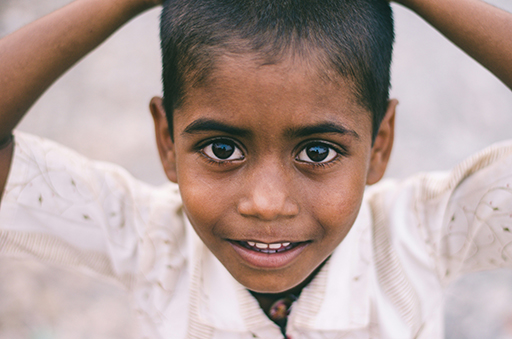
Consider Arjun, a seven-year-old boy of South Asian heritage. At his school, Arjun loves engaging in role-playing games with his classmates, where they act out stories involving superheroes and villains. However, as he has gotten older, Arjun has noticed that his classmates consistently assign him to play the role of the ‘baddie’ or the ‘shadow’, while children with lighter skin are chosen to be the ‘heroes’.
When Arjun asks why he always had to be the shadow or the villain, his classmates reply, ‘Because your skin is darker, and the baddie always has to hide in the dark. That’s how it is on TV’. The comment makes Arjun keenly aware of his skin colour in a negative way. Over time, this dynamic in their games begins to affect how Arjun views himself. He started to associate his darker skin with the idea that he was somehow ‘less good’ than his friends with lighter skin.
What you might see at home or in your setting
Changes in play: Arjun might stop suggesting superhero games or seem reluctant to join in when others initiate them.
Questions about appearance: He might ask questions like ‘Why is my skin this colour?’ or make comments about wanting to look different.
Withdrawal: You might notice him becoming quieter or less confident, especially around certain activities or children.
Sleep or mood changes: The impact on his self-image might show up as nightmares, reluctance to go to school, or general sadness.
If you’re Arjun’s teacher or practitioner
In the moment: Address the comment directly but calmly: ‘Actually, heroes come in all colours. What makes someone a hero is how they help others, not what they look like.’
Follow up privately: Check in with Arjun individually to reassure him and validate his feelings.
Create learning opportunities: Use books, films or discussions that showcase diverse heroes and positive role models.
Monitor peer dynamics: Pay attention to how roles are assigned in play and gently redirect when patterns emerge.
If you’re Arjun’s parent or carer
Listen without minimising: If Arjun shares his experience, avoid saying ‘just ignore them’ or ‘it doesn’t matter’. His feelings are valid.
Affirm his identity: Share positive stories about your heritage, celebrate cultural heroes, and help him see his background as a strength.
Communicate with school: Let his teacher know what’s happening so they can address it in the classroom.
Build his confidence: Encourage activities where he can excel and feel valued for his unique qualities.
This situation shows how children as young as seven can absorb and act on racial messages from media and society. While the children’s comments weren’t meant to be cruel, they reflect deeper patterns that can seriously impact a child’s developing sense of self.
Reflection prompt
Have you noticed similar dynamics in play or social interactions among the children you work with or care for?
How might you respond if a child made similar comments about skin colour and character roles?
What positive representations of diverse heroes and role models are available in your setting or home?
Activity 1 Stages of racial identity development in the primary years quiz
a.
Two years old
b.
Three years old
c.
Four years old
d.
Five years old
The correct answer is b.
Discussion
By age three, children notice who appears most frequently in books, television, films, and leadership positions around them. They begin linking positive traits with the majority racial group because these groups are more often shown as heroes, leaders, and main characters.
a.
Logical thinking and cognitive development
b.
Exposure to media and social interactions
c.
Peer group influence
d.
All of the above
The correct answer is d.
Discussion
Primary-age children experience multiple developmental changes simultaneously. Their thinking becomes more logical, allowing them to categorise and make connections about social groups. They’re exposed to more diverse media and social situations. Meanwhile, peer friendships become increasingly important, and children begin to notice social hierarchies. All these factors work together to shape their understanding of race and identity.
a.
Their exposure to diverse cultural environments
b.
Their increased cognitive ability to process social cues
c.
Their interactions with family members only
d.
Lack of interest in social relationships at this age
The correct answer is b.
Discussion
The key change during this period is children’s growing ability to notice and interpret subtle social messages about race. They become better at picking up on tone of voice, body language, who gets included or excluded, and how different groups are talked about. This cognitive development allows them to absorb racial attitudes from their environment, even when these messages aren’t explicitly stated.
4. How do peer interactions at this age contribute to a child’s developing racial identity?
Discussion
Peer interactions are crucial because children this age are learning social rules about belonging and acceptance. Friends can either reinforce racial stereotypes through exclusion, comments, or role assignments (like in Arjun’s story), or they can promote inclusion through diverse friendships and fair play. When children experience racial rejection or stereotyping from peers, it can lead to internalised negative feelings about their own identity. Conversely, supportive and diverse peer groups help children develop pride in their background and empathy for others.
a.
True
b.
False
The correct answer is a.
Discussion
Unlike younger children who mainly notice physical differences, primary-age children start to understand that race isn’t just about how someone looks. It’s about how society responds to those differences. They begin to grasp concepts like group membership, social rules about race, and the fact that racial categories carry different social meanings and consequences.
a.
They begin to ignore physical differences between people
b.
They start to recognise societal hierarchies and stereotypes
c.
They focus solely on cultural identity
d.
They lose interest in social interactions
The correct answer is b.
Discussion
This is a critical developmental milestone. Children begin to notice that society values some racial groups more than others; they see who gets to be the heroes in stories, who holds positions of authority, and whose experiences are centred in their environment. This recognition of social hierarchies, even when unconscious, forms the basis of their developing racial attitudes and can significantly impact their self-concept and relationships with others.
a.
True
b.
False
The correct answer is a.
Understanding these developmental patterns helps you recognise when children might be internalising harmful messages and gives you tools to intervene supportively, just like you saw needed in Arjun’s situation.
Now you’ll explore the specific influences that shape this process and how you can work with them constructively.