
2.4 Media
Media representations significantly influence children’s understanding of race and identity. Positive portrayals can foster inclusivity and self-esteem among racially minoritised children, while negative depictions may reinforce stereotypes and feelings of marginalisation.
Positive media representations
The versions of these two images are really small. We think the best thing would be to take a screen grab from the video itself. Please can you let us know which episodes these two images are from or alternatively pick an episode and pick a time frame for an image?
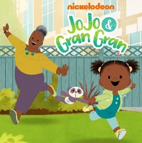
‘JoJo & Gran Gran’ (CBeebies): This animated series centres on a young Black girl, JoJo, and her St Lucian grandmother, Gran Gran. It celebrates family, Caribbean culture and everyday life, offering positive representation for Black children. Creator Laura Henry-Allain advocates for more culturally rich children’s stories, urging publishers to support diverse narratives.

‘Nikhil & Jay’ (CBeebies): Another animated series which follows two British Asian brothers exploring their cultural heritage through family traditions, festivals and daily life. It positively reflects South Asian culture and promotes understanding of multicultural family experiences.

CBeebies presenters discussing the racial and cultural heritage: CBeebies presenter Ben Cajee openly shared his experiences of being mixed race, introducing age-appropriate conversations about diversity and identity. This normalises discussions on race for young viewers.
Books and literature
- Patrice Lawrence’s novels (such as Orangeboy and Indigo Donut): British author writing contemporary stories featuring Black British teenagers.
- Malorie Blackman’s works: Former Children’s Laureate whose books like the Noughts and Crosses series tackle race directly while Pig-Heart Boy shows diverse characters in other contexts.
- Muhammad Khan’s books: British Pakistani author writing stories that reflect British Muslim experiences for young readers.
Negative media representation
Some shows have historically reinforced harmful stereotypes, like the ‘smart Asian’ or the ‘strong Black athlete’, limiting how children view themselves and others. A lack of diverse characters in children’s media can lead to feelings of invisibility among racially minoritised children and may negatively impact self-esteem and the sense of belonging.
What parents and practitioners can do
- Actively seek out programmes and books with diverse, positive representation.
- Discuss media choices with children: ‘What do you notice about the characters in this story?’
- Use positive examples like those above to counter stereotypical representations.
Beyond media, sociopolitical movements have a profound impact on how children understand race. Rogers et al. (2021) found that events like the Black Lives Matter missing from glossary movement have influenced how Black and multi-racial children articulate their racial identities. These societal shifts have empowered many children to express pride in their racial backgrounds and to become more socially aware.
Children absorb messages not just from entertainment, but from news coverage, social media (even when filtered through adults), community conversations, and social movements that shape how race is discussed in society.
Activity 2 How do children internalise cues from various influencers?
Task 1 heading needed
Below are six key concepts that explain how children internalise cues about race from their environment. Your task is to drag and drop each description to match the correct title.
Using the following two lists, match each numbered item with the correct letter.
-
Words used about race shape children’s attitudes – positively or negatively.
-
TV, books and games influence how children view different racial groups.
-
Unspoken actions signal what is acceptable or taboo about race.
-
Friends’ actions and comments can reinforce stereotypes or inclusion.
-
Approval or disapproval teaches children which behaviours are accepted.
-
Children copy how adults and peers interact with people of different races.
Match each of the previous list items with an item from the following list:
a.Language and labels
b.Peer influence
c.Observations of the behaviours of others
d.Media representation
e.Social reinforcements
f.Implicit messaging
- 1 = a,
- 2 = d,
- 3 = f,
- 4 = b,
- 5 = e,
- 6 = c
Task 2 Identifying influences in real situations
Read each scenario and identify which influences are shaping the child’s understanding of race. Remember, multiple influences often work together.
Scenario 1: Seven-year-old Zora is excited about her new trainers, but during PE, a classmate says, ‘My dad says people like you get everything for free’. Other children start asking Zora if her family ‘doesn’t pay for things’. The PE teacher hears this but continues with the lesson without addressing the comments.
Which influences are at play here? How might different adults have responded differently?
Discussion
Influences at play
- Language and labels: The classmate’s father used specific language about ‘people like you’, showing how adult conversations shape children’s vocabulary about race.
- Peer influence: Other children joining in with questions amplifies the impact.
- Implicit messaging: The PE teacher’s silence signals that these comments are acceptable.
- Social reinforcements: Lack of intervention reinforces the stereotype about economic dependency.
How different adults could respond
- PE teacher: Address immediately: ‘That’s not accurate. All families work hard for what they have. Let’s focus on our lesson.’
- Class teacher: Follow up with education about assumptions and stereotypes.
- Parents: Validate Zora’s feelings, communicate with school, help her understand the stereotype is false.
Scenario 2: During story time, ten-year-old David notices that in all the adventure books his class reads, the brave explorers and scientists are white men, while characters who look like him appear only in books about slavery or poverty. He stops volunteering to read aloud and asks his teacher, ‘Do people like me invent things and go on adventures?’
Identify the influences. What control do different adults have over this situation?
Discussion
Influences at play
- Media representation: Curriculum choices showing limited diversity in adventure/science roles.
- Observations of behaviours: David notices patterns in who gets to be heroes versus victims.
- Language and labels: His question ‘Do people like me...’ shows he’s categorising by race.
- Implicit messaging: Book selection sends messages about whose stories matter and who can be adventurous.
How different adults could respond
- Teachers/librarians: Actively diversify reading materials and highlight diverse inventors/explorers.
- Parents: Can provide counter-narratives and advocate for inclusive curriculum.
- School leadership: Can ensure the inclusion of diverse representation in learning opportunities and the curriculum.
Scenario 3: Nine-year-old Priya loves art, but when she wants to create a family paper portrait, there is no paper that is the right colour for her family’s brown skin. She asks for the different colour paper and her teacher tells her to ‘use what is there’. Priya starts using the peach-coloured paper for all her family portraits, even though it doesn’t match their actual skin tone.
Which influences are shaping Priya’s behaviour? How could adults intervene?
Discussion
Influences at play
- Implicit messaging: Limited art supplies suggest her skin tone isn’t ‘normal’ or expected.
- Social reinforcements:: Teacher’s ‘use what’s there’ response reinforces that her needs aren’t priority.
- Observations of behaviours: Priya learns that asking for inclusion gets dismissed.
- Language and labels: The assumption that peach represents ‘normal’ skin colour.
How different adults could respond
- Teacher: Provide diverse art materials, explain why representation matters.
- School: Audit resources for inclusivity, ensure diverse skin-tone options are standard.
- Parents: Discuss the importance of accurate self-representation, advocate with school.
Reflection prompt
After completing the activity, reflect on which influences you think are most powerful in shaping a child’s understanding of race. Why do you think that is?