
4 Case studies and practical applications
In the next animation, you’ll meet Soraya, a confident, articulate ten-year-old girl who enjoys taking the lead, especially in group projects. After joining a new class, her confidence is misread by her teacher, leading to a series of escalating disciplinary actions that have a profound impact on her wellbeing and self-image.
Activity 4 Soraya’s story: learning from a real-life example
Task 1
As you watch, notice how Soraya’s natural leadership qualities are interpreted differently than they might be for other children. Pay attention to the specific language used to describe her behaviour and consider how these small, everyday interactions, what researchers call microaggressions, can accumulate to create larger problems.
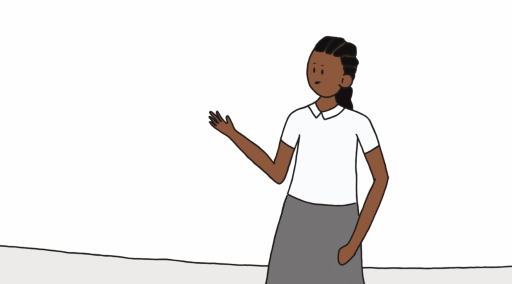
Transcript: Video 1 Soraya’s story
NARRATOR
Soraya is a 10-year-old Black girl attending a primary school in Birmingham. She lives with her parents and younger brother. Soraya is known for her assertiveness and leadership qualities among her family and friends. She enjoys participating in group discussions and projects. She is confident when presenting in class, and enjoys performing in dance and drama lessons. She attends dance lessons outside of school, and wants to work for the United Nations as a representative when she's older.
Since moving to her new class, she has been receiving reports home from her teacher that include words like aggression and non-compliance. Recently, Soraya’s class was given a group project, where the teacher had asked the group to assign a lead for the overall project. Soraya’s peers asked Soraya to be the lead. Soraya was excited, as she was eager to contribute ideas and direct the project’s progression.
When disagreements arose between two group members who each wanted to do the same task, Soraya attempted to mediate. Her teacher, Mr Henderson, stated he knew Soraya was too dominant, and that it was her intimidating behaviour towards her classmates that had resulted in the argument. He made another group member the group leader, and told Soraya she needed to stop taking over the project.
After the incident, Soraya became more reserved. Her parents noticed a change in her demeanour at home, and they became concerned when Soraya expressed reluctance to go to school. After checking in with Soraya’s teacher, they learned about the group project incident. Soraya’s mother arranged a meeting with Mr Henderson, who explained that Soraya’s behaviour was unusually mature for her age, and that she needed to learn her place amongst her peers as she often bossed them around.
Soraya’s situation did not improve. Incidents of her being singled out became more frequent. She was often reprimanded for things like talking back. On one occasion, she was told off for speaking back to her teacher, when she disagreed with something Mr Henderson had said in his interpretation of a book they were reading. Soraya noticed she was singled out, despite her other classmates’ similar interactions being overlooked.
On another occasion, Soraya was sent to the head teacher’s office for allegedly raising her voice at a supply teacher, an accusation Soraya denied. The head of year invited Soraya’s parents to the school, citing a pattern of disruptive behaviour, and suspended Soraya for two days. Her parents were shocked, feeling that the punishment was disproportionate, and a result of misunderstanding Soraya’s assertiveness and leadership as behavioural issues. Soraya became withdrawn at home and at school, and told her parents she no longer wanted to be a UN representative, now stating that she didn’t know what she wanted to be.
After watching the video, pause and reflect before moving on to the next part of the activity.
What were your initial thoughts about Soraya?
How was her behaviour described, and by whom?
How did the teacher interpret her actions, and what assumptions might have informed that interpretation?
Have you seen similar situations in your own work, or experienced them yourself?
- What do you think was going on in this classroom?
- How would you have supported Soraya differently?
- Hold on to your thoughts as you’ll revisit them after hearing from our expert.
Task 2
You’ll now watch Dr Siya Mngaza, an educational tword missing, who will help us understand what happened to Soraya through a different lens.
Dr Mngaza will discuss adultification, a process where children, particularly Black children, are treated as if they’re older and more responsible than they actually are. She’ll also explore misogynoir, that is the specific discrimination that Black girls face when racial and gender stereotypes combine.
Watch how she explains these concepts through Soraya’s real experience rather than abstract definitions.
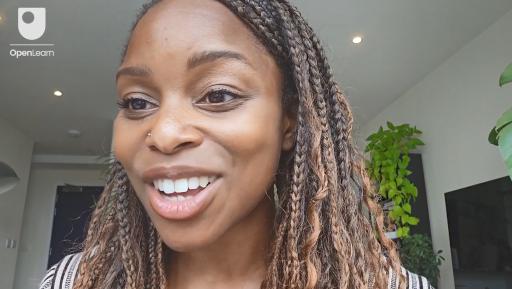
Transcript: Video 2 Analysis of Soraya’s story
SIYA MNGAZA
So what we can see from Soraya’s case is a real pattern of dehumanisation that ends up shrinking Soraya and extinguishing her light. So adultification within this context is when neutral behaviours and, in the case of Soraya, commendable behaviours-- having a voice, being confident, advocating for oneself and others-- are viewed through a racist lens as being too much or being overbearing. Children have-- it manifests in the classroom, within this case, works through adultification. So those behaviours that Soraya was attributing-- the behaviours that Soraya was presenting-- so being confident and having a voice-- were interpreted through this particular lens.
In terms of the impact on children, we do have studies about the way that racism impacts a child’s psychology. And so there have been studies around microaggressions. So we can think about a child consistently being told that what they’re doing is wrong or their responses are not correct or the way that they’re responding is not correct as a chip, chip, chipping away. And the research around microaggressions tells us that it leads to a sense of low self-esteem. So children end up internalising these interactions that they’re having within the classroom.
Another impact of racism in this way through adultification on children is hypervigilance. So when we think about what a hypervigilant mind is like, a hypervigilant mind is constantly thinking. It’s constantly ready to receive information from the immediate environment. That’s not necessarily the best place for deep learning. So it has a very real impact on learning capacity for children too.
If you have a child who has a voice and who is confident and you are interpreting that in a neutral way, the implications are you’ll give them more of a voice. You’ll know what their strengths are. You’ll give them opportunities to exhibit those strengths.
I think that the implication for Black children is that something is being extinguished there. And the potential to grow those attributes gets lost. So I think that it’s about a child’s actual developmental opportunities being reduced through that interpretation.
What I actually have a lot to say on this. So I hope it’s not a really long answer. So I think that the way that language was used within that case was really interesting. Because to me, language is the mechanism that sustains racism. It sustains adultification. And it sustains misogynoir. So describing Sorayah as dominant or intimidating or as too much, it reinforces that stereotype of a Black woman being too much.
And similarly, when we think about Black boys, the language that we might be expecting are things like aggressive or unruly or overbearing. And so this language has the impact of reducing the freedom that that young Black person has. It reduces the amount of grace that a young person is given to be a child, to make mistakes, to take risks.
We know that risk taking is one of the key things that supports children to learn. If Black children can’t take risks, how are they developing? And what are they learning about themselves as a growing person?
What do they know about taking risks? And what do they know about being a human? If they’ve had a very linear experience of it because of this type of language, then we’ve got a lot of work to do in adulthood to unpick all of that. And so I think it’s about thinking about the whole lifespan also.
And finally, on language, a lot of what we do as educational psychologists is construct picture portraits of children in our reports. We also receive information about children through requests for involvement that used to be called referrals. And the language that is used on these requests for involvement is often very, very telling.
And so the first thing that I’m often doing when I receive a request for involvement if it is concerning or if I feel that I’m picking up on stereotypical language or language that tells me that there might be some adultification lens happening, I’m having a conversation about what those experiences and expectations are about my role. So I’m supporting them to understand, I’m not going to collude about the view of this child as being aggressive. What I can do is work with you to understand the context of what’s going on for that child in the classroom and give a view about a holistic, whole person that we’re kind of dealing with here. So I think language is really important not only in the way that we describe children but also the way that we write about children too.
So I feel that there are a couple of layers to this. One is looking at school data. One of the schools that I work with who have thought about the way that racial inequities impact the children in their school-- and they’ve done this really well-- is by looking at their data, and exploring the ways in which children are attaining or not attaining across the curriculum, looking at exclusion statistics, looking at data. So where are the patterns? And what is your data telling you about your school community? And who is benefiting? And who is being disadvantaged?
The other thing that I think is really key is exploring the language that is used within behaviour policies. So a colleague of mine and then later me were able to look at the ways in which language can be incredibly punitive. Sometimes, if you look at a behaviour policy, you might think that it was written in the early 1900s due to the way that children are spoken about within these policies.
So going through policy with a fine-tooth comb to think about, is this fit for purpose? Is this me in a modern context of schooling? And is this policy informed by what we know about child development?
Is it trauma-informed? Are we thinking through the ways in which children’s behaviours might be communicating a need to us? So exploring policy with a fine-tooth comb is something that I always advocate for for senior leadership and using your aligned professionals. Many schools have an educational psychologist or other professionals that they have relationships with that can support them in policy development.
I think that another thing that’s key is looking at policy development and being intentional about infusing anti-racism through policy. And then finally, I think in terms of what we can do as external professionals working with schools is thinking about, how do we put our advocacy hat on? So something that I’ve thought through often is that I have a relationship with the school that needs to be protected.
Often, though, you have to put the advocacy of the child before that. And I’ve been really fortunate in that I’ve worked in a service that has always encouraged me to put the advocacy hat before thinking about maintaining, for example, a financial relationship with a school. The child has to come first. And when we’re thinking about discrimination of Black children, knowing that I’m within a setting that is encouraging that from me and that expects that from me is really key. So I think for external professionals, thinking about the values of the services that you work within is really important too.
I think that parents and educators-- I think it’s really hard on parents when they can see that this is happening and the school cannot see it or will not come on board with accepting that this is happening. It’s a really lonely experience for parents. So I think that in terms of educators, it’s about arming ourselves with an understanding about what adultification can look like. It’s about understanding the nuances of what that may look like in practice.
So as one sort of example, I was working with a family where they did not feel that their child’s mental health was being taken seriously. And naming adultification became the piece of work that I did with the family and with the school. But it’s a longer process. It’s a challenging process to help a school to understand what this is, A, and that B, a child is experiencing this within your setting.
So I think there’s a willingness that educators need to have to go there. I think we need to be really purposeful in the way that we use our language. And also, I think that there needs to be a sense of compassion, mainly for parents in particular, to help them feel validated and to help them feel understood. And then there needs to be some form of ongoing learning process for that education setting too.
So we’ve named adultification. We’ve identified it. What do we do now? And what does that look like in terms of your new recruits as teachers, your CPD days? Are you learning about adultification? Are you buying in expertise to help your staff body understand that this is a thing and how to spot it?
And are staff feeling well enough? Is there enough going on for staff wellbeing where they’re able to explore some of these things? It’s an emotional process, I think, especially for educators who are not Black and who have not had that experience to go on that anti-racist journey. Are they within the place where they can do that safely? And then in terms of our Black educators, are they getting the support, the supervision, the space to unpack the experiences that they have as Black educators around adultification?
Understanding the impact
Dr Mngaza explains that when children like Soraya face constant correction and criticism, it creates a state of hypervigilance, where they’re always scanning their environment for potential problems. This mental state makes deep learning very difficult because the child’s brain is focused on survival rather than growth.
Notice how Dr Mngaza connects this to language, she notes the words used to describe Soraya (‘dominant’, ‘intimidating’, ‘too much’) wouldn’t typically be applied to other children showing similar leadership behaviours. This demonstrates how seemingly neutral observations can carry hidden biases.
Reflect on these questions:
- After hearing Dr Mngaza’s analysis, how do you now understand what happened to Soraya?
- Can you identify moments in the story where Soraya was being treated as older than her ten years?
- What did you notice about how the accumulation of small incidents affected Soraya’s sense of self?
- How might understanding these patterns change your response when you see similar situations?
Now update your earlier response.
What have you learned from Dr Mngaza’s perspective? How will this inform your work in schools or other settings?
What can you do?
Having seen how adultification and misogynoir affect children like Soraya, consider your role and influence.
If you’re an educator
- How might you examine the language you use when describing confident Black girls?
- What steps could you take to ensure behaviour policies don’t disproportionately impact certain children?
- How can you advocate for anti-racism training in your setting?
If you’re a parent or carer
- How will you prepare your child to navigate these challenges while maintaining their confidence?
- What conversations might you need to have with schools when incidents occur?
- How can you reinforce positive messages about identity at home?
If you work with families
- How might you support parents who are experiencing what Dr Mngaza describes as ‘a really lonely experience’ when schools won’t acknowledge discrimination?
- What resources could help families build resilience against these systematic patterns?
The ‘Race on the Agenda’ research by Jamila Thompson (2025) shows that over 80 per cent of Black girls experience or witness racism in education. This should show you that understanding concepts like adultification is essential for protecting and empowering the children in our care.