
4 Panel reflections: where do you go from here?
In this final panel conversation, you’ll hear reflections from Dr Shaddai Tembo, Dr Siya Mngaza and course author, Mel Green, on how you can move forward in this work. Listen as they share their thoughts on intersectionality, best practice, policy challenges, and why this work is never finished.
Activity 6 Learning from expert insights
Task 1 Language and power (Dr Mngaza’s insights)
Dr Mngaza discusses how language constructs reality in schools, particularly around exclusion and behaviour.
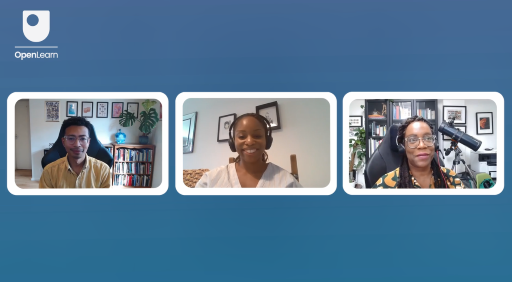
Transcript: Video 2 Panel discussion part 2
SIYA MNGAZA
I think it’s also important to think about how language can construct our realities. And I think within schools, often when I’m thinking about situations where we’re maybe thinking around exclusion or we’re thinking about behaviours that are challenging school staff, I’m often really using language as a way of navigating my position as an external professional.
How are people constructing this reality about this child? How people are describing this behaviour? What does it tell me about the system that we’re in, A, around the child. And B, in terms of the wider school system.
And how might these oppressive discourses make their way into those conversations? I think that we have a situation where for not all schools, but for many schools, behaviour policies have stuck for many, many years.
And some of the language, when you interrogate that language, we wouldn’t be comfortable with using that to describe or to talk about or to talk to individual children. But those policies and those artefacts seep their way into conversations, artefacts, ways of being.
And so I think that language becomes a really important aspect of the way that I’m dealing with situations in schools, particularly when I’m thinking about children that have-- Black children, for example, who are more likely to have experiences within disciplinary systems within schools. So language is important. I’m always listening carefully to how we describe children too for those reasons as well.
SHADDAI TEMBO
I’m just thinking more about what Siya is saying there in terms of labelling children, the sorts of language we refer to particular groups of children, but also the language we don’t use in some circumstances to refer to particular groups of children that can all feed into sometimes very racialised ways of understanding particular children.
I guess, in terms of intersectionality, for me, that’s something that’s really fundamental and should be running throughout our anti-racist work. Whenever I talk about intersectionality, I’m always reminded of the TedTalk by Kimberlé Crenshaw who has the kind of fascinating activity at the outset of her video where she asks everyone to stand up in the room and she reads out the names of people who have been subject to police brutality in the United States.
And as she goes on, the more names that are read out, the more people start to sit down because they’re not familiar with the names. The change there is that she begins to read out the names of Black women who have been subject to police brutality.
And that, for me, is quite a forceful reminder of the need to not universalise the racial experience for people and consider those kind of nuanced and quite complicated effects on people-- Black men, Black women, Black people who are neurodivergent, Black people with disabilities, Black people from different backgrounds.
We all affect and we all live lives in very intersectional ways. We don’t live single lives. Certainly for educators, that for me is really important to bear in mind.
I do think that we’re not intersectional enough actually. And certainly when we think about the experiences of particularly Black children with special educational needs and disabilities, there are some real issues there that we need to take into account.
I think thinking intersectionality enables us to connect the anti-racist approach towards a broader movement towards equalities per se. So thinking about gender inequality, thinking about class-based inequalities that children might be facing.
Of course, it’s important to think about anti-racism as a single issue. But the reality is that for children in practice, all of these areas are intersecting in their lived experiences, and might be showing up through their play encounters in the nursery.
So for us as educators, it’s really important that we’re attuned to that. We understand the child’s cultural backgrounds, their differences, who they come from, who their families are, and really understand and can be responsive to those multiple areas of their identities that might be intersecting to potentially produce multiple layers of inequality for them in the nursery environment.
SIYA MNGAZA
We all have these overlapping identities. I think that it becomes challenging when we’ve not maybe thought about how to organise the learning environment around the ways in which those intersecting identities might manifest in the classroom.
And so, yeah, I suppose when I think about how it shows up in my work as an educational psychologist, I’m often thinking about it being a really complex interplay between understanding the child and what their needs might be.
So I might be thinking about their special educational needs and what that might look like, but really kind of anticipating how other areas of their experience, their class background, their racial background might need to be thought about in a particular way, in combination with those special educational needs and/or disabilities.
So it’s just about accepting and being really open to nuance and complexity. And also, I think as a kind of outsider, inviting people to express what that complexity might have felt like for them.
So for parents, it might be a space to think about, OK, so I have a young Black person that has autism and diet is a thing that we think about often. Well, we think about it in a specific cultural situation too.
So allowing people to have those thoughts and to express those feelings with specificity to their own experience. And also validating that it can feel complicated. It can feel complex and inviting people to feel OK with that complexity.
And then I also think about, for the children that I work with who are slightly older who maybe have a way of expressing what some of these multiple layers of their identity might feel like. What I’ve noticed is a sophistication in the way that they manage their experiences-- other people’s experience of them, and other people’s way of interacting with them.
So there’s a lot of thought that’s happening. And I suppose when I think about what our duty is, it’s to take some of that away from the child so that we’re doing the thinking about how to adapt your resources, your environment, how to think about how we interact with you. And so, yeah, really kind of shifting that responsibility to the people around the child. So it’s not just on them to manage their own experiences.
So what I wish educators and practitioners knew about working with racially minoritised children is that there are assets indifference. And there are strengths in anybody’s minoritised identity. It’s often that reframe from minoritised to Global majority, I find a useful linguistic twist as well because you’re thinking about the vast cultural gifts that, that child may have.
And then in terms of best practice and things that I’ve seen done well, I’ll talk from the perspective of a practitioner that may come in and assess or may come in as a visitor to a setting. And I think there’s an importance of culturally responsive practice.
So thinking about how you understand the culture of the place that you’re working and how you respond to that maybe in your assessment choices. And then also your anti-racist orientation as well. So, how do you understand the power imbalances that exist out there as how they might be enacted in here? What are you going to do to actively disrupt that?
And so I think when I’ve seen practitioners that I really respect have those questions going in their head constantly, and they inform how they make assessment choices and how they engage within settings.
And then in terms of settings themselves, Shaddai talked about training earlier. And I think settings that are open to going on those longer learning journeys about their own staff body, about their own perceptions of race, ethnicity, power, difference. I think the schools that have that openness to explore are the schools where they’re able to do things really creatively and really well.
SHADDAI TEMBO
Yeah. So I think particularly in the early years, what I really wish educators knew is that whether we adults like it or not, children are already aware of all kinds of difference from a really young age and already having these sorts of conversations, perhaps within their play practices. So as adults, we have a responsibility to meet them halfway, to really be responsive to their increasing curiosity about who they are and difference between others.
I often think that when we think about anti-racism, it can be difficult to have these conversations for reasons of anxiety, not wanting to say or do the right thing. So what I’d really like people listening to this event today, this video is to have a courageous conversation, to go back to their nursery setting and say that I’ve been on this training video. You listen to this video. Here’s what I learned. And what do you think about it?
Really just beginning to open up those conversations. Be courageous in a setting where you might not be having these sorts of conversations about anti-racism. Just begin to open it up and just think about what these sorts of issues might be like in your particular practice, and how they might be affecting your children.
I guess that feeds into the need to think about this in terms of a whole staff team approach. It’s very common that one or two practitioners might go on anti-racism training within their setting, and that’s great, but they won’t then disseminate that information and understanding to the whole staff team.
It’s often very common as well that there will be members of staff who are perhaps less willing to engage within this work. And for me, that’s understandably difficult. But it really underlines the need for them all to be involved, because if we don’t all care about this, it can so often fall to the bottom of the agenda.
And without that holistic whole staff team approach, it’s unlikely to lead to long-term change for the children. So getting the whole staff team on board and beginning to have those courageous conversations for me is really important.
The best settings that have done this have done a reading group once a month, just a short article, half an hour at the end of the staff meeting. What did you find out from this article? What did you find interesting?
There are some really good resources for educators out there at the moment, just to begin to learn about these sorts of issues. And link it to what’s going on in society as a whole. Then what those settings have done is organised coffee mornings with parents and conversational events just to begin to have conversations about the work you’re doing within your setting towards anti-racism, and really just opening up the opportunity for parents to input and share their views as well.
Some parents will be reluctant to engage, and that’s fine. That’s a good opportunity to have those conversations and really support their understanding. Some parents will be like, great, why haven’t we done this sooner? I’ve been wanting to understand this and contribute.
And making that space to have those conversations with parents and carers, engaging in those courageous conversations with colleagues and working as a whole staff team towards anti-racism, I think for me are three really good ways in which you can begin to embed this in your settings over a longer time.
MEL GREEN
I’m really getting a vibe from both of you of this ongoing work. It’s not something that you’re just going to turn around tomorrow or even after one term. It’s something that you are continually doing and probably will never finish because, essentially, you’ve both mentioned about the need for being child-centred, being setting centred. So it’s specific to your community.
The work that needs to be done needs to be situated within the context of your setting. And it sounds like the focus on needing to be relational, compassionate, but also holistic. So it’s ongoing and incredibly complex work.
But the benefits to the children and young people that we’re talking about, because I’ll bring it back to my children. I worry about their future, as I imagine a lot of parents do, but in that sort of intersectional way.
So from their special educational needs, from their race, their experiences of being boys as well. So if we think about it, as parents, we’re all worrying about these different little niggly parts. And the settings can help our children, support our children by understanding that, by understanding those individual parts and bringing it to within their setting.
I want to thank you because this has been a wonderful conversation, but also something that I could have continued for another hour, I think, at a minimum. You have both been amazing and genuinely I have learned so much from both of you. So I just want to thank you for your time and give you a chance to say your goodbyes and add any final thoughts. Do you want to start, Siya?
SIYA MNGAZA
Yes. Well, thank you actually, Mel. Oh, I want to say thanks to you because I’ve enjoyed both the interview and this panel today. Shaddai, thank you. I’ve learned so much from listening to your thoughts as well.
And Mel, we’ve not known each other for years, but I must say I am proud of what you’re doing with this. I think it’s going to be a really meaningful addition to the learning offer that’s on out there. So well done. And yeah, I’m just excited to see what comes next. So yeah.
MEL GREEN
Shaddai?
SHADDAI TEMBO
I’ll echo those thanks to you Mel. It’s been a really fantastic opportunity to be part of this. And yeah, also Siya I really enjoyed this conversation. It’s been really generative. And yeah, I think what you were saying about the ongoing nature of the work is really important.
I always say to practitioners when I deliver the training that the work continues even when the attention wanes. Given that we’re four years on from the Black Lives Matter movement and the death of George Floyd, this work is still ongoing, even though it’s not in the press or the media cycles at the moment.
And I guess we have that responsibility to continue the work even when the attention wanes in mainstream press.
MEL GREEN
Yeah, thank you. Thank you so much. Yeah, thank you so much for this. Thank you for listening.
As you listen, consider:
- What does Dr Mngaza mean when she talks about ‘oppressive discourses’ seeping into conversations about children?
- How does she suggest practitioners should pay attention to the language used to describe children’s behaviour?
- What questions does she recommend asking about how language reveals systemic issues?
Task 2 Intersectionality in practice (Dr Tembo’s insights)
Dr Tembo references Kimberlé Crenshaw’s work and emphasises that ‘we don’t live single lives’.
Focus on:
- What does Dr Tembo’s example about police brutality and Black women teach us about intersectionality?
- How does he suggest this applies to children with SEND in educational settings?
- What does ‘not universalising the racial experience’ mean for your practice?
Task 3 Part 3: Complexity and assets (Dr Mngaza’s framework)
Dr Mngaza talks about being ‘open to nuance and complexity’ and reframes from ‘minoritised to global majority’.
Listen for:
- What does she mean by ‘assets in difference’ and how does this challenge deficit thinking?
- How does she describe children’s sophistication in managing multiple identities?
- What is ‘our duty’ as adults according to Dr Mngaza?
Task 4 Practical implementation (Dr Tembo’s strategies)
Dr Tembo provides concrete suggestions for embedding anti-racist work in settings.
Note down:
- What three specific strategies does he mention for ‘courageous conversations’?
- Why does he emphasise ‘whole staff team approaches’?
- What does he suggest about engaging parents and carers?
Task 5 Ongoing commitment (All panellists)
All three panellists emphasise this work is never finished.
Consider:
- What do they mean by ‘the work continues even when the attention wanes’?
- How does Mel’s perspective as a parent add to the discussion about intersectional worries?
- What do the panellists suggest about staying motivated for long-term change?
Task 6 Synthesising
Based on what you heard, complete this reflection:
| Your reflection | |
|---|---|
| One insight that challenged my thinking | |
| One practical strategy I want to try | |
| One way I can start ‘courageous conversations’ in my context | |
| The biggest barrier I anticipate and one way to address it |
Discussion
Dr Mngaza’s emphasis on listening to how children and families describe their experiences aligns with restorative practices of centring voices and understanding rather than judging.
Intersectionality and trauma-informed practice: Dr Tembo’s intersectionality framework connects to trauma-informed approaches that consider how multiple identities affect children’s experiences and needs.
Dr Mngaza’s ‘global majority’ reframe and focus on cultural gifts directly supports culturally responsive practice that builds on strengths rather than deficits.
Dr Tembo’s practical strategies (reading groups, parent engagement) provide concrete ways to implement all three interventions systematically rather than individually.
The panellists show that effective anti-racist practice requires combining all three interventions within supportive organisational cultures committed to ongoing learning and change.
If you’re part of or working with families who are trying to challenge these outcomes, you may notice that they are sometimes seen as combative or uncooperative. Many Black parents say they feel mistrusted by schools and excluded from key conversations about their child’s support.