

3 How common is maths anxiety?
While it’s difficult to get a handle on the precise number of people who suffer with maths anxiety, according to an Ipsos MORI poll commissioned by the Maths Anxiety Trust in 2018, it’s believed that around 20% of adults in Great Britain feel anxious when confronted with a mathematical problem.
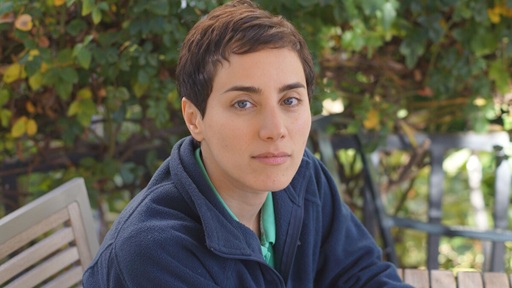
It’s worth noting that maths anxiety isn’t necessarily a barrier to being successful with maths. There are lots of people with maths anxiety who still study maths at a high level. Research at The Open University has shown that up to 58% of students who have an element of maths within their degree exhibit characteristics associated with maths anxiety (Pawley and Organ, 2022). The gifted Iranian mathematician Maryam Mirzakhani claimed to have suffered from maths anxiety – this clearly didn’t hold her back, as in 2014 she was the first woman to be awarded the Fields Medal, the most prestigious award for maths.
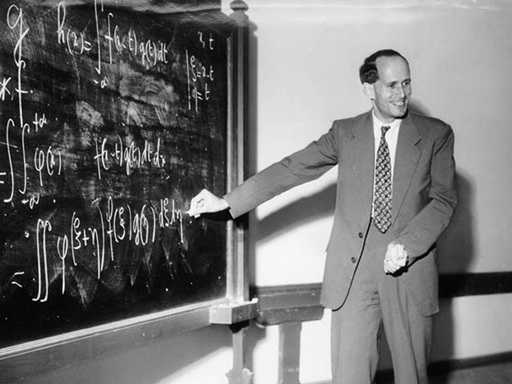
Similarly, French mathematician Laurent Schwartz claimed to have suffered from maths anxiety. He was also awarded the Fields Medal in 1950.
Activity 1 Gauging your maths anxiety
Have a look at the following statements, which were listed earlier in this session. How many do you identify with?
If you find that you relate to even a few of them, then it’s likely that you experience some level of maths anxiety. Generally, the more statements you identify with, the higher the degree of maths anxiety you may be facing.