

1 The consequences of maths anxiety
There are three main responses to maths anxiety: physical symptoms, procrastination, and avoidance. In experiencing maths anxiety you may demonstrate some, or all of these responses, and this may change over time.
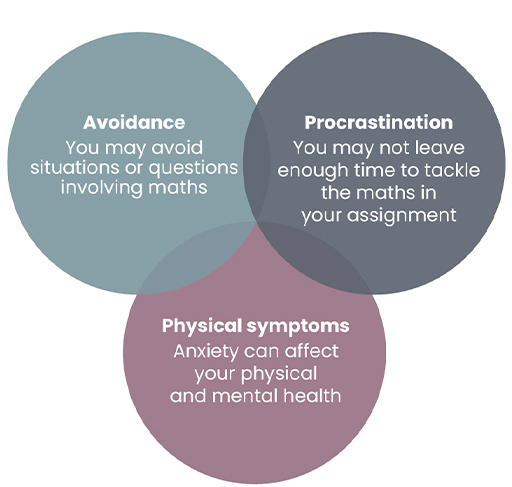
Identifying physical symptoms of maths anxiety may seem straightforward, but they can be subtle. If someone experiences immediate symptoms, such as sweaty palms, increased heart rate and palpitations or tense muscles from panicking, these could be connected relatively easily with their cause. The cause may be less apparent for longer-term physical symptoms, such as tiredness, insomnia, headaches and other pain-related problems, but these could also be related to repeated stress from maths anxiety (Alvaro, Roberts and Harris, 2013; Lyons and Beilock, 2012).
Procrastination is a very reasonable response to anxiety (Luttenberger, Wimmer and Paechter, 2018). Avoiding situations involving maths due to experiencing unpleasant physical symptoms is understandable. The maths could be in everyday life or in other situations, like studying a subject that includes maths.