
 (1).jpg)
Introduction
In Rural Ireland it is still a common but fading practice for men to get together to voluntarily dig the grave when a neighbour dies. I found two reasons that might explain why this happens.
Firstly, Ireland is a socially and politically conservative nation that values traditional practices, including voluntary grave digging. Secondly, it leapfrogged industrialisation. Starting around 1970, it went from being a largely agrarian to a post-industrial society. Here people have continued to live in the same small communities that earlier generations of their family had done and maintain traditional practices - but earn their living in nearby towns and cities.
To find out more about voluntary grave digging, I conducted separate interviews with 26 men who were involved with voluntary grave digging in 2018-2019. I wanted to understand what happens when they dig a neighbour’s grave and why they do it. I also witnessed three graves being dug and helped to dig two of these.
Interview recording: Professor Erica Borgstrom talks to Dr. Danny Conway
Listen to our recording of the conversation about voluntary grave digging in the West of Ireland.
Digging the Grave
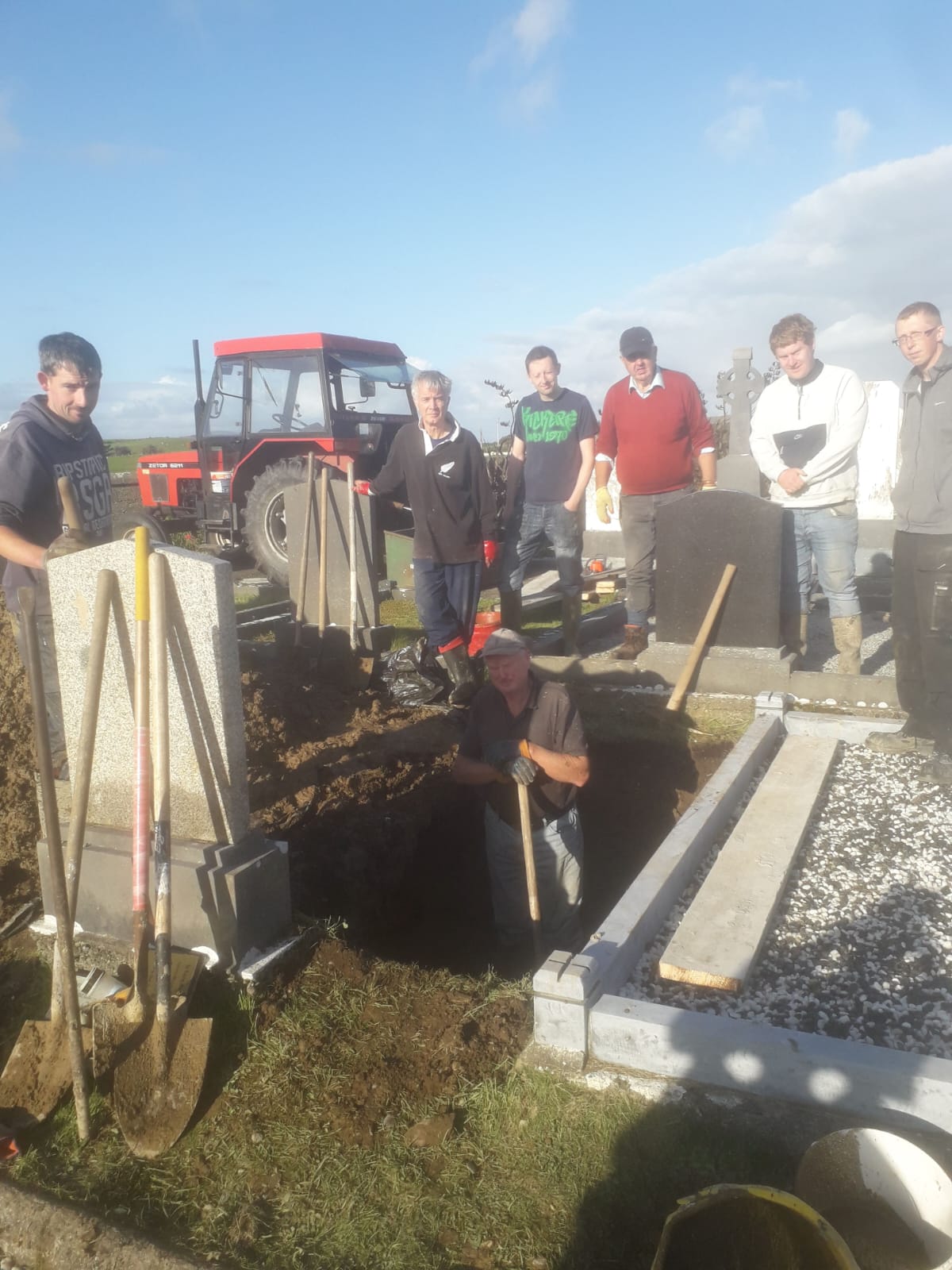
A group of men digging a grave, September 2019. Author, second from left.
When someone dies, the bereaved family invites neighbours to dig the grave or neighbours offer this. Digging typically involves four to five men. They are just working with picks and shovels to dig a grave that measures approximately 7ft x 3ft x 6ft deep. This takes them between two and five hours to do, depending on the ground conditions and whether it is an old or new grave. If it is an old grave, it will be easier to dig but will be a more complex and sensitive job as human remains are put to one side to be reinterred later. If the death is considered to be a tragic one, for example, the death of a child or as a result of someone taking their own life, the grave sides and bottom may be decorated with moss, ivy or wild flowers. After the bereaved family and mourners have left the burial, the grave diggers will backfill and make a finished grave. In some communities, everyone present at the funeral will be free to help to backfill the grave, in a practice that is known as taking the shovel.
Why people voluntarily dig graves
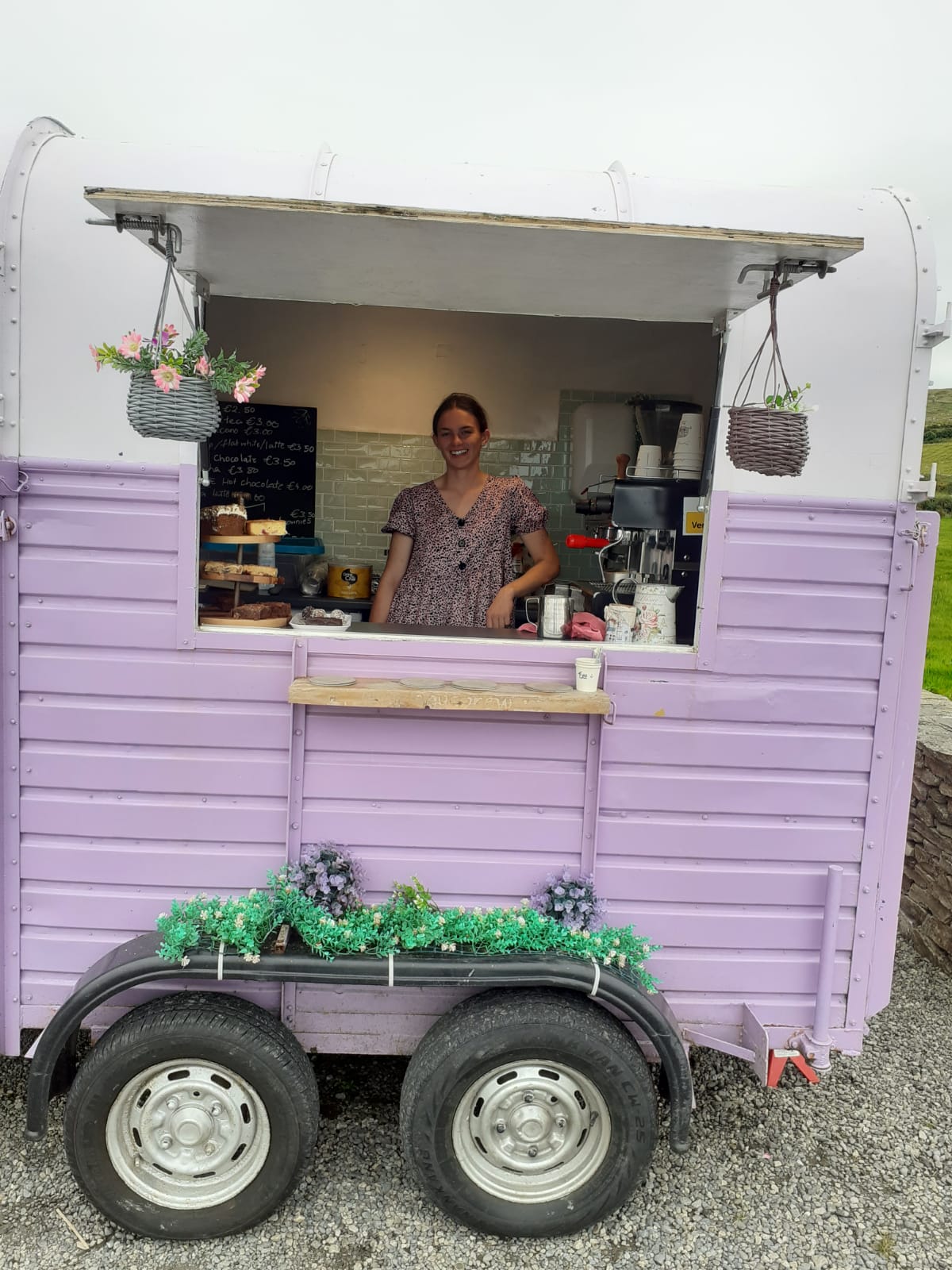 Mobile tea and coffee hut, outside Killeen Graveyard, Louisburgh, co. Mayo. The graveyard is a place that is so frequently visited by local families as a 'living space' that it is worth having a small business presence there.
In my research, I found that on one level, the practice is culturally invisible to the people who do it. Initially, some could not understand why I wanted to talk with them about a purely practical task. In my research diary, I recall Cillian saying:
Danny, what is there to tell. If a neighbour dies, I dig a grave for them – what is there to tell?
Tim thought the men who dig graves do not consciously notice they do it, they just do it. Martin said his generation do it because ‘they were reared to it’. He started at age six, just going along to grave diggings, ‘in association’ with his father. He notes his son’s generation are not reared to it, and so will need to consciously adopt the practice, if it is to survive.
I came to understand that voluntary grave digging is both a serious practice and a social activity. It provides a time for men to come together, in reaction to death, as an acknowledgement of the person who has died and affirming the continuing life of the community. This happens in many ways: in men coming together as a team to dig the grave; as the grave is being dug, in the back and forth banter (known as slagging); about how well the grave is being dug and who is up to the job - ‘will you come up out of there, let a real man down into the grave’ (Sean); about whether it is deep, wide or perpendicular enough, and general banter about politics and the price of cattle and sheep. And most importantly, there will a coming together of disparate but positive stories about the person who is to buried in this grave, about their life and their importance to the community. Although only four or five men will be doing the actual grave digging, many more might turn up to take part in telling these stories and perhaps to share ‘a few cans and maybe a nip of whiskey’ (Martin), brought to the digging by the bereaved family.
If the death is considered to be a tragic one, it is then seen as more essential that the neighbours dig the grave as a mark of support for the family and as an expression of their sorrow. Then the atmosphere is serious, and many more men could turn up. James said when his son died at age 5, thirty men were ‘at the digging’.
All 26 participants also had individual reasons for participating in this practice. Most significant was the bond people felt with their neighbours, whose graves they had dug, and who, going back several generations, may have ‘dug for’ their family. Sometimes they spoke of the importance of voluntary grave digging as a tradition that was a symbol of their way of life, and by implication, a demonstration of belonging. For the 10 participants who had worked and lived away from rural Ireland, it was also a way of reconnecting with a rural Irish collective death culture and an expression of re-belonging. Some participants connected grave digging to friendship. Liam said: ‘It's a very strong act, to dig the soil, to prepare the place of burial of your friend, neighbour.’ James thought it was part of a wider affection people had for those around them. He said, ‘We do it for the love of the people.’ Just one participant, Tom, felt that the nature of these communities tended to promote a spirit of kindness amongst people, which in turn produced more kindness, like a self-perpetuating flywheel of kindness, with voluntary grave digging being one of its most vivid expressions.
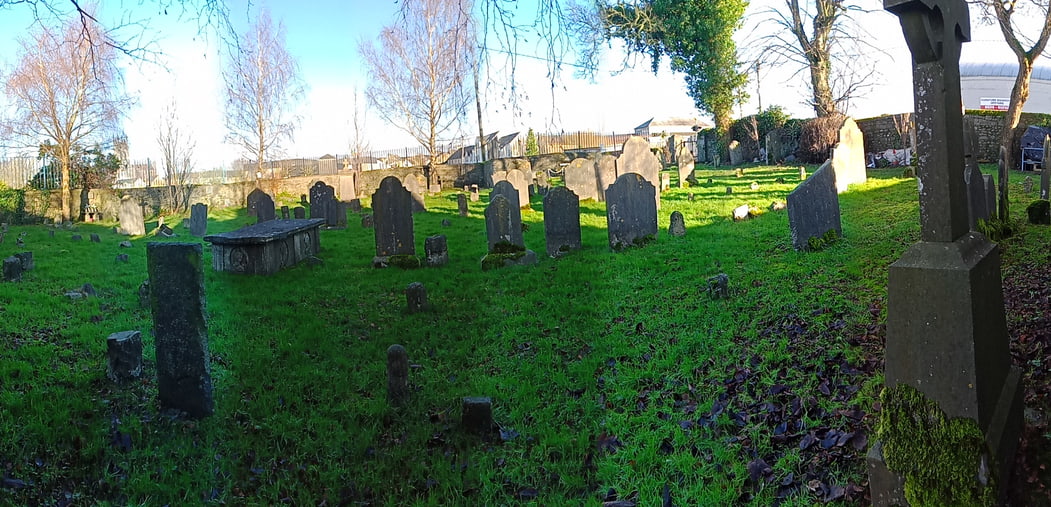
Note
Although this study on voluntary grave digging has been about a male only practice, many participants wanted to stress it exists in a wider context of community support to bereaved families. This is centred around the pre-funeral wake and wakehouse, where the deceased is present in an open coffin. The wakehouse is usually run, managed and provisioned, just by women.
This article is based on my doctoral study: Voluntary Gravedigging in the West of Ireland, published by the Open University in December 2024: https://oro.open.ac.uk/101454/. All of the participants have been given pseudonyms in this article but they have all given permission for their full audio interviews to be accessible in a public Irish archive.
Rate and Review
Rate this article
Review this article
Log into OpenLearn to leave reviews and join in the conversation.
Article reviews