OpenLearn will be unavailable from 8am to 10.30am on Wednesday 3 December due to scheduled maintenance.
Personalise your OpenLearn profile, save your favourite content and get recognition for your learning
Joelle Ann Myles Gilbert
OpenLearn Profile
This page contains all the information that this user has chosen to make public on their OpenLearn profile.
From pygmy shrews to armadillos, a wide range of mammals survive on a diet made up largely of insects. Many of these have fascinating adaptations suited to catching or rooting out their prey. In this free course, Studying mammals: The insect hunters, you will learn about these adaptations, along with survival strategies for when food is scarce. ...
Free course
10 hrs
Level: 1 Introductory
Updated on:
01 May 2019
From the mouse-deer to the elephant, plant eaters come in all shapes and sizes. But how do they manage to flourish on a salad diet? In this free course, Studying mammals: Plant predators, we will examine the special features that allow them to extract their nutrients from leaves, and see how some plants protect themselves from these predators. ...
16 Mar 2016
The powerful and majestic carnivores are the focus of many television documentaries. In this free course, Studying mammals: Meat eaters, we will delve into the lives of these fearsome hunters and explore their physical adaptations and social behaviour. This is the fifth course in the Studying mammals series.
Many mammals are food specialists, with complex adaptations that gear them toward a particular food source. So how do the omnivores survive and prosper without these fancy evolutionary features? This free course, Studying mammals: The opportunists, examines the physiology, diet and strategies of some of these opportunistic feeders. It is the ...
Some of the most unusual and versatile of all the mammals are the groups that live, feed and reproduce underwater. In this free course, Studying mammals: Return to the water, we will see how these formerly land-based mammals adapted to a return to the water, discussing such challenges as breathing, movement and communication. This is the seventh...
15 May 2019
David Attenborough looks at life in the trees: examining how species have evolved to cope with arboreal living. In this free course, Studying mammals: Life in the trees, you will learn how lemurs, anteaters, bears and many others have developed different methods to help movement and survival.
Monkeys have long fascinated us because of their similarities to the human race. In this free course, Studying mammals: The social climbers, you will find out about some of the characteristics that make them so like us: their physiology, complex social interactions, large brains and intelligence. This is the ninth course in the Studying mammals ...
Who were our ancestors? How are apes and humans related? And where does the extinct Homo erectus fit into the puzzle? In this free course, Studying mammals: Food for thought, we will examine culture, tool use and social structure in both apes and humans to gain an understanding of where we come from and why we behave as we do. This is the tenth ...
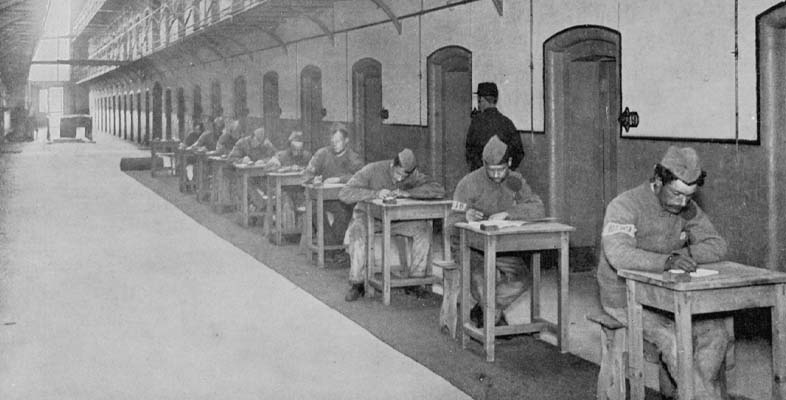
This free course, Exploring the history of prisoner education, looks at the history of prison education in the British Isles. It will examine the motivations behind the provision of education, the types of learning that were offered and the experiences of prisoners over the first 100 years of education in prisons.
24 hrs
11 Oct 2022