
Free courses
Produced by The Open University, a world leader in open and distance learning, all OpenLearn courses are free to study. We offer nearly 1000 free courses across 9 different subject areas. Our courses are available to start right away.
- All topics
 free course icon
level 1: introductory icon
Badge icon
free course icon
level 1: introductory icon
Badge icon
Science, Maths & Technology
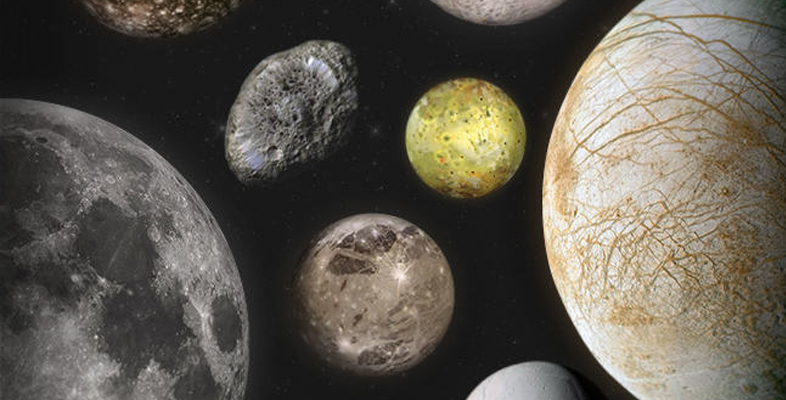
Moons of our Solar System
In this free course, Moons of our Solar System, explore the many moons of our Solar System. Find out what makes them special. Should we send humans to our Moon again?
 free course icon
level 1: introductory icon
free course icon
level 1: introductory icon
Science, Maths & Technology
Data analysis: hypothesis testing
Making decisions about the world based on data requires a process that bridges the gap between unstructured data and the decision. Statistical hypothesis testing helps decision-making by formulating beliefs about the world, including people, organisations or other objects, and formally testing these beliefs. In this free course, you will ...
 free course icon
level 1: introductory icon
free course icon
level 1: introductory icon
Science, Maths & Technology
Data analysis: visualisations in Excel
Evidence comes in the form of qualitative or quantitative data about the world around you. It is not always obvious, however, how to structure, aggregate, analyse or interpret the data to help you make decisions. In this free course, you will look at how to use data to make decisions in a systematic way using Microsoft Excel. Microsoft Excel ...
 free course icon
level 1: introductory icon
Badge icon
free course icon
level 1: introductory icon
Badge icon
Science, Maths & Technology
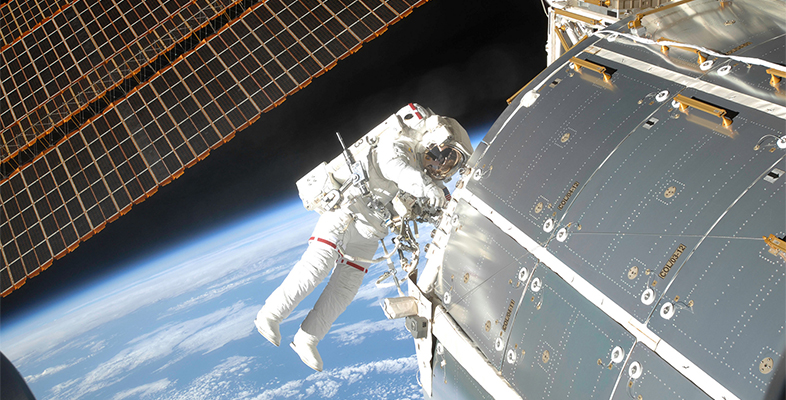
Microgravity: living on the International Space Station
This free badged open course, Microgravity: living on the International Space Station, will help you to consider microgravity environments in more detail than before! You will make direct comparisons of some important physical values between the International Space Station (ISS), the Earth and the Moon.
 free course icon
level 1: introductory icon
Badge icon
free course icon
level 1: introductory icon
Badge icon
Science, Maths & Technology
Understanding science: what we cannot know
This free course, Understanding science: what we cannot know, investigates the boundaries of our understanding across numerous scientific fields. It asks whether it's possible that we will one day know everything, or whether some knowledge will always lie beyond the bounds of human comprehension.
 free course icon
level 1: introductory icon
free course icon
level 1: introductory icon
Science, Maths & Technology
Introducing technology and innovation management
This free course will introduce you to technology and innovation management and is relevant to managers and students of technological innovation. You will learn about innovation types and processes, how innovation can add or create value, and about the management activities that underpin the innovation and value creation process. You do not ...
 free course icon
level 1: introductory icon
Badge icon
free course icon
level 1: introductory icon
Badge icon
Science, Maths & Technology
Succeed with maths: part 1
If you feel that maths is a mystery that you want to unravel then this free course is for you. It will guide you through how numbers are put together, give you confidence with using percentages, fractions and negative numbers and provide you with problem solving skills for your everyday life and the wider world.
 free course icon
level 1: introductory icon
free course icon
level 1: introductory icon
Science, Maths & Technology
Introducing vectors for engineering applications
Applied mathematics is a key skill for practicing engineers and mathematical modelling is an ever-increasing field within engineering. This free course, Introducing vectors for engineering applications, covers one aspect of a Level 1 engineering module, the application of vectors and vector algebra, using examples inspired by engineering ...
 free course icon
level 1: introductory icon
Badge icon
free course icon
level 1: introductory icon
Badge icon
Science, Maths & Technology
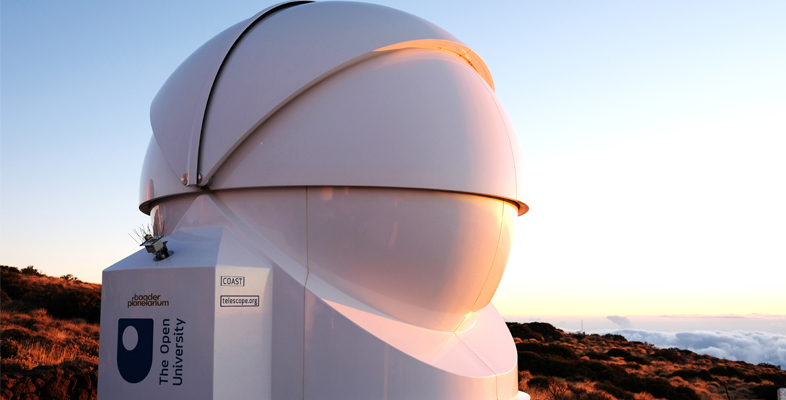
Astronomy with an online telescope
This free course shows you how to navigate the night sky, and introduces the wide variety of objects it contains. You will develop a hands-on understanding of telescopic observations using the Open University’s own robotic telescope facility COAST sited on the island of Tenerife. Supported by your own measurements we illustrate how stars...
 free course icon
level 1: introductory icon
free course icon
level 1: introductory icon
Science, Maths & Technology
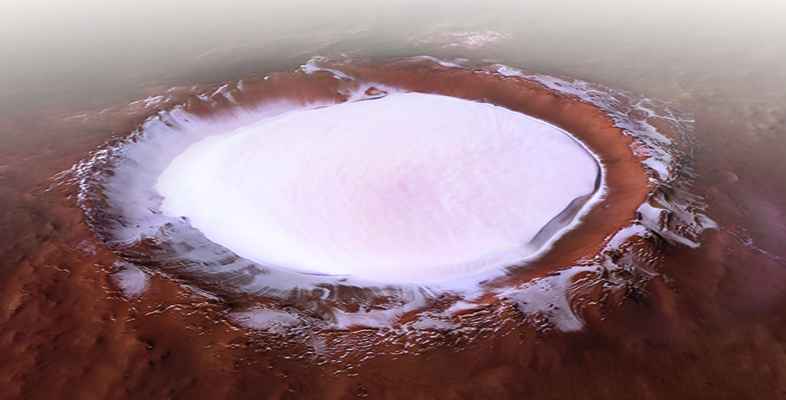
The search for water on Mars
The possibility of water on Mars has captured human imagination for over a century. In this free course, The Search for Water on Mars, find out more about how scientists have found evidence for water in the red planet’s past and present, and what this might mean for the possibility of life beyond Earth.
 free course icon
level 1: introductory icon
Badge icon
free course icon
level 1: introductory icon
Badge icon
Science, Maths & Technology
Could we control our climate?
Climate crisis is one of the grand challenges we face as a society, but it can be hard to approach as a subject. Not only can the science at times seem dauntingly complex, but the solutions are also far from clear. This leaves many people feeling confused, guilty, anxious, angry, or else completely switched off from the subject. This course ...
 free course icon
level 1: introductory icon
free course icon
level 1: introductory icon
Science, Maths & Technology
Student Partner in Educational Research
The Student as Partners in Educational Research is an ongoing initiative sponsored by eSTEeM: The OU Centre for STEM Pedagogy whereby OU undergraduate or postgraduate students are supported to participate as partners in STEM Educational research with OU staff, alongside their studies. eSTEeM manages a range of Educational Research projects with ...