
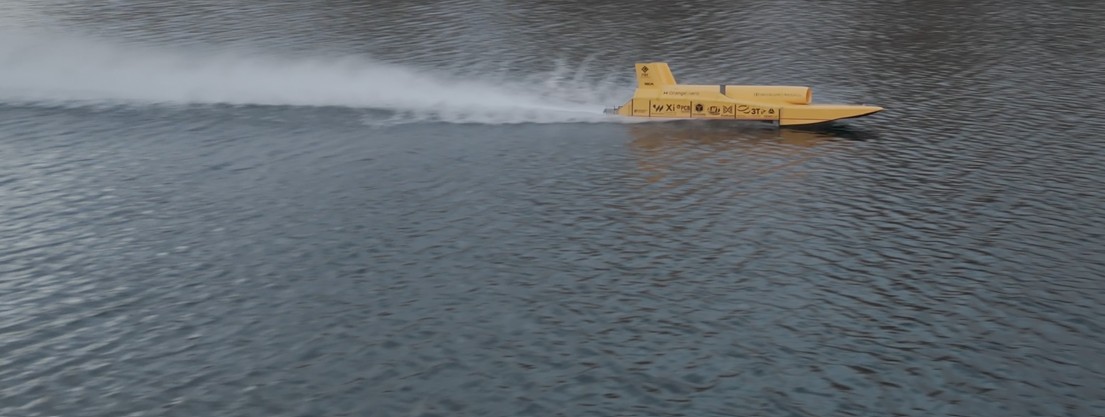

This hub brings together a collection of free learning resources related to the Thrust Water Speed Hydrofoil (ThrustWSH) that will introduce some of the advanced technologies and take your learning deeper into the underlying mathematics and engineering used in the project.
ThrustWSH aims to break the world water speed record with a design speed of 450 mph and builds on the team’s experience from the ThrustSSC and Bloodhound land speed record projects. The current world water speed record is 317.596 mph/511.121 km/h, held by Ken Warby in the Spirit of Australia on 8 October 1978.
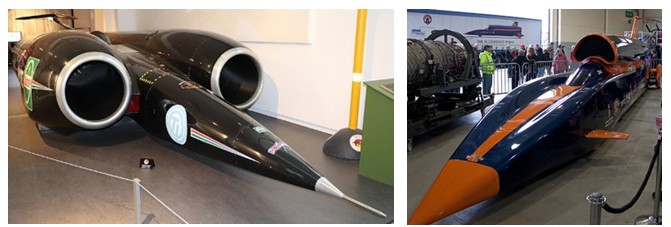
The images above show the ThrustSSC and Bloodhound land speed record vehicles.
The ThrustWSH boat will be 12.2 metres long, weighing 7 tonnes and manufactured to be strong and light using carbon fibre composite materials. It is powered by a Rolls-Royce Spey 205 jet engine, which is a development of the Spey 202 engine, and the project will research how to use sustainable waste-based fuel. The boat uses novel technologies, including super-cavitating hydrofoils (described in our online boat interactive linked below) and active stability and control systems. Safety is at the heart of the project, with risk and hazard management embedded throughout the project and a reinforced safety cell for the pilot.
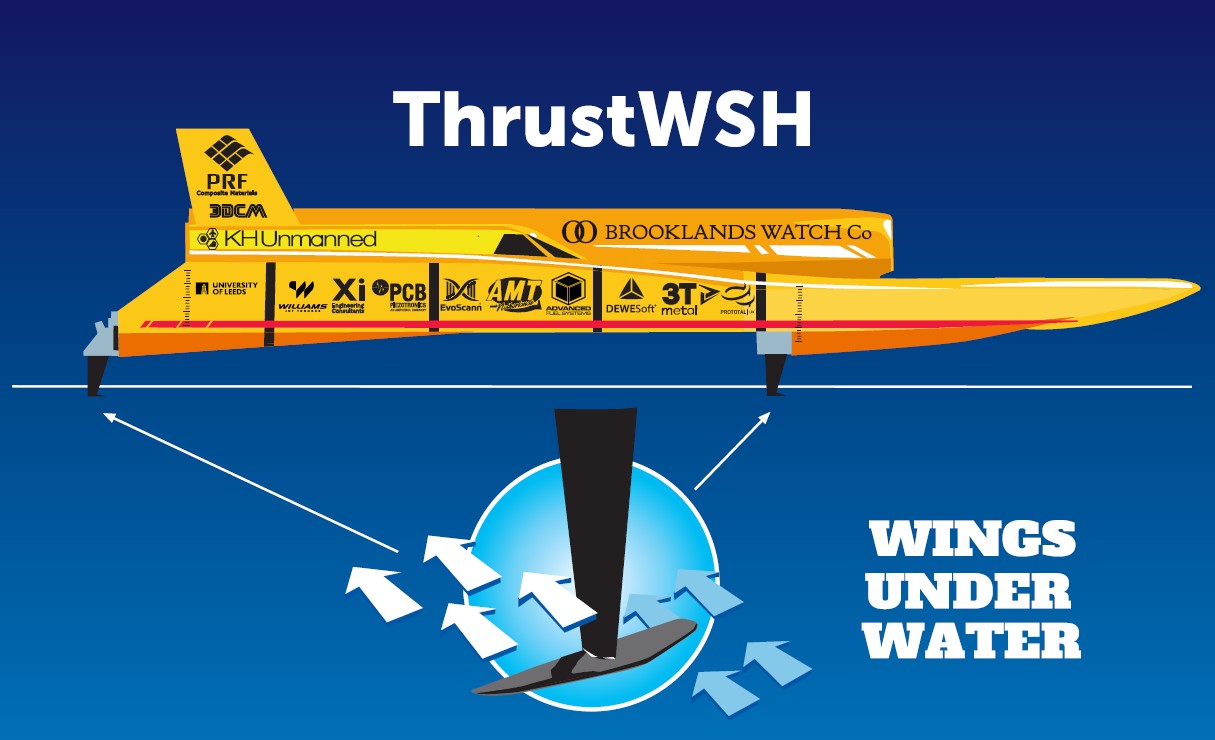
The image above is of the ThrustWSH boat concept.
Engineering and mathematics are essential to the success of the ThrustWSH project - from the design of the boat hull and the systems that control it, to project management and the manufacturing and testing of the boat. Whether you are studying science and maths at school, or an adult inspired by STEM careers, or just excited to find out more about the technologies used in the project, you will find resources on this hub to help you.
If you’re not sure where to start why not try our online boat interactive that will help you to identify some of the key technologies on the boat or watch a series short video to meet the ThrustWSH team and find out what excites them about mathematics and engineering. There are also some careers-related resources to help you think about careers in engineering and STEM.
If you want to study in greater depth, take a look at the free online courses in a variety of mathematics and engineering topics that are available on the hub. All the courses let you know the number of study hours and are tagged with their level (introductory, immediate or advanced) to help you to decide whether they are right for you.
Visit the ThrustWSH water speed record hub
-
ThrustWSH water speed record hub
Learn more to access more details of ThrustWSH water speed record hubIn this hub you will find free learning resources related to the ThrustWSH (Water speed hydrofoil) water speed record project.
Discover our Engineering and Mathematics qualifications
-
Engineering courses
Learn more to access more details of Engineering coursesStart your journey towards becoming a professional engineer with an engineering course from The Open University. Recognised and accredited by professional engineering institutions, our courses cover various engineering topics, such as electronics, engineering design, mechanical engineering and more

-
Mathematics courses
Learn more to access more details of Mathematics coursesWhether you’re looking for a solid grounding in maths and statistics or want to specialise in aspects of pure or applied mathematics, an OU maths course will help you stand out from the crowd. Maths is an inspiring and enjoyable subject that will equip you with problem-solving and decision-making skills valued across employment sectors.

Study a free course
-
Introducing engineering
Learn more to access more details of Introducing engineeringEngineering encompasses a broad range of disciplines from design to manufacturing. This free course, Introducing engineering, introduces a number of key themes that explore how engineering is undertaken in our modern world. These themes include engineering design, rules that govern engineers, manufacturing for products and electricity ...

-
An introduction to design engineering
Learn more to access more details of An introduction to design engineeringThis free course, An introduction to design engineering, looks at the way in which engineers use ideas and approaches from the discipline of design thinking to inform their work. The complexity that people bring to design problems is introduced, along with some basic methods of dealing with such complexity.

-
Engineering: The nature of problems
Learn more to access more details of Engineering: The nature of problemsEngineering is about extending the horizons of society by solving technical problems, ranging from the meeting of basic human needs for food and shelter to the generation of wealth by trade. In this free course, Engineering: The nature of problems, we learn that engineers see the problems more as challenges and opportunities than as difficulties...

Rate and Review
Rate this article
Review this article
Log into OpenLearn to leave reviews and join in the conversation.
Article reviews