Week 4 Readings
3. Common glaze “problems” as learning signals
3.1. 2-minute Practice: Defect → risk → mitigation (quick thinking)
Figure 2 Glaz Crawling Defect
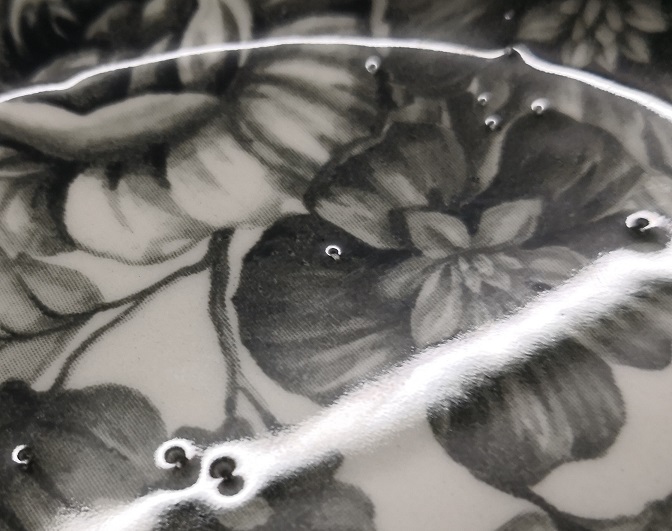
Look at the image and write 3 bullets:
-
What I observe (visible clue):
-
Why it matters (risk):
-
One mitigation idea (simple):
Optional fourth bullet: One question you would ask (about process/material).
REVEAL (Example)
1. Observe: I observe irregular bare patches where the glaze has pulled away, leaving exposed clay body (a crawling pattern).
2. Risk: The surface can be rough and harder to clean, may trap dirt, and can be unsuitable for functional tableware depending on the intended use and finish requirements.
3. Mitigation: Improve glaze adhesion by ensuring the bisque surface is clean and dust-free, adjusting application thickness, and testing a small tile before glazing a full piece (plus record results).
4. Question: Was there dust/grease on the bisque, or was the glaze applied too thick / with high surface tension?