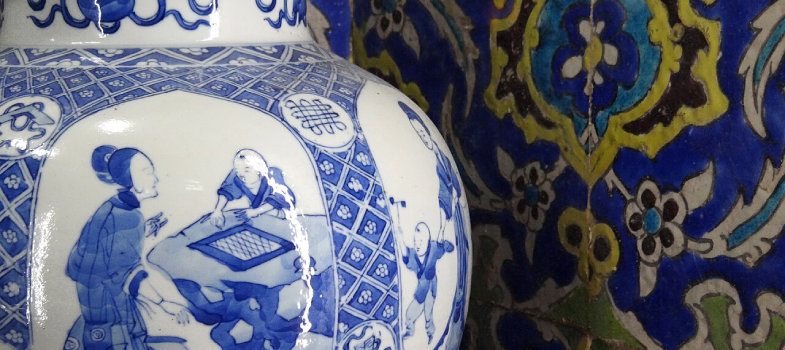
Week 4 Readings
1. A toolkit: Read glaze and surface like a ceramic professional
What you will learn this week
By the end of Week 4, you will be able to:
-
describe glaze surfaces using accurate vocabulary (gloss, matte, texture, defects)
-
explain how firing and atmosphere can change colour and surface results
-
connect “surface choices” to performance thinking (durability, safety, function)
Real-world lens (why this matters)
Glaze and firing decisions affect:
-
how an object looks (colour depth, translucency, texture)
-
how it performs (durability, staining, water resistance)
-
what risks appear (crazing, pinholes, crawling, running)
The 90-second Surface Reading Checklist
Use this when you see any ceramic object (photo or real):
-
Gloss level: glossy / satin / matte
-
Colour response: uniform or varied? pooled in recesses? thinner on edges?
-
Texture: smooth / orange peel / crystalline / crackle
-
Defects: pinholes, crawling, blistering, running, crazing (tiny crack lines)
-
Clues at edges/foot: glaze stops? bare foot ring? kiln marks?
Tip: Start with describing. Interpretation comes second.