13.2.2 Attitudes, beliefs and traditions influence WASH practices
There are several reasons why unhealthy WASH practices persist, even if people have been given good information to help them change for the better. If you look again at Figure 13.2, you can see we have put ‘attitudes’ and ‘beliefs’ on either side of ‘valued WASH practices’. Attitudes are individual preferences or opinions about what a person likes or dislikes. Beliefs are firmly held states of mind about what is true or false. One reason for the persistence of bad WASH practices, even when correct knowledge is available, is that people have attitudes and beliefs that make them ignore the facts.
Can you suggest an attitude and a belief that people might express about not using a latrine even when there is one nearby?
Here are our suggestions, but you may have given other good answers:
- Attitudes against using latrines: ‘I dislike using latrines because they smell bad’; or ‘I prefer to empty my bowels in the open because the bad smell is blown away by the fresh air’.
- Beliefs against using latrines: ‘The bad odour collects in the latrine and causes disease if you breathe it into your body’; or ‘It is safer to defecate in the open because there are evil influences in latrines’.
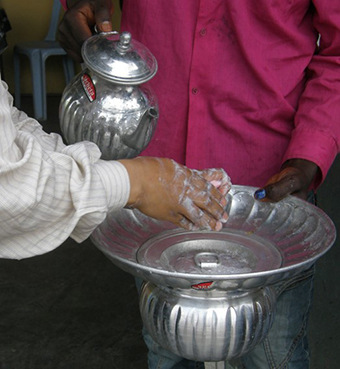
Good WASH practices at community level also include handwashing, accessing clean drinking water, and keeping the physical environment clean and free from waste. Sustaining these practices builds our health, improves our lifestyle and helps us all to live longer. But first, negative attitudes and beliefs must be overcome and replaced with valued behaviours. For example, handwashing with soap before eating is not practised by everyone in Ethiopia, even though it prevents transmission of infection from dirty hands to the mouth. (Figure 13.5).
The example we gave earlier of debo – the valued practice in rural communities of neighbours helping to harvest crops from each other’s fields – can also be termed a tradition, a behaviour that is learned from previous generations and passed on to the next generation. Some traditions, like debo, bring positive benefits to the community and also to the environment. But some traditions expose people and the environment to possible harm.
Open defecation is a tradition in communities like the one we described in Case Study 13.1. Can you recall the tradition mentioned by some of the people he spoke to?
They told him that they continued to defecate in the open because their ‘ancestors never used latrines’. Behaviour that was accepted by the ancestors has become a tradition that people in this community pass on to their children.
Tradition is one reason why, according to the report of the Joint Monitoring Programme for Water Supply and Sanitation in Ethiopia (JMP, 2014), about 37% of Ethiopians were still practising open defecation in 2012.
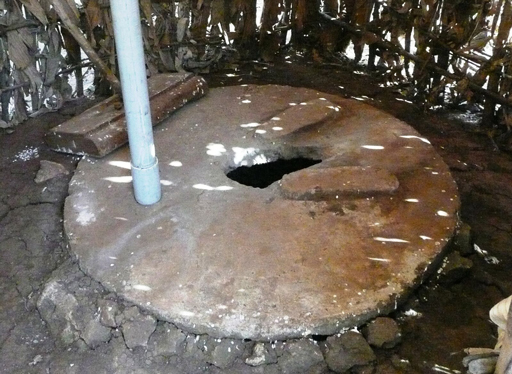
Traditions are very difficult to change because everyone in a community believes it is the right way to behave. Individuals who challenge the tradition are likely to meet opposition from the majority who want to go on doing things in the old way. If open defecation or not washing the hands at critical times is considered normal and traditional in a community, it will take time and effort to persuade people that using a latrine (Figure 13.6) or handwashing with soap are valued practices that benefit the whole community and also protect the environment.
13.2.1 Knowledge of WASH practices is not enough to change behaviour