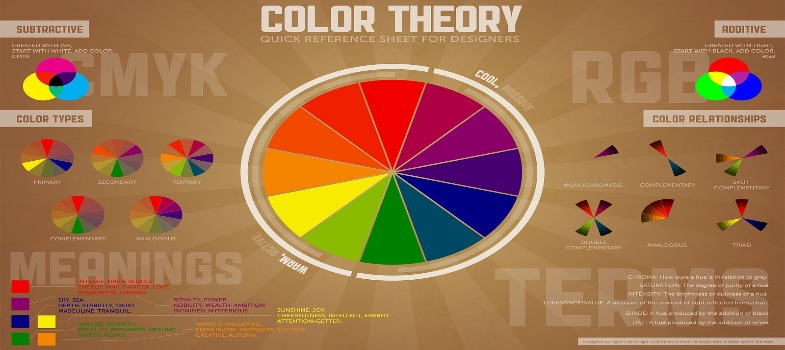
What is Colour
COLOUR
Colour is a property of light. Have you ever seen a ray of sunlight pass through a glass prism? If you have, you know that a prism refracts, or bends, white light into a range of colours.
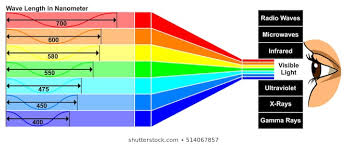
This range is known as the visible spectrum. Each of these colours has a unique electromagnetic wavelength; red possesses the longest wavelength, while violet possesses the shortest
The visible spectrum includes only a portion of the electromagnetic wavelengths that exist. There are other waves that the human eye can’t perceive, such as ultraviolet radiation waves, X rays, gamma rays, infrared waves, microwaves, radar waves and the electromagnetic waves used to broadcast radio and television signals.
Objects in our environment absorb certain light waves and reflect others. The reflected light waves picked up by your eyes and transmitted to your brain are interpreted as colour sensations. What Does Color Do?
Colour is an extremely important aspect of our environment because it directly affects how we perceive our world and how others perceive us. For example, colour is used to reinforce printed warnings, such as Stop, Caution, and Emergency. The flashing red light at a street intersection instructs drivers to stop and proceed slowly.
The visible spectrum is the range of colours that can be seen when light is refracted.
Lights are often used in road construction to alert people to approach an area with caution. The flashing coloured lights of an ambulance tell us that when an emergency is in progress. Red fire trucks, brightly coloured children’s toys, and high contrast, intensely coloured posters are also examples of how colour is used to attract attention. Similarly, colour helps to identify products and businesses visually.
Many people can identify popular soft-drink containers or fast-food restaurant emblems at just a glance of the items’ colours. As a result, manufacturers invest large sums of money to determine the look and colour of their products in the hopes of making them memorable to consumers.
Colour is often used to designate the status of a machine’s operation. Have you ever noticed the small coloured lights on certain devices that tell you when they’re warming up, in operation, or standby mode?
Computers, printers, coffee makers, and battery chargers all contain such indicators. Wires inside cables are coloured to help identify where each wire goes. This is essential knowledge for those assembling and/or making repairs on certain types of equipment.
Colour can either set a mood or be determined by a mood. An example of the former is the dark colours that seem to dominate the sets of television shows concerning the mystery and the supernatural.