
Introduction
Dr. Geraldine Boyle and her colleagues are carrying out research into the experiences of South Asian young adult carers living in England as they transition (or progress) to adulthood. They told us about who they care for, what this involves and how they manage this role alongside family life, education and paid jobs. We learned about the impact of caring on their health and wellbeing, as they help to maintain or enhance the health of those they care for. The young people told us about their aspirations for the future, including progressing their education and embarking on careers. The link to the SATTA study site is here: SATTA: South Asian Young Adult Carers’ Transitions to Adulthood | Faculty of Wellbeing, Education and Language Studies
The young people told us about cultural expectations, religious values, gender roles and looking after their health, as well as the importance of accessing support. Their stories show both the pressures and the strengths that can come with caring. They highlight that no young adult carer should feel they have to manage alone.
Resources
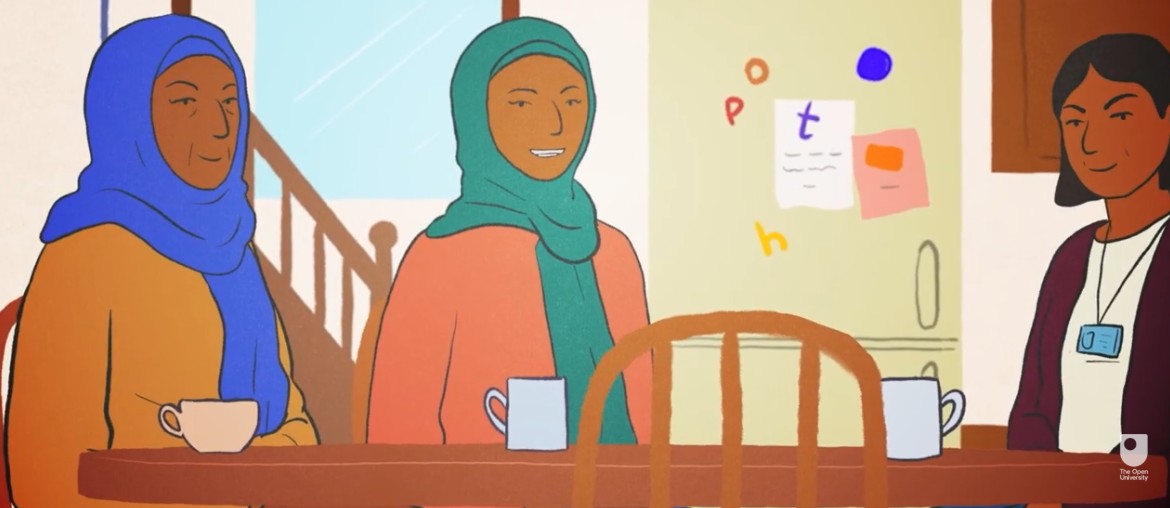
The animations below tell the stories of Bilal and Aisha. While these are fictionalised characters, their stories are based on the experiences of the young people who took part in our study, using their own words. You can find out more about the experiences of South Asian young adult carers by reading the articles provided. Urdu/Punjabi versions are also provided (where possible). The resources on this site provide information and advice for young adult carers, their families and health and social care and education staff and students, regarding the support needs of South Asian and other young adult carers, the value of transition assessments and where to find support. Further resources will be added as the research progresses.
We would like to thank Chandini Subramanyam-Paul and Sabbir Ali for their involvement in preparing the scripts and voicing the animations.
Bilal
Urdu audio version
Bilal's follow-up story
Urdu audio version
Aisha
Urdu audio version
More insights into the lives of South Asian young adult carers
-
What does it mean to be a South Asian young adult carer?
Read now to access more details of What does it mean to be a South Asian young adult carer?What is life like for young adult carers in South Asian families? This article shares the experiences of 16–24 year olds in England who provide unpaid care to relatives, balancing cultural expectations, education and their own wellbeing.

Level: 1 Introductory
-
What are South Asian young adult carers’ aspirations for the future?
Read now to access more details of What are South Asian young adult carers’ aspirations for the future?South Asian young adult carers balance study, work and family responsibilities while caring for loved ones – often with remarkable strength and determination. This article shares their dreams for the future, from higher education and careers to starting families and owning homes, and highlights the support that can help them achieve their goals.

Level: 1 Introductory
-
Supporting South Asian young adult carers: A guide for social workers
Read now to access more details of Supporting South Asian young adult carers: A guide for social workersHow can social workers better support South Asian young adult carers? This article explains the legal duties around transition assessments, highlights key safeguarding considerations and shares practical guidance for delivering culturally sensitive, strengths-based support.

Level: 1 Introductory
Like this? Try a free course
-
Caring for adults
Learn more to access more details of Caring for adultsCaring for adults is an introductory course for anyone in a caring role, either paid or unpaid. It builds on what you already know to give you a better understanding of your role as a carer. It also supports your own well-being by giving you some ideas and information about looking after yourself and dealing with stress.

-
Mental health in society
Learn more to access more details of Mental health in societyIn this free course, Mental health in society, you will explore and critically reflect on mental health. You will explore the relationship between the lived experiences of individuals, and the society and environment in which they live. Different perspectives, approaches and models of understanding and critiquing mental health will be explored ...

-
Exploring learning disabilities: supporting belonging
Learn more to access more details of Exploring learning disabilities: supporting belongingThis course takes the real-life cases of a number of different people to explore what it is like to have the label ‘learning disability’. The course also considers how it feels to support someone with a learning disability, as a family member, a friend, an advocate or a paid worker. Through these human stories the course considers the ...

Rate and Review
Rate this article
Review this article
Log into OpenLearn to leave reviews and join in the conversation.
Article reviews