
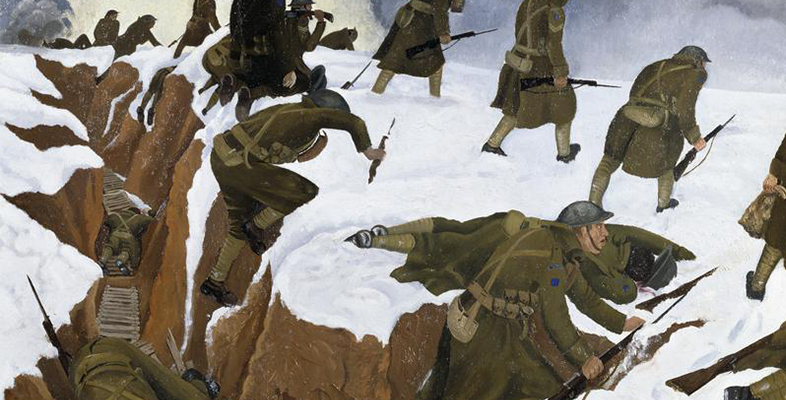
This free course, Teaching the First World War, is designed for history teachers and their pupils. It provides a wide range of visual, textual and oral sources to enrich the teaching of the First World War. It covers familiar and less familiar aspects of the history of the First World War, ranging from the debate on the origins of the war and propaganda to non-European combatants’ experiences of fighting in a global war, and the memory and commemoration of the conflict.
It includes skills development for teachers and their pupils, including document analysis, advanced techniques in internet searches for primary and secondary sources, and how to evaluate and identify the most suitable literature on the topic.
Course learning outcomes
After studying this course, you should be able to:
- understand topics relating to the history of the First World War, including its origins, the role of propaganda, the experiences and memories of non-European combatants, and aspects of commemoration and memory
- analyse primary sources, including documents, paintings and objects, and develop ideas for how these sources can by analysed by students in the classroom
- use advanced search techniques for locating primary and secondary sources on different online platforms
- evaluate search results to identify the most suitable literature for your own work and your students
- explain search techniques which will be helpful for students' non-exam assessment (NEA) projects.
First Published: 25/07/2023
Updated: 25/07/2023
The submitted rating needed to be reduced due to the sheer number of broken links and less significant issues that clearly necessitate a full course update. Hopefully the following will be of assistance in this regard.
The British Library's Web Editor, Richard Power, kindly provided the following response:
𝗙𝗼𝗹𝗹𝗼𝘄𝗶𝗻𝗴 𝘁𝗵𝗲 𝗰𝘆𝗯𝗲𝗿-𝗮𝘁𝘁𝗮𝗰𝗸, 𝘄𝗲 𝗮𝗿𝗲 𝗶𝗻 𝘁𝗵𝗲 𝗽𝗿𝗼𝗰𝗲𝘀𝘀 𝗼𝗳 𝗿𝗲𝗯𝘂𝗶𝗹𝗱𝗶𝗻𝗴 𝗼𝘂𝗿 𝘄𝗲𝗯𝘀𝗶𝘁𝗲. 𝗪𝗲 𝗽𝗹𝗮𝗻 𝘁𝗼 𝗿𝗲𝗯𝘂𝗶𝗹𝗱 𝘁𝗵𝗲 𝗪𝗼𝗿𝗹𝗱 𝗪𝗮𝗿 𝗢𝗻𝗲 [embedded micro-]𝘀𝗶𝘁𝗲 𝗯𝘂𝘁 𝘄𝗲 𝗱𝗼 𝗻𝗼𝘁 𝘆𝗲𝘁 𝗵𝗮𝘃𝗲 𝗮𝗻𝘆 𝘁𝗶𝗺𝗲𝘀𝗰𝗮𝗹𝗲𝘀 𝗳𝗼𝗿 𝘄𝗵𝗲𝗻 𝘁𝗵𝗶𝘀 𝘄𝗶𝗹𝗹 𝗯𝗲 𝗱𝗼𝗻𝗲.
𝗔𝘀 𝘆𝗼𝘂 𝗺𝗲𝗻𝘁𝗶𝗼𝗻, 𝗧𝗵𝗲 𝗕𝗿𝗶𝘁𝗶𝘀𝗵 𝗟𝗶𝗯𝗿𝗮𝗿𝘆’𝘀 𝗪𝗼𝗿𝗹𝗱 𝗪𝗮𝗿 𝗢𝗻𝗲 𝘀𝗶𝘁𝗲 𝗶𝘀 𝗰𝘂𝗿𝗿𝗲𝗻𝘁𝗹𝘆 𝗼𝗻𝗹𝘆 𝗮𝘃𝗮𝗶𝗹𝗮𝗯𝗹𝗲 𝗼𝗻 𝘁𝗵𝗲 𝗜𝗻𝘁𝗲𝗿𝗻𝗲𝘁 𝗔𝗿𝗰𝗵𝗶𝘃𝗲 (𝗲𝗴 𝗵𝘁𝘁𝗽𝘀://𝘄𝗲𝗯.𝗮𝗿𝗰𝗵𝗶𝘃𝗲.𝗼𝗿𝗴/𝘄𝗲𝗯/𝟮𝟬𝟭𝟵𝟬𝟯𝟭𝟵𝟭𝟮𝟭𝟴𝟬𝟵/𝗵𝘁𝘁𝗽𝘀://𝘄𝘄𝘄.𝗯𝗹.𝘂𝗸/𝘄𝗼𝗿𝗹𝗱-𝘄𝗮𝗿-𝗼𝗻𝗲/). 𝗣𝗿𝗲𝘀𝗲𝗻𝘁𝗮𝘁𝗶𝗼𝗻 𝗼𝗳 𝘁𝗵𝗲 𝗶𝗺𝗮𝗴𝗲𝘀 𝗮𝗻𝗱 𝗻𝗮𝘃𝗶𝗴𝗮𝘁𝗶𝗼𝗻 𝗳𝗼𝗿 𝘁𝗵𝗲 𝘀𝗶𝘁𝗲 𝗰𝗮𝗻 𝗯𝗲 𝗽𝗮𝘁𝗰𝗵𝘆 𝗼𝗻 𝘁𝗵𝗲 𝗜𝗻𝘁𝗲𝗿𝗻𝗲𝘁 𝗔𝗿𝗰𝗵𝗶𝘃𝗲, 𝗯𝘂𝘁 𝗮𝗹𝗹 𝘁𝗵𝗲 𝘄𝗿𝗶𝘁𝘁𝗲𝗻 𝗰𝗼𝗻𝘁𝗲𝗻𝘁 𝗳𝗼𝗿 𝘁𝗵𝗲 𝗽𝗮𝗴𝗲𝘀 𝘀𝗵𝗼𝘂𝗹𝗱 𝗯𝗲 𝘁𝗵𝗲𝗿𝗲.
𝗢𝘂𝗿 𝗼𝘄𝗻 𝗰𝗼𝗽𝗶𝗲𝘀 𝗼𝗳 𝘁𝗵𝗲 𝗕𝗿𝘆𝗰𝗲 𝗥𝗲𝗽𝗼𝗿𝘁 𝗮𝗿𝗲 𝗮𝘁 𝗽𝗿𝗲𝘀𝗲𝗻𝘁 𝗼𝗻𝗹𝘆 𝗮𝘃𝗮𝗶𝗹𝗮𝗯𝗹𝗲 𝘁𝗼 𝗿𝗲𝗮𝗱 𝗶𝗻 𝗼𝘂𝗿 𝗥𝗲𝗮𝗱𝗶𝗻𝗴 𝗥𝗼𝗼𝗺𝘀 (𝗵𝘁𝘁𝗽𝘀://𝗰𝗮𝘁𝗮𝗹𝗼𝗴𝘂𝗲.𝗯𝗹.𝘂𝗸/𝗽𝗲𝗿𝗺𝗮𝗹𝗶𝗻𝗸/𝟰𝟰𝗕𝗟_𝗠𝗔𝗜𝗡/𝟭𝘂𝗸𝘃𝟲𝗮𝟵/𝗮𝗹𝗺𝗮𝟵𝟵𝟬𝟭𝟱𝟮𝟭𝟯𝟮𝟴𝟬𝟬𝟭𝟬𝟵𝟮𝟱𝟭), 𝗮𝗹𝘁𝗵𝗼𝘂𝗴𝗵 𝗰𝗼𝗽𝗶𝗲𝘀 𝗮𝗿𝗲 𝗳𝗿𝗲𝗲𝗹𝘆 𝗮𝘃𝗮𝗶𝗹𝗮𝗯𝗹𝗲 𝗼𝗻 𝘁𝗵𝗲 𝗜𝗻𝘁𝗲𝗿𝗻𝗲𝘁 𝗔𝗿𝗰𝗵𝗶𝘃𝗲, 𝗲𝗴 𝗵𝘁𝘁𝗽𝘀://𝗮𝗿𝗰𝗵𝗶𝘃𝗲.𝗼𝗿𝗴/𝗱𝗲𝘁𝗮𝗶𝗹𝘀/𝗿𝗲𝗽𝗼𝗿𝘁𝗼𝗳𝗰𝗼𝗺𝗺𝗶𝘁𝘁𝗲𝟬𝟬𝗶𝗻𝗴𝗿𝗲𝗮/𝗺𝗼𝗱𝗲/𝟮𝘂𝗽
𝗜𝗳 𝘁𝗵𝗲𝗿𝗲 𝗶𝘀 𝗮𝗻 𝗼𝘂𝘁 𝗼𝗳 𝗰𝗼𝗽𝘆𝗿𝗶𝗴𝗵𝘁 𝗽𝘂𝗯𝗹𝗶𝗰𝗮𝘁𝗶𝗼𝗻 𝘆𝗼𝘂 𝗻𝗲𝗲𝗱 𝘄𝗵𝗶𝗰𝗵 𝗶𝘀 𝗻𝗼𝘁 𝗮𝘃𝗮𝗶𝗹𝗮𝗯𝗹𝗲 𝗮𝗻𝘆𝘄𝗵𝗲𝗿𝗲 𝗼𝗻𝗹𝗶𝗻𝗲 𝗮𝗻𝗱 𝘆𝗼𝘂 𝗮𝗿𝗲 𝘂𝗻𝗮𝗯𝗹𝗲 𝘁𝗼 𝗰𝗼𝗺𝗲 𝘁𝗼 𝘁𝗵𝗲 𝗕𝗿𝗶𝘁𝗶𝘀𝗵 𝗟𝗶𝗯𝗿𝗮𝗿𝘆, 𝘆𝗼𝘂 𝗺𝗮𝘆 𝗯𝗲 𝗮𝗯𝗹𝗲 𝘁𝗼 𝗮𝗰𝗾𝘂𝗶𝗿𝗲 𝗮 𝗰𝗼𝗽𝘆 𝘁𝗵𝗿𝗼𝘂𝗴𝗵 𝗼𝘂𝗿 𝗢𝗻 𝗗𝗲𝗺𝗮𝗻𝗱 𝘀𝗲𝗿𝘃𝗶𝗰𝗲 𝗵𝘁𝘁𝗽𝘀://𝘄𝘄𝘄.𝗯𝗹.𝘂𝗸/𝘀𝗲𝗿𝘃𝗶𝗰𝗲𝘀/𝗼𝗻-𝗱𝗲𝗺𝗮𝗻𝗱.
The 𝗝𝗦𝗧𝗢𝗥 web site has been redeveloped since the screen shots were taken. Also, a free account now permits viewing of "100 free articles this month", rather than the 6 that is stated throughout this course.
The document comments are based on the prevailing 𝗠𝗦 𝗪𝗼𝗿𝗱 𝗱𝗼𝗰𝘂𝗺𝗲𝗻𝘁.
There are five: "𝗘𝗿𝗿𝗼𝗿! 𝗛𝘆𝗽𝗲𝗿𝗹𝗶𝗻𝗸 𝗿𝗲𝗳𝗲𝗿𝗲𝗻𝗰𝗲 𝗻𝗼𝘁 𝘃𝗮𝗹𝗶𝗱.." related to session links.
Session 1
1 Why did we fight?
"You can find discussions of this type of propaganda in 𝗘𝗿𝗿𝗼𝗿! 𝗛𝘆𝗽𝗲𝗿𝗹𝗶𝗻𝗸 𝗿𝗲𝗳𝗲𝗿𝗲𝗻𝗰𝗲 𝗻𝗼𝘁 𝘃𝗮𝗹𝗶𝗱.."
4 Summary
"In the 𝗘𝗿𝗿𝗼𝗿! 𝗛𝘆𝗽𝗲𝗿𝗹𝗶𝗻𝗸 𝗿𝗲𝗳𝗲𝗿𝗲𝗻𝗰𝗲 𝗻𝗼𝘁 𝘃𝗮𝗹𝗶𝗱.., we will explore propaganda during the First World War in more detail"
Session 2
6 Summary
"In the 𝗘𝗿𝗿𝗼𝗿! 𝗛𝘆𝗽𝗲𝗿𝗹𝗶𝗻𝗸 𝗿𝗲𝗳𝗲𝗿𝗲𝗻𝗰𝗲 𝗻𝗼𝘁 𝘃𝗮𝗹𝗶𝗱.., you will develop primary source analysis further."
Session 3
2 Summary
"In the 𝗘𝗿𝗿𝗼𝗿! 𝗛𝘆𝗽𝗲𝗿𝗹𝗶𝗻𝗸 𝗿𝗲𝗳𝗲𝗿𝗲𝗻𝗰𝗲 𝗻𝗼𝘁 𝘃𝗮𝗹𝗶𝗱.., you will look at examples of commemoration of the war."
Session 4
Activity 4 Assessing potential secondary sources
"It uses the subject of the causes of the First World War – which, as 𝗘𝗿𝗿𝗼𝗿! 𝗛𝘆𝗽𝗲𝗿𝗹𝗶𝗻𝗸 𝗿𝗲𝗳𝗲𝗿𝗲𝗻𝗰𝗲 𝗻𝗼𝘁 𝘃𝗮𝗹𝗶𝗱.. of this course makes clear, remains a highly contested debate"
𝗦𝗲𝘀𝘀𝗶𝗼𝗻 𝟭: 𝗢𝗿𝗶𝗴𝗶𝗻𝘀 𝗼𝗳 𝘁𝗵𝗲 𝗙𝗶𝗿𝘀𝘁 𝗪𝗼𝗿𝗹𝗱 𝗪𝗮𝗿
Activity 1 Finding primary sources online Discussion
http://germanhistorydocs.ghi-dc.org/sub_document.cfm?document_id=815 ->
https://germanhistorydocs.org/en/wilhelmine-germany-and-the-first-world-war-1890-1918/the-kaiser-speaks-from-the-balcony-of-the-royal-palace-august-1-1914
The following link proved to be unreliable, initially online, the next day offline, now back again...
https://encyclopedia.1914-1918-online.net/article/the-historiography-of-the-origins-of-the-first-world-war/
2.1 Centenary debates
Activity 3 Accessing review articles
Without having access to the full text of these 2 books, my understanding is that:
• Joll and Martel (2022) tell you why the war broke out by looking at the traditional systemic causes (Alliances, Militarism, Imperialism).
• Mombauer (2024) takes the next academic step. She explains why historians still cannot agree on those causes, unmasking a century's worth of political bias, hidden archives, and state-sponsored myths.
2.2 Activity 4
"Did you know?"
"independent Social Democratic Party" -> "Independent Social Democratic Party" (an official party), the party that Karl Kautsky founded in 1917. Actually, I would have welcomed a greater understanding as to why someone from outside of the SDP and who was also a leading Marxist was given the task in 1918, only to then have his work vetted (aka censored). The official release might have been in stark contrast to his conclusions, but both would surely have still have been accessible, thus losing any benefit of having such an authoritative figure undertaking the work in the first place? Since the formal information only came to light through the research that was undertaken by Fritz Fischer, it remains unclear why Kautsky did not speak out.
2.2 Activity 5
Audio: "Christopher Clark 2"
"Admiral Müller’s recollection and his diary entry ends the account of the meeting of that day by saying the result of this meeting was exactly zero, so the war council isn’t a war council and it didn’t have the consequences that have been attributed to it"
Whilst Admiral Müller’s 8 December 1912 diary did state: "That was the end of the meeting. There were almost no results" it also included: 'Gen. v. Moltke: "I consider a war inevitable—the sooner, the better. But we should do a better job of gaining popular support for a war against Russia, in line with the Kaiser's remarks." H.M. confirmed this and asked the secretary of state to use the press to work toward this end.' Surely this confirms that laying the groundwork for war amongst the population through the press predates the assassination?
In addition: "The chief of the general staff says: the sooner war comes, the better; however, he hasn't concluded from this that we should give Russia or France, or even both, an ultimatum that would trigger a war for which they would carry the blame."
Indeed, it strikes me that a combination of increasing popular support, obtaining additional finances, the need to construct the Tirpitz and additional submarines, together with creating additional alliances (e.g., Romania/Bulgaria/Albania/Austria-Hungary and potentially even Turkey) are the actual components of the Admiral's diary.
https://en.wikipedia.org/wiki/German_Imperial_War_Council_of_8_December_1912
3 Activity 6, 3.1 and 3.2
With further investigation into the "blank cheque" there seems to be some debate amongst historians as to whether the telegram of the 5th or 6th deserved the designation.
1a) What the course has characterised as the 'blank cheque' (the 5th July 1914 telegram from the Austrian Ambassador to the Austrian Foreign Minister) does indeed include the translated statement "the Kaiser authorised me to inform your Gracious Majesty that we might in this case, as in all others, rely upon Germany's full support", immediately following it goes on to state "He must, as he said before, first hear what the Imperial Chancellor had to say". Thus, this document is more in expectation of full unequivocal support, rather than providing it.
https://www.open.edu/openlearn/mod/oucontent/view.php?id=142569§ion=9
1b) As stated in 3.1, on the 6th July 1914 a document that edged considerably closer to be an actual 'blank cheque' was issued (indeed, other sources consider this to be the actual 'blank cheque'), namely the telegram sent by the German Chancellor, Theobald von Bethmann-Hollweg, to the German Ambassador at Vienna. This concludes with the statement "The Emperor Francis Joseph may, however, rest assured that His Majesty will faithfully stand by Austria-Hungary, as is required by the obligations of his alliance and of his ancient friendship."
However, the body of the telegram provides a reassurance of standing-by, framed as alliance obligations, i.e. a commitment about German posture and fidelity to the alliance, not a detailed operational carte-blanche for every conceivable Austrian move.
The “blank” here is less about the telegram(s) giving unlimited tactical instructions and more about it giving high confidence that Austria will not be left exposed if it presses the Serbia issue.
Specifically:
i) It aims at concrete political outcomes (“renunciation of Serbia” and “suppression of the Rumanian agitations…”), not just vague moral support.
ii) It supplies a strong alliance pledge (“rest assured… faithfully stand by Austria-Hungary”), even while carving out only one narrow limitation: Germany “cannot interfere” in the current Austro-Hungarian–Serbian dispute “now” (competence, not will).
https://w.johndclare.net/causes_WWI4_BlankCheque.htm
https://wwi.lib.byu.edu/index.php/The_'Blank_Check'
2) In addition, historians have as stated in the URL below, interpreted the support in contradictory ways: escalation versus localisation.
Was Germany trying to push Austria toward decisive action (accepting escalation risk) or did Germany think it could support coercively in the Balkans without triggering a general European war (as covered in 3.2)?
https://encyclopedia.1914-1918-online.net/article/germanys-blank-cheque-to-austria-hungary/
The 14–18–NOW website URL (https://www.1418now.org.uk/) could not be reached from my PC, though my mobile is forwarded to the Imperial War Museum's web site, https://www.iwm.org.uk/partnerships/first-world-war-centenary/1418now. This is merely a notification that the project has now completed, without any reference to the original content. The Wayback Machine has cached content, e.g., https://web.archive.org/web/20230410193856/https://www.1418now.org.uk/.
Also:
https://artinpublic.art/programs/14-18-now
https://en.wikipedia.org/wiki/14%E2%80%9318_NOW
https://artsandculture.google.com/story/cQVBUiY9jPNlIg
The "German History in Documents and Images website" also has broken links https://germanhistorydocs.ghi-dc.org/ and https://germanhistorydocs.ghi-dc.org/sub_document.cfm?document_id=801.
With the Wayback Machine's assistance, these should now be https://germanhistorydocs.org/ and
https://germanhistorydocs.org/en/wilhelmine-germany-and-the-first-world-war-1890-1918/germany-and-the-ultimatum-heinrich-von-tschirschky-and-boegendorff-vienna-to-gottlieb-von-jagow-july-10-1914
𝗦𝗲𝘀𝘀𝗶𝗼𝗻 𝟮: 𝗣𝗿𝗼𝗽𝗮𝗴𝗮𝗻𝗱𝗮
1 Defining propaganda
Broken links:
"The British Library’s First World War website" -> "https://www.bl.uk/world-war-one", [https://web.archive.org/web/20230205105735/https://www.bl.uk/world-war-one]
"This First World War propaganda video" -> "https://www.bl.uk/world-war-one/videos/world-war-one-propaganda"
2.1 British propaganda – Example 1
Activity 3 Primary source analysis
With regard to "Uses for historians", which states "Like all sources, however, the poster has its limitations. For instance, it does not tell us how men and women viewed enlistment in reality. And, as with all examples of propaganda, it is difficult to gauge how people responded to posters like this. Whether they were successful or not is open to debate."
A few thoughts:
1) Recruitment/enlistment data over time: compare enlistment rates before vs. after major poster campaigns or recruitment drives; look for changes in who was enlisting (age groups, regions), not just totals.
2) Local case studies: many posters were deployed region-by-region and sometimes tied to specific recruitment initiatives. If a locality with heavy poster coverage shows different outcomes than similar nearby areas, that can be suggestive (though still not definitive).
3) Administrative feedback from recruitment bodies: official minutes, reports, and correspondence sometimes note whether propaganda “moved” people—e.g., anecdotal evidence, complaints, or reports of increased turnout at recruitment offices.
4) Press and public reaction: letters to newspapers, criticism in the press, and debates in Parliament can indicate whether propaganda was landing—or failing.
5) Enemy reactions and intelligence: propaganda works partly by shaping behaviour; militaries sometimes assessed enemy morale and disaffection. This is more common for enemy propaganda than for measuring the poster’s effect on one’s own enlistment, but intelligence reports can still provide clues.
6) Surveys/social research analogues (though rare in WWI): there were occasional inquiries and records of public sentiment. These are scarce and not always systematic.
2.2 British propaganda – Example 2
Activity 4 Primary source analysis
Re: "Report of the [Bryce] Committee on Alleged German Outrages By O Bryce, F Pollock, E Clarke, K Digby, A Hopkinson, H Fisher, H Cox"
"More pages of the report can be viewed on the British Library website." broken link -> https://www.bl.uk/collection-items/bryce-report-committee-alleged-german-outrages
...a search within the BL site states that members can use on-site PCs to access the data. Google Books states that it must be purchased. However:
https://archive.org/details/reportofcommitte00grea
https://dn760004.eu.archive.org/0/items/reportofcommitte00grea/reportofcommitte00grea.pdf
Project Gutenberg has a far shorter document, "The Truth About German Atrocities", but this still contains the extracted text...
https://www.gutenberg.org/ebooks/50788
...however, it is perhaps interesting to note that the appended "𝗧𝗵𝗲𝘆 𝗮𝗹𝘀𝗼 𝗼𝗻 𝗻𝘂𝗺𝗲𝗿𝗼𝘂𝘀 𝗼𝗰𝗰𝗮𝘀𝗶𝗼𝗻𝘀 𝘁𝗵𝗿𝗲𝘄 𝗰𝗼𝗿𝗽𝘀𝗲𝘀 𝗶𝗻𝘁𝗼 𝘄𝗲𝗹𝗹𝘀, 𝗼𝗿 𝗹𝗲𝗳𝘁 𝗶𝗻 𝘁𝗵𝗲𝗺 𝘁𝗵𝗲 𝗯𝗼𝗱𝗶𝗲𝘀 𝗼𝗳 𝗽𝗲𝗿𝘀𝗼𝗻𝘀 𝗺𝘂𝗿𝗱𝗲𝗿𝗲𝗱 𝗯𝘆 𝗱𝗿𝗼𝘄𝗻𝗶𝗻𝗴" does not appear in the shorter version; both from the perspective of both its omission and the fact that such a very significant statement had only been appended to a far lesser paragraph?
2.3 Useful resources for studying British propaganda in the First World War
"Horne and Kramer’s 2002 book is freely available online." -> https://archive.org/details/germanatrocities00horn
...this merely provides the cover and index. Google Books provides a far greater "preview":
https://books.google.co.uk/books/about/German_Atrocities_1914.html?id=Navs5TkI9oAC&redir_esc=y
https://books.google.co.uk/books?id=Navs5TkI9oAC&printsec=frontcover#v=onepage&q&f=false.
Also, all references state that the publication date was 𝟮𝟬𝟬𝟭.
3.2 German propaganda – Example 2
Activity 6 Primary source analysis
"My country is you – New Prussia (1916)"
Who? “The exact organisation responsible for the poster is not clear” Egon Tschirch worked for the Imperial army press office in Berlin from 1916.
𝗦𝗲𝘀𝘀𝗶𝗼𝗻 𝟯: 𝗚𝗹𝗼𝗯𝗮𝗹 𝘄𝗮𝗿 𝗲𝘅𝗽𝗲𝗿𝗶𝗲𝗻𝗰𝗲𝘀
1.4.2 Horace Pippin’s wartime notebook
Activity 2 Horace Pippin’s wartime notebook
"See Session 1, Section 3" links to the OpenLearn web site, rather than within the document.
"Anne Monahan’s article" -> "https://www-jstor-org.libezproxy.open.ac.uk/stable/25435156?sid=primo", this should have been "https://www.jstor.org/stable/25435156"
Smithsonian link: https://www.aaa.si.edu/collections/horace-pippin-notebooks-and-letters-8586
"In the 1930s, Horance Pippin" -> "Horace"
The course may well have benefited by the inclusion of the YouTube video "Harlem Hellfighters' Daring Offensive in Séchault (Season 1) | History"
https://www.youtube.com/watch?v=CvaSE69Cpsk
1.4.3 James Reese Europe
Typos: alterntaively -> alternatively and Music Department.. -> Music Department.
"An excellent monograph on the subject" "Book available to patrons with print disabilities" "A More Unbending Battle" -> preview version only
"Another source which is freely available" "Book available to patrons with print disabilities" "Harlem’s Hell Fighters" -> preview version only
1.5 1 Dominion Forces in the war
Activity 3 Dominion First World War Statistics
The graphic for the table is of the low-resolution version, requiring either the transfer of the maximised image from the Web course unit or (even better) the extraction from the source table...
https://encyclopedia.1914-1918-online.net/article/indigenous-experience-of-war-british-dominions/
1.5.2 Mike Mountain Horse
From the Canadian and IWM archives his name was often hyphenated when included in his official documentation, "Mike Mountain-Horse"?
https://recherche-collection-search.bac-lac.gc.ca/eng/Home/Record?app=pffww&IdNumber=178860&q_type_1=q&q_1=Mike%20Mountain%20Horse&ecopy=510312a
https://livesofthefirstworldwar.iwm.org.uk/searchlives/field/birthplace/Blood%20Tribe%20First%20Nations%20MB/filter
"At Cambrai he witnessed ‘the first massed tank attack in history...'" Cambrai was not the first massed tank attack, though it was considerably the more effective:
Nivelle offensive (16 April – 9 May 1917) 128 tanks
https://en.wikipedia.org/wiki/Nivelle_offensive
The first Battle of Cambrai 20 November – 7 December 1917, 476 tanks (378 combat tanks)
https://en.wikipedia.org/wiki/Battle_of_Cambrai_(1917)
"Did you know? Mountain Horse’s service records have been digitised and can be found on this Imperial War Museum website."
Even the IWM's links are having issues, the "Evidence" button yields "PDF of service records for C.E.F", however the following URL is broken: https://central.bac-lac.gc.ca/.item//?op=pdf&app=CEF&id=B6448-S013
However, the following URLs provide further information:
a) https://recherche-collection-search.bac-lac.gc.ca/eng/Home/Result?q_1=Mike+Mountain-Horse&SEARCH_TYPE=SEARCH_BASIC&q_type_1=q
b) 895041 https://recherche-collection-search.bac-lac.gc.ca/eng/Home/Record?app=pffww&IdNumber=178860&q_type_1=q&q_1=Mike%20Mountain-Horse&ecopy=510312a
c) 195041 https://recherche-collection-search.bac-lac.gc.ca/eng/Home/Record?app=paslisandborent&IdNumber=4441136&q_type_1=q&q_1=Mike%20Mountain-Horse&ecopy=e003604569
"Did you know? Resources and further reading" "Mountain Horse (1979)" -> preview version only.
𝗦𝗲𝘀𝘀𝗶𝗼𝗻 𝟰: 𝗠𝗲𝗺𝗼𝗿𝘆, 𝗿𝗲𝗽𝗿𝗲𝘀𝗲𝗻𝘁𝗮𝘁𝗶𝗼𝗻 𝗮𝗻𝗱 𝗿𝗲𝗺𝗲𝗺𝗯𝗿𝗮𝗻𝗰𝗲
"This session focuses on the representation, commemoration and memory of the First World War" -> I am intrigued as to the absence of photography, given its importance within WW1 and the fact that it was the first conflict to receive full coverage, e.g., the images that were captured by Lt Ernest Brooks. Indeed, 3.1 states "we would need to examine paintings like this alongside other sources, such as photographs and eyewitness accounts". https://encyclopedia.1914-1918-online.net/article/photography/
1 Historiography
Jay Winter, "Sites of Memory, Sites of Mourning: The Great War in European Cultural History" -> the current edition is dated 𝟮𝟴 𝗝𝘂𝗹 𝟮𝟬𝟭𝟰.
Gary Sheffield, "Forgotten Victory: The First World War: Myths and Realities" -> the current edition is dated 𝟭𝟰 𝗠𝗮𝘆 𝟮𝟬𝟭𝟴.
2.2 War poetry – Example 2
"Did you know?"
It is perhaps surprising that the "First World War Poetry Digital Archive" does not actually include the text of "Dulce et Decorum est"?
3.1 War art – Example 1
"When?" "Battle of Third Ypres" -> "Third Battle of Ypres"
"Limitations" "We also need to be aware that Nevinson may have intentionally intended to shock his audience and may have embellished the painting for this purpose" -> whilst artistic licence must always be considered, there is no question in this case that such imagery was repeated continually throughout the Western Front. Perhaps also confirmation that the inclusion of photography (in addition to poetry and art) would have been useful.
"What does this painting depict?"
Presumably the return of millions of service men who experienced such conditions would also have removed any possibility of producing art that continued to glorify war.
3.2 War art – Example 2
"What does this painting depict?" "a line of temporarily blinded soldiers" -> 𝗜𝗻 𝗿𝗲𝗮𝗹𝗶𝘁𝘆 𝗺𝘂𝘀𝘁𝗮𝗿𝗱 𝗴𝗮𝘀 𝗶𝗻𝗷𝘂𝗿𝗶𝗲𝘀 — 𝗲𝘀𝗽𝗲𝗰𝗶𝗮𝗹𝗹𝘆 𝘁𝗼 𝘁𝗵𝗲 𝗲𝘆𝗲𝘀 𝗮𝗻𝗱 𝗹𝘂𝗻𝗴𝘀 — 𝗰𝗼𝘂𝗹𝗱 𝗯𝗲 𝘀𝗲𝘃𝗲𝗿𝗲 𝗮𝗻𝗱 𝗹𝗼𝗻𝗴-𝗹𝗮𝘀𝘁𝗶𝗻𝗴 𝗳𝗼𝗿 𝗺𝗮𝗻𝘆 𝘀𝗼𝗹𝗱𝗶𝗲𝗿𝘀.
"Limitations"
"Sargent’s exact views on the war are also hard gauge from this painting alone; in this sense, it has limitations as a source." -> his niece Rose-Marie died while working as a nurse for wounded WW1 soldiers. Henry Tonks (who travelled with him) later recalled going to the corps dressing station at le Bac-du-sud after hearing about “gassed cases,” and says Sargent was “very struck by the scene,” then “immediately made a lot of notes.” Although Sargent was commissioned to help create a grand national memorial scheme he “abandoned his assigned theme” and chose to depict the human consequences of chemical warfare.
"Did you know?"
"Useful historical context is also available on the British Library’s website." -> unfortunately, as mentioned previously, this remains offline for the foreseeable future and there seems no sign on the Internet Archive either.
https://www.bl.uk/world-war-one/articles/why-paint-war-british-and-belgian-artists
4 Primary source analysis – war memorials and commemorative rituals
"The idea came from Sir Percy Fitzpatrick, who had served as high commissioner in South Africa during the war. He modelled the silence on a practice he had observed there known as ‘the three minutes’ pause’, which had been used to honour those, living and dead, who had served their country. Though three minutes was considered too long for the armistice day anniversary" -> strictly it was the Cape Town Mayor, Sir Harry Hands, who reduced the public observance from 3 minutes to 2.
𝗦𝗲𝘀𝘀𝗶𝗼𝗻 𝟱: 𝗦𝗸𝗶𝗹𝗹𝘀 𝗮𝗻𝗱 𝗿𝗲𝘀𝗼𝘂𝗿𝗰𝗲𝘀 𝗳𝗼𝗿 𝘁𝗲𝗮𝗰𝗵𝗶𝗻𝗴 𝘁𝗵𝗲 𝗙𝗶𝗿𝘀𝘁 𝗪𝗼𝗿𝗹𝗱 𝗪𝗮𝗿
3 Using Google Scholar
Activity 1 Finding literature using Google Scholar, perhaps the various wording of the search terms might need further consideration:
1) (psychology OR psychiatry) and (“first world war”) and "shell shock" = 7,580 records.
2) (psychology OR psychiatry) and (“first world war” OR "world war 1" OR WW1) and "shell shock" = 8,000 records.
Depending on whether psychology or psychiatry alone are to be covered, one might wish to consider other options such as electrotherapy or cognitive therapy...
3) (*therapy OR psychology OR psychiatry) and (“first world war” OR "world war 1" OR WW1) and "shell shock" = 8,630 records.
5 Using JSTOR
The JSTOR web site has been redeveloped since the screen shots were taken. A free account permits viewing of "100 free articles this month", rather than the 6 that is stated throughout this course.
6 Evaluating academic literature
Activity 3 Using PROMPT to evaluate a source
"PDF version" -> the Amazon AWS URl yields an "𝗔𝗰𝗰𝗲𝘀𝘀𝗗𝗲𝗻𝗶𝗲𝗱" XML.
7 Using PROMPT in practice
Activity 4 Assessing potential secondary sources
[The search currently produces 84 results.]
Although the "Comment" refers to investigating the author, perhaps consideration should also be given to the "Cited by (N)" information that JSTOR provides; in terms of both the number and their academic standing. Given the 1990 publication date, the presence of only 4 citations would seem low, especially for a document that is likely to appear at the top of even related searches? Indeed, the text goes on to state that only 1/4 of the document is potentially relevant, which the citations may well have already indicated?
8 Finding and assessing online primary sources
Activity 5 Evaluating an online primary source collection
"German History in Documents and Images" -> https://germanhistorydocs.ghi-dc.org/home.cfm, as previously, this should now be https://germanhistorydocs.org/. In particular, https://germanhistorydocs.org/en/wilhelmine-germany-and-the-first-world-war-1890-1918.