

7. Thinking about safeguarding
Before we start to think about different types of abuse, it is important to note, and remember that –
- Abuse is often (but not always) a crime.
- Abuse can be perpetrated by anyone, anywhere.
- There is often more than one type of abuse in any situation.
- Abuse is not always intentional – it can often be a result of well-meaning ignorance.
- We all have a duty to report any concerns or suspicions that an individual at risk may have been or may be being abused.
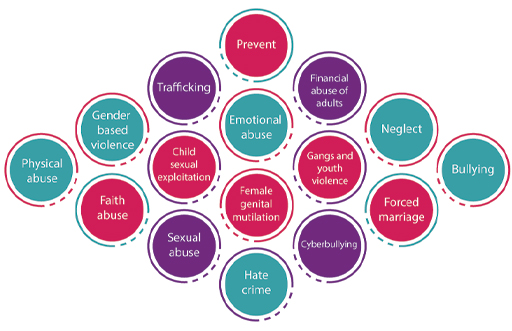
Individuals can be abused in many ways. The diagram (Figure 1) below names some of the ways in which children or adults may be abused. You may never come across some of these, but it is useful to be aware of the range of ways in which abuse can take place.
Case study 4
-
A student tells you that they have been finding a particular piece of work difficult to complete because of the theme which is “family life”. They tell you that it has caused them to think back about their own family life, which was awful. The student shares with you that they suffered abuse as a child via their grandfather, but they are ok now. Is this a safeguarding concern?
-
Yes, this is a safeguarding concern because there has been a clear disclosure of historic abuse. The student themself may not want to report the matter but should be given advice that they can do so and that the abuse they suffered was an offence. The Safeguarding Referral Team will support you by advising on how best you can respond to the student and will determine if any further action needs to be taken.
a.
Yes
b.
No
The correct answer is a.
Case study 5
-
A 17-year-old student tells you that they will not be available over the next month because they are going overseas to get married. In conversation student confides in you that they do not want to, but it has been arranged by their family. Student explains that its part of their family tradition. Is this a safeguarding concern?
-
Yes, This is a safeguarding concern; essentially this is not an arranged marriage but a forced one, which is against the law. This individual needs to be protected.
a.
Yes
b.
No
The correct answer is a.
Within this course there is space to think about the following categories of abuse, these are:
- Physical
- Sexual
- Psychological
- Neglect
- Organisational
- Financial or material
- Discriminatory
- Domestic Abuse and Gender Based Violence
- Modern Slavery
Please note the lists and examples given to the tasks below is not exhaustive.