

5 Boud’s triangular representation
Many models are cyclical in nature, representing the idea that reflection leads to learning, but this learning is never completed or able to be transferred without reflecting on it further in different contexts. The most straight forward reflective model could be seen to be Boud’s triangular representation, Figure 2.
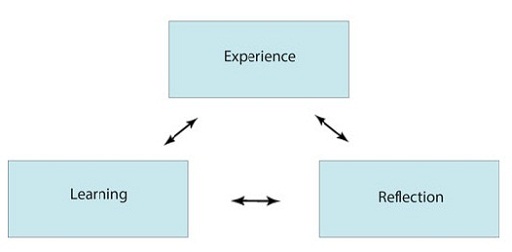
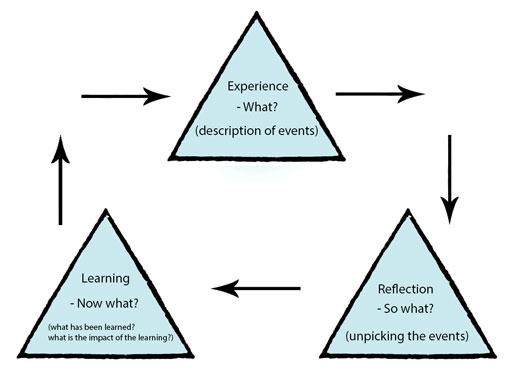
This model, although capturing the essentials (that experience and reflection lead to learning), has limitations. It doesn’t guide us as to what reflection might consist of, or how the learning might translate back into experience. Aligning key reflective questions to this model, see Figure 3, may help.
In summary below is a table setting out the development over time of a range of reflective models:
- Dewey (1933)
- Borton (1970)
- Boud et al (1958)
- Schön (1983, 1987)
- Johns (1994)
- Gibbs (1988)
- Rolfe et al. (2001)
- Driscoll (2007)
So, which reflective model to use for your reflective accounts?
To ensure your preparation for revalidation aligns with the NMC revalidation template we suggest Boud’s reflective model. The following table uses Boud’s model. You can complete the table by making notes in it or recording your full reflection and download it in preparation for your revalidation. You can record your five reflective accounts using the tables below, saving each so that you have five records of reflection when you are ready to complete your revalidation submission form.
- Reflective account 1 [Tip: hold Ctrl and click a link to open it in a new tab. (Hide tip)]
- Reflective account 2
- Reflective account 3
- Reflective account 4
- Reflective account 5