
 free course icon
level 2: intermediate icon
free course icon
level 2: intermediate icon
History & The Arts
Exploring Thomas Hardy's Far From the Madding Crowd
This free course, Exploring Thomas Hardy's Far From the Madding Crowd, is designed to tell you something about Hardy's background, and to introduce you to the pleasures of reading a nineteenth-century novel. Why do we believe in fictional characters and care about what happens to them? You will discover some of the techniques that Hardy ...
 free course icon
level 2: intermediate icon
free course icon
level 2: intermediate icon
History & The Arts
Veiling
This free course explores controversies associated with the practice of 'veiling' within Islam. The Islamic 'veil', be it in the form of the hijab, niqab, jilbab or burqa (we shall explore this terminology in more detail later), has been at the centre of many different controversies. Many of these controversies can be understood in the context ...
 video icon
History & The Arts
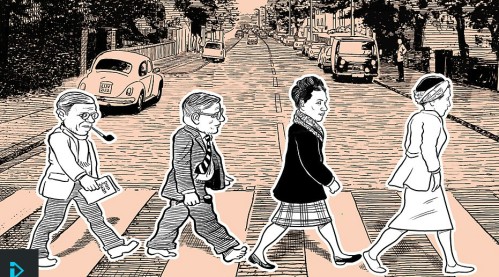
Sartre: Love is a hazardous, painful struggle
This short animation, narrated by Aidan Turner, shows the conflict and danger of love from Jean-Paul Sartre's perspective.
 free course icon
level 1: introductory icon
free course icon
level 1: introductory icon
History & The Arts
Looking at, describing and identifying objects
This free course, Looking at, describing and identifying objects, will enable you to practise and develop your skills of observation and description of objects. It will also enable you to interpret objects and work towards writing your own object life cycle. You will also work with, and understand artefact databases.
 free course icon
level 3: advanced icon
free course icon
level 3: advanced icon
History & The Arts
Library of Alexandria
One of the most important questions for any student of the ancient world to address is 'how do we know what we know about antiquity?' Whether we're thinking about urban architecture, or love poetry, or modern drama, a wide range of factors shape the picture of antiquity that we have today. This free course, Library of Alexandria, encourages you ...
 free course icon
level 2: intermediate icon
free course icon
level 2: intermediate icon
History & The Arts
John Webster, The Duchess of Malfi
This free course, John Webster, The Duchess of Malfi, concentrates on Acts 1 and 2 of John Webster's Renaissance tragedy, The Duchess of Malfi. It focuses on the representation of marriage for love and the social conflicts to which it gives rise. The course is designed to hone your skills of textual analysis.
 free course icon
level 2: intermediate icon
free course icon
level 2: intermediate icon
History & The Arts
Introducing the philosophy of religion
In this free course, Introducing the philosophy of religion, Timothy Chappell, Professor of Philosophy, asks what the words 'God' and 'religion' mean, and what it means to ask philosophical questions about them.
 free course icon
level 1: introductory icon
free course icon
level 1: introductory icon
History & The Arts
Introducing philosophy
Ever wondered what it would be like to study philosophy? This free course, Introducing philosophy, will introduce you to the teaching methods employed and the types of activities and assignments you would be asked to undertake should you wish to study philosophy and the human situation.
 article icon
History & The Arts
A reader's guide to Holes
Louis Sachar's Holes creates a strange correctional facility on the shores of the largest lake in Texas.
 article icon
Health, Sports & Psychology
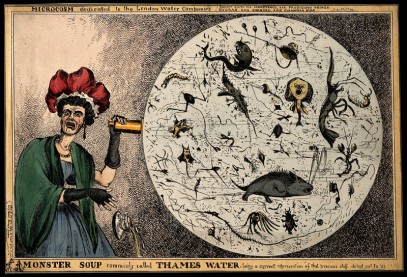
Dirt, waste and revulsion: How cultures cope with leftovers and mess
In a roundtable discussion at The Wellcome Collection, the panel explore the difference between dirty and polluting, and why "not all poo is equal".
 free course icon
level 1: introductory icon
free course icon
level 1: introductory icon
History & The Arts
Start writing fiction: characters and stories
Start writing fiction is a free course that helps you to get started with your own fiction writing, focusing on the central skill of creating characters.
 free course icon
level 1: introductory icon
free course icon
level 1: introductory icon
History & The Arts
Visions of protest: graffiti
This free course, Visions of protest: graffiti, introduces students to contrasting understandings of graffiti. It draws on a wide range of graffiti examples, including mystery zebras in Hackney, fish graffiti in Morecambe, 'tags' in a Milton Keynes underpass, a McDonald's advert and exhibits at a highly established art gallery, the Tate Modern....