
My OpenLearn Profile
Personalise your OpenLearn profile, save your favourite content and get recognition for your learning
Dutch painting of the Golden Age
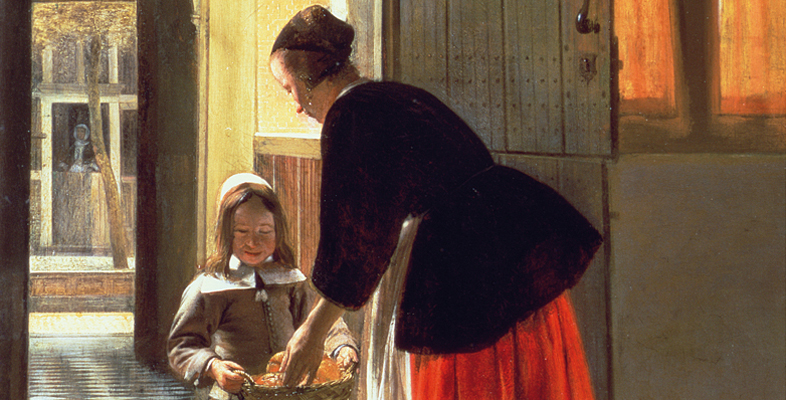
Seventeenth-century Dutch painting stands out from other art of the same period and even more so from that of previous centuries on account of its apparently ‘everyday’ character. Works by artists such as Johannes Vermeer, Pieter de Hooch and Jacob van Ruisdael seem to offer a faithful picture of life in the Netherlands at the time. In studying this free course, Dutch painting of the Golden Age, you will discover that there is much more to Dutch painting than meets the eye. You will explore scholarly debates about the possible meanings that might be attributed to this type of picture and learn how the very idea of ‘realism’ in art has been challenged in recent times.
Course learning outcomes
After studying this course, you should be able to:
- explore recent debates around the interpretation of seventeenth-century Dutch painting
- consider the strengths and limitations of iconology as an art-historical approach
- examine the notion of 'realism' as applied to works of art
- address the relevance of social and cultural context for interpreting works of art
- analyse works of art in terms of different ideas and approaches.
First Published: 15/06/2016
Updated: 26/01/2017
Rate and Review
Create an account to get more
Track your progress
Review and track your learning through your OpenLearn Profile.
Statement of Participation
On completion of a course you will earn a Statement of Participation.
Access all course activities
Take course quizzes and access all learning.
Review the course
When you have finished a course leave a review and tell others what you think.