
My OpenLearn Profile
Personalise your OpenLearn profile, save your favourite content and get recognition for your learning
Helen Langdon's ‘Caravaggio’
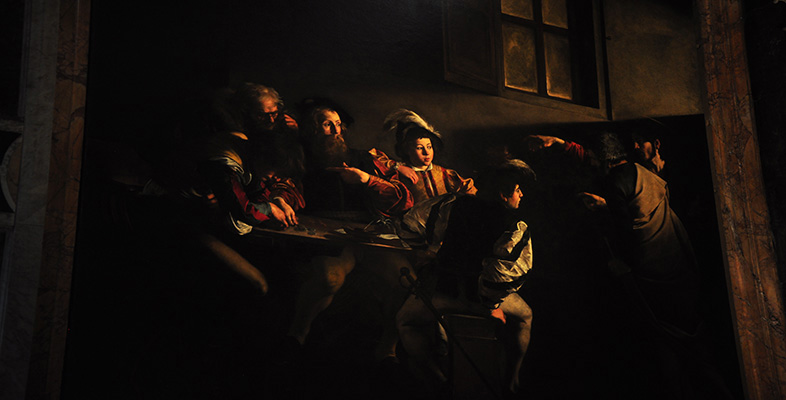
Accounts of Caravaggio's life are filled with suggestions of murder and intrigue. But does knowing more about this dark artist's experiences help us to interpret his art? Or does understanding his motivations cloud their true meaning? This free course, Helen Langdon's 'Caravaggio', explores the biographical monograph, one of the most common forms of art history writing.
Course learning outcomes
After studying this course, you should be able to:
- analyse the pros and cons of the biographical monograph in art history
- examine the strengths and weaknesses of the biographical monograph in relation to other kinds of art history writing.
First Published: 09/08/2012
Updated: 08/02/2016
Rate and Review
Create an account to get more
Track your progress
Review and track your learning through your OpenLearn Profile.
Statement of Participation
On completion of a course you will earn a Statement of Participation.
Access all course activities
Take course quizzes and access all learning.
Review the course
When you have finished a course leave a review and tell others what you think.
- The course is well‑designed for readers who want a biographical narrative (admittedly this was necessarily limited by the lack of relatively primary/contemporaneous biographical sources; which were themselves at times potentially biased.)
- However, it underserves learners who expect painting‑centred, multi‑method analysis.
- A Schütze rather than Langdon‑style foundation would have potentially produced a more balanced and rewarding structure.
- The late introduction of alternative epistemologies (Langdon's historical/biographical; Freedberg's style/formalism; Ostrow's iconographic method) might to some feel like an afterthought rather than an integrated approach?
One further aspect would have been of specific personal interest, namely further depth into the attribution of 'Narcissus' to Caravaggio, occurring as it did by Roberto Longhi in 1916 (indeed, in the absence of this attribution defining the approximate date of the painting would not have even been possible). There is a reference to the reflection of the bare knee probably being caused by "overcleaning", however there remains some (admittedly limited) debate as to attribution between Caravaggio, Manfredi ("several of the forty or so works now attributed to him were formerly believed to be by Caravaggio") or a contemporary. For example, with regard to the deformed left hand, given Caravaggio's anatomical precision; also, his mastery of optical realism that has clearly failed the painter in this instance; the brocade is unusually decorative for Caravaggio...
𝗠𝗶𝘀𝗰𝗲𝗹𝗹𝗮𝗻𝗲𝗼𝘂𝘀:
The web site's 'Course content' has merged sections 2 and 3.
2.6 Caravaggio's sexuality
1) A suggested reference: "The Sexuality of Caravaggio and His Artistic Identity: Did Caravaggio create a homosexual style?", Luiz F. Viotti Fernandes, 06.Jan.2005, Birkbeck College.
2) Saslow spelt 'oevre' correctly, i.e., 'oeuvre'; online OCR versions tend to use the included spelling.
… anyway, just my ramblings, onto ‘Artists and authorship: the case of Raphael’…