
My OpenLearn Profile
Personalise your OpenLearn profile, save your favourite content and get recognition for your learning
The many guises of the emperor Augustus
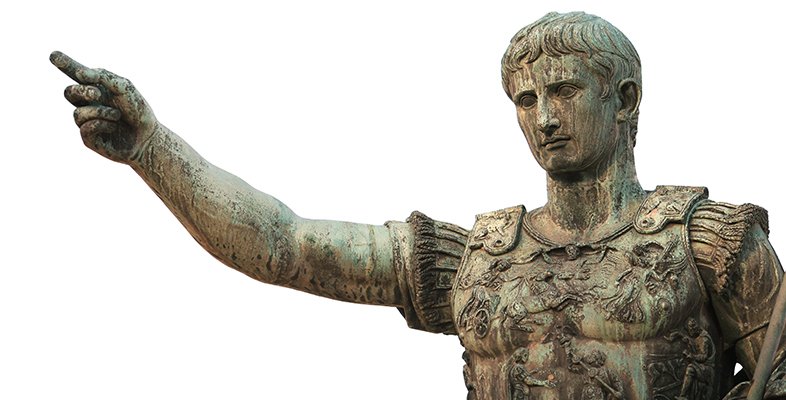
This free course focuses on Rome’s first emperor, Augustus, who lived from 63 BCE to 14 CE. The rule of Augustus marked a significant political change in Rome, and Augustus’ position as emperor was initially fragile and controversial. Key to his success in holding onto power was his masterful use of visual propaganda to cement his position and underline his legitimacy. The course examines the various roles Augustus constructed in an attempt to appeal to as many people as possible, and highlights the central importance of dress in Augustus’ imagery. To illustrate this, the course will also look at Abdullah II, who became king of Jordan in 1999, who applies a similar principle to his portraiture.
Interested in taking your learning further? You might find it helpful to explore the Open University’s Classical Studies courses and qualifications.
Course learning outcomes
After studying this course, you should be able to:
- understand how political leaders can construct various different roles to appeal to as many people as possible
- understand the key role that visual representation and dress plays in these roles
- show some knowledge of the personality and history of Rome's first emperor Augustus, and some of the ways in which he consolidated his power
- analyse images and source texts, and compare them to one another.
First Published: 19/03/2024
Updated: 19/03/2024
Rate and Review
Create an account to get more
Track your progress
Review and track your learning through your OpenLearn Profile.
Statement of Participation
On completion of a course you will earn a Statement of Participation.
Access all course activities
Take course quizzes and access all learning.
Review the course
When you have finished a course leave a review and tell others what you think.
Yes, Augustus used visual symbols (including clothing/appearance) as part of a deliberate legitimacy program. However, his “reinvention” of himself was not mainly sartorial; it was institutional and symbolic:
• 𝗟𝗲𝗴𝗮𝗹/𝗽𝗼𝗹𝗶𝘁𝗶𝗰𝗮𝗹 𝘁𝗿𝗮𝗻𝘀𝗳𝗼𝗿𝗺𝗮𝘁𝗶𝗼𝗻: he reshaped offices, succession, and the state’s public language of “restoring order.” Titles mattered, and so did the machinery behind them.
• 𝗥𝗲𝗹𝗶𝗴𝗶𝗼𝘂𝘀 𝗹𝗲𝗴𝗶𝘁𝗶𝗺𝗮𝗰𝘆: he anchored rule in religion and propaganda—temples, priestly functions, festivals, vows, coinage, public building programs, and carefully managed cult associations.
• 𝗡𝗮𝗿𝗿𝗮𝘁𝗶𝘃𝗲 𝗰𝗼𝗻𝘁𝗿𝗼𝗹: he promoted a story of himself as 𝙧𝙚𝙨𝙩𝙤𝙧𝙚𝙧 of the Republic’s peace (even while power was being concentrated).
Dress is part of that system, but it is one channel.
At least a brief mention of Augustus’s equivalent of a modern-day "image-management firm" may have been beneficial, perhaps along the lines of:
𝗔𝗱𝘃𝗶𝘀𝗼𝗿 / 𝗦𝘂𝗯-𝗧𝗲𝗮𝗺
𝗚𝗮𝗶𝘂𝘀 𝗠𝗮𝗲𝗰𝗲𝗻𝗮𝘀 (The Culture & Media Minister) Directed the literary wing of the administration. He scouted, funded, and managed top-tier creative talent to rewrite Rome's national myth. Persuaded poets like Virgil and Horace to write masterworks (like the Aeneid) that explicitly glorified Augustus’ divine lineage and golden age.
𝗠𝗮𝗿𝗰𝘂𝘀 𝗩𝗶𝗽𝘀𝗮𝗻𝗶𝘂𝘀 𝗔𝗴𝗿𝗶𝗽𝗽𝗮 (The Infrastructure Brand Manager)
Augustus' right-hand man and military genius. He translated imperial propaganda into massive, physical urban renewal. Built the Pantheon and grand aqueducts. This allowed Augustus to famously boast that he "found Rome a city of bricks and left it a city of marble."
𝗟𝗶𝘃𝗶𝗮 𝗗𝗿𝘂𝘀𝗶𝗹𝗹𝗮 (The Matriarchal Brand Anchor) Augustus' wife and closest political counsellor. She anchored the "Father of the Country" (Pater Patriae) persona. Formed the visual benchmark for the ideal Roman family. She personally spun the emperor's clothes to project absolute moral wholesomeness and austerity.
𝗧𝗵𝗲 𝗜𝗺𝗽𝗲𝗿𝗶𝗮𝗹 𝗠𝗶𝗻𝘁 & 𝗦𝗰𝘂𝗹𝗽𝘁𝗼𝗿 𝗚𝘂𝗶𝗹𝗱𝘀 (The Visual Distribution Wing): Replicated approved imperial portraits and slogans on a mass scale to standardise the emperor's image across continents. Produced over 50,000 statues and millions of coins stamping his titles (𝗗𝗶𝘃𝗶 𝗙𝗶𝗹𝗶𝘂𝘀 / "Son of a God") into the daily pockets of every citizen.
𝗠𝗶𝘀𝗰𝗲𝗹𝗹𝗮𝗻𝗲𝗼𝘂𝘀 𝗽𝗼𝗶𝗻𝘁𝘀:
MS Word: “View description” and “View alternative description” for each figure are the same.
Many, but most certainly not all, of the graphics were of a very low resolution, requiring replacement from within the course web site or elsewhere online.
𝟯.𝟮 𝗧𝗵𝗲 𝘁𝗼𝗴𝗮 𝗶𝗻 𝗥𝗼𝗺𝗮𝗻 𝗰𝘂𝗹𝘁𝘂𝗿𝗲
Map 2
https://upload.wikimedia.org/wikipedia/commons/4/4e/Roman_Empire_125_political_map.png
Gave a better resolution, allowing the key to be easily read.
𝟰.𝟯 𝗔𝘂𝗴𝘂𝘀𝘁𝘂𝘀’𝘀 𝗮𝘂𝘁𝗼𝗯𝗶𝗼𝗴𝗿𝗮𝗽𝗵𝘆
Map 3
Maximisation does not yield a map.
https://upload.wikimedia.org/wikipedia/commons/1/11/NSRW_Plan_of_Ancient_Rome.png
Map 4 see Map 2 above.
Personally, one might also expect a 𝗿𝗲𝗳𝗲𝗿𝗲𝗻𝗰𝗲𝘀 section, despite his autobiography being sadly lost to the tides of time.