
Acknowledgements
This free course was written by Rosalind Crone and Daniel Weinbren.
Except for third party materials and otherwise stated (see terms and conditions [Tip: hold Ctrl and click a link to open it in a new tab. (Hide tip)] ), this content is made available under a Creative Commons Attribution-NonCommercial-ShareAlike 4.0 Licence.
The material acknowledged below and within the course is Proprietary and used under licence (not subject to Creative Commons Licence). Grateful acknowledgement is made to the following sources for permission to reproduce material in this free course:
Intro and Guidance
Images
Course image: Chronicle/Alamy Stock Photo
Course badge: © The Open University
Audio-visual
Trailer: © The Open University (2022) with grateful thanks to licensors, including: Bridgeman Images; Rosalind Crone; Getty Images; The National Archives. http://www.nationalarchives.gov.uk; Lincolnshire Archives https://lincolnshire.org/ lincolnshire-archives/
Week 1
Figures
Figure 1: Private Collection Look and Learn/Peter Jackson Collection/Bridgeman Images
Figure 2: Battle of Waterloo by William Sadler: public domain https://en.wikipedia.org/ wiki/ Battle_of_Waterloo#/ media/ File:Battle_of_Waterloo_1815.PNG

Figure 3: © SZ Photo/Bridgeman Images
Figure 4: National Portrait Gallery, London, UK/Bridgeman Images
Figure 5: Private Collection Look and Learn/Bridgeman Images
Figure 6: Private Collection Look and Learn/Elgar Collection/Bridgeman Images
Figure 7: Hulton Archive/Stringer Via Getty Images
Figure 8: Photo image: Dr Shirin Hirsch, Researcher at People’s History Museum and Lecturer at Manchester Metropolitan University
Figure 9: Private Collection The Stapleton Collection/Bridgeman Images
Figure 10: Left: Jedburgh Castle Jail, Archibald Elliott, 1823 alterations by Thomas Brown, 1847 © Crown Copyright: Historic Environment Scotland. Scotland’s Prisons Research Report 2015. Right: © Sir John Soane’s Museum, London. Photography by Ardon Bar Hama.
Figure 12: Diary of Thomas Lloyd The Diary of Thomas Lloyd kept in Newgate Prison, 1794-1796. ACHS Historic Papers Lloyd Family Digital Library @ Villanova University https://creativecommons.org/ licenses/ by-sa/ 4.0/
Figure 13: Extract from the diary of Francis Place describing the pillory, British Library (MS27826) 1829 https://creativecommons.org/ licenses/ by/ 4.0/
Prison system in England and Wales (PDF) images:
Lock-up: adapted: Copyright © Chris Andrews. https://creativecommons.org/ licenses/ by-sa/ 2.0/
Petty Sessions/Quarter Sessions Assizes: Photo by: Universal History Archive/Universal Images Group via Getty Images
Houses of Correction: From Henry Mayhew and John Binny, The Criminal Prisons of London (London, 1862). Images: Courtesy Rosalind Crone;
Convict Ship: https://en.wikipedia.org/ wiki/ Convict_ship#/ media/ File:Convict_ship_Neptune00.jpg;

Gaols: From Henry Mayhew and John Binny, The Criminal Prisons of London (London, 1862). Images: Courtesy Rosalind Crone
Hulks: From Henry Mayhew and John Binny, The Criminal Prisons of London (London, 1862). Images: Courtesy Rosalind Crone;
Millbank Penitentiary: From Henry Mayhew and John Binny, The Criminal Prisons of London (London, 1862). Images: Courtesy Rosalind Crone;
Pentonville Prison: From Henry Mayhew and John Binny, The Criminal Prisons of London (London, 1862). Images: Courtesy Rosalind Crone;
Parkhurst Prison for Juveniles: Illustrated London News, 13 March 1847, p. 164.
Female Convict Prison: From Henry Mayhew and John Binny, The Criminal Prisons of London (London, 1862). Images: Courtesy Rosalind Crone;
Public Works Prisons: image Chatham Prison from ROYAL SAPPERS AND MINERS in Western Australia https://sappers-minerswa.com/ sappers-index/ sappers-a-f/ booler-thomas/ .
Week 2
Images
Figure 1: Photograph: © The Open University
Figure 2: Horsley House of Correction, Registers of prisoners. courtesy Gloucestershire Archives https://www.gloucestershire.gov.uk/ archives/
Figure 3: Wymondham Bridewell in Norfolk https://commons.wikimedia.org/ wiki/ File:Cmglee_Wymondham_Heritage_Museum.jpg https://creativecommons.org/ licenses/ by-sa/ 4.0/ deed.en

Figure 4: courtesy Preston Digital Archive
Figure 5: Sarah Martin, Private Collection/Bridgeman Images
Figure 6: A separate cell at Pentonville Prison. From Henry Mayhew and John Binny, The Criminal Prisons of London (London, 1862) Image; Courtesy Rosalind Crone
Figure 7: Girls’ schoolroom at Tothill. From Henry Mayhew and John Binny, The Criminal Prisons of London (London, 1862) Image; Courtesy Rosalind Crone
Figure 8: Leicester Chronicle, 9 July 1842. Private Collection / Peter Jackson Collection/Bridgeman Images
Figure 9: advertisement: Jackson’s Oxford Journal, 24 April 1852.
Figure 10: A letter of application from John Sutton Moore. Buckinghamshire Archives archives.buckinghamshire.gov.uk
Figure 11: The chapel on board the Defence prison hulk at Woolwich. From Henry Mayhew and John Binny, The Criminal Prisons of London (London, 1862) Image; Courtesy Rosalind Crone.
Figure 12: The boys’ schoolroom at Tothill Fields. From: Henry Mayhew and John Binny, The Criminal Prisons of London (London, 1862). Image: Courtesy: Rosalind Crone.
Figure 13: Adult School at the Surrey House of Correction, Historical Picture Archive/Contributor/Getty Images
Figure 14: The treadwheel (or treadmill). From: Henry Mayhew and John Binny, The Criminal Prisons of London (London, 1862). Image Courtesy: Rosalind Crone
Audio-visual
Silence and Separation © The Open University (2022) with thanks to licensors, including: Alamy Images; Bridgeman Images; Getty Images; Rosalind Crone.
Week 3
Figures
Figure 1: Mary Evans/Peter Higginbotham Collection.
Figure 2: https://www.bl.uk/ collection-items/ the-bottle--a-series-of-temperance-themed-illustrations-by-george-cruikshank-with-poetry-by-charles-mackay https://creativecommons.org/ publicdomain/ mark/ 1.0 /
Figure 3: Prisoners at exercise at Pentonville Prison in the late 1850s. From: Henry Mayhew and John Binny, The Criminal Prisons of London (London, 1862). Image: Courtesy: Rosalind Crone.
Figure 4:Classrooms at Parkhurst Juvenile Prison in 1847. © Illustrated London News Ltd/Mary Evans.
Figure 5: Pages from the schoolmaster’s journal at Littledean House of Correction, Gloucestershire. Gloucestershire Archives, Schoolmasters’ journals, Littledean House of Correction, Gloucestershire, 1844-1877, Q/Gli/22/2: 1848-1852 https://www.gloucestershire.gov.uk/ archives/
Figure 6: Convict life at Portland. Illustration for The Graphic, 31 March 1883. Bridgeman Education
Figures 8 and 9: Mrs Trimmer’s Charity School Spelling Book https://www.bl.uk/ collection-items/ the-charity-school-spelling-bookhttps://creativecommons.org/ publicdomain/ mark/ 1.0/
Figure 10: The new gaol at Reading. Illustration for the Illustrated London News. Private Collection Look and Learn/Illustrated Papers Collection/Bridgeman Images.
Figure 11: Misconduct book from Chester City Gaol. Cheshire Archives, QAG/35 copyright ©Cheshire Archives and Local Studies.
Figure 12: The chapel, on the ‘separate system’ at Pentonville Prison. Photographic image: Granger/Shutterstock.
Figure 13: Women who had given birth shortly before entering prison or who gave birth in prison. From: Henry Mayhew and John Binny, The Criminal Prisons of London (London, 1862). Image: Courtesy: Rosalind Crone.
Audio-visual
Video: Lincoln Castle Gaol: The Prison School: © The Open University (2022) with thanks to licensors including: Rosalind Crone; Parliamentary Papers Gaol Act Reports 1842; Lincolnshire Archives Lincolnshire Archives – About the Lincolnshire Archives - Lincolnshire County Council
Week 4
Images
Figure 1: Prison library at Strangeways, Manchester, 1910: Manchester Libraries Information and Archives https://secure.manchester.gov.uk/ terms
Figures 2 and 3: Southgate prison records: Devon Heritage Centre, Southgate Prison book, ECA Book 251 devonarchives@swheritage.org.uk
Figure 4: Surrey House of Correction ‘Crank Labour’: Wellcome Images, a website operated by Wellcome Trust, a global charitable foundation based in the United Kingdom. Creative Commons — Attribution 4.0 International — CC BY 4.0
Figure 5: The dormitory at Coldbath Fields Prison, London. From: Henry Mayhew and John Binny, The Criminal Prisons of London (London, 1862). Image: Courtesy: Rosalind Crone
Figure 6: Frederick Hill: H. Manesse https://www.nationalgalleries.org/ https://creativecommons.org/ licenses/ by-nc/ 4.0/
Figure 7: Private Collection © Look and Learn/Bridgeman Images
Figure 9: Front cover of The Saturday Magazine, published by the Society for the Promotion of Christian Knowledge held by British Library.
Figure 10: Separate cell in Brixton. From Henry Mayhew and John Binny, The Criminal Prisons of London (London, 1862). Image: Courtesy: Rosalind Crone.
Figure 11: Image of a small prison: Hulton Archive/Stringer/Getty Images.
Audio-visual
Video: The Library © The Open University (2022) with thanks to licensors including: National Archives http://www.nationalarchives.gov.uk/doc/open-government-licence/version/3/; Private Collection Look and Learn/Bridgeman Images; Alamy Stock images
Week 5
Images
Figure 1: Prisoners were required to surrender their clothes and put on a uniform. From Henry Mayhew and John Binny, The Criminal Prisons of London (London, 1862). Image: courtesy: Rosalind Crone.
Figure 2: Page from the Ilchester County Gaol description book dated January 1822. Photograph taken at: Somerset Archives and Local Studies, Q/AGI/15/1
Figure 3: Cartoon featuring representatives from the four major political groups (not parties). Image: Bridgeman Education
Figure 4: A Criminal Calendar for the County of York. Reproduced from an original held by City of York Council/Explore Libraries and Archives Mutual, York (ref Y/ORD/1/1). Permission to reproduce documents in the custody of City of York Council/Explore Libraries and Archives Mutual, York has been granted.
Figure 5: Industrial Manchester, showing the Irwell River from Blackfriars Bridge. Date: 1876.Chronicle/Alamy Stock Photo
Figure 6: Portraits of German and Italian criminals. Bridgeman Images
Figure 7: Rates of male illiteracy in England and Wales derived from prisoner literacy statistics and the marriage registers, 1839–1899. Digest of Prison Returns. Sources: Digest of Prison Returns, 1836-1854 (Parl. Papers, 1837-1857); Return of Judicial Statistics for England and Wales, 1856-1899 (Parl. Papers, 1857-1901); Registrar General of Births, Deaths and Marriages in England, Annual Reports, 1839-1899 (Parl. Papers, 1840-1899).
Figure 8: Rates of female illiteracy in England and Wales derived from prisoner literacy statistics and the marriage registers, 1839–1899. Digest of Prison Returns. Sources: Digest of Prison Returns, 1836-1854 (Parl. Papers, 1837-1857); Return of Judicial Statistics for England and Wales, 1856-1899 (Parl. Papers, 1857-1901); Registrar General of Births, Deaths and Marriages in England, Annual Reports, 1839-1899 (Parl. Papers, 1840-1899).
Figure 9: Two pages from the journal of the schoolmaster, Thomas Shepherd, at Littledean House of Correction in Gloucestershire. (ref: Q/Gli/22/3) https://www.gloucestershire.gov.uk/ archives/
Figure 10: Manchester Borough Gaol, also known as Belle Vue Prison, https://commons.wikimedia.org/ wiki/ File:Belle_Vue_Prison_1870.jpg PD

Figure 11: Recognising the difficulties faced by released prisoners in gaining employment and accommodation after release. Reproduced with the permission of Glasgow Caledonian University, Research Collections, Heatherbank Museum of Social Work.
Tables
Table 3: The state of education of 198 male prisoners discharged from Manchester Borough Gaol between July and September 1850. Source: Inspectors, Northern & Eastern, 17th Report, 1852–53, p. from Inspectors of Prisons of Great Britain II. Northern and Eastern District, Seventeenth Report (1852-53, LII.1), p. 40
Table 4: Commissioners for the Government of Pentonville Prison, Fifth Report (Parl. Papers, 1847, XXX.481), p. 45
Audio-visual
Video: The Reception Cell: © The Open University (2022) with thanks to licensors, including: Welcome Images. https://wellcomeimages.org/ indexplus/ obf_images/ 7e/ fd/ 66c92bea4bb089f97d4892859d0c.jpg; Rosalind Crone; National Archives http://www.nationalarchives.gov.uk/ doc/ open-government-licence/ version/ 3/; Habitual criminals registers Lincolnshire Archives; Wakefield Archives Wakefield House of Correction Receiving Book, Oct 1842.

Week 6
Images
Figure 1: The illustration shows three ‘ticket-of-leave men’ From: Henry Mayhew and John Binny, The Criminal Prisons of London (London, 1862). Image: Courtesy: Rosalind Crone.
Figure 2: Boys at lessons in the gymnasium. https://www.mylearning.org/stories/leeds-reformatory-schools/985 https://creativecommons.org/ licenses/ by-nc/ 2.0/
Figure 3: Joshua Jebb, Illustrated London News, 11 July 1863: Bridgeman Images
Figure 4: A convict prisoner’s ‘good conduct’ badge © Galleries of Justice https://creativecommons.org/ licenses/ by-nc-sa/ 3.0/
Figure 5: Norfolk Island penal colony, c.1847. Illustrated London News, 12 June 1847: Image: Bridgeman Education.
Figure 6: Bound volumes of some of Charles Dickens’ works. Photograph: John Keates/Alamy Stock Photo.
Figure 7: separate cell at Pentonville Prison. From: Henry Mayhew and John Binny, The Criminal Prisons of London (London, 1862). Image: Courtesy: Rosalind Crone
Figure 8: Plan of Millbank Prison. Millbank Prison - Wikipedia

Figure 9: Michael Davitt (1846–1906) https://en.wikipedia.org/ wiki/ Michael_Davitt#/ media/ File:Michael_Davitt_(Charlie_Farr)_restored.png
_restored.png)
Audio-visual
Video: Change and continuity in the 1860s: © The Open University (2022) with thanks to licensors including: Punch Cartoon Library: Topfoto; Rosalind Crone; Look and Learn/Peter Jackson/Bridgeman Images; Peter Newark; Alamy; The National Archives. http://www.nationalarchives.gov.uk/
Week 7
Images
Figure 2: World History Archive/Alamy Stock Photo.
Figure 3(a): Pages from the Examination Book of William Weaver https://alpha.nationalarchives.gov.uk/journey/record/PCOM:3 https://www.nationalarchives.gov.uk/ doc/ open-government-licence/ version/ 3/
Figure 3(b): Pages from the Examination Book of William TNA, PCOM 3/518: Male Licences, 1880Weaver https://www.nationalarchives.gov.uk/ doc/ open-government-licence/ version/ 3/
Figure 4(a): Norwich castle: Bridgeman Images.
Figure 4(b): Prison at Mousehold Heath: Alamy.
Figure 5: Prisoners on the treadwheel at Pentonville Prison in 1895. https://www.nationalarchives.gov.uk/ education/ resources/ victorian-prison/ source-2a/
Figure 6: Morning assembly at a Board School: Bridgeman Images.
Figure 7: An aerial view of Barlinnie Prison: Photo by Daily Record/Mirrorpix/Getty Images.
Figure 8: Prison warder standing in the Entrance Hall at Newgate Prison: Bridgeman Education.
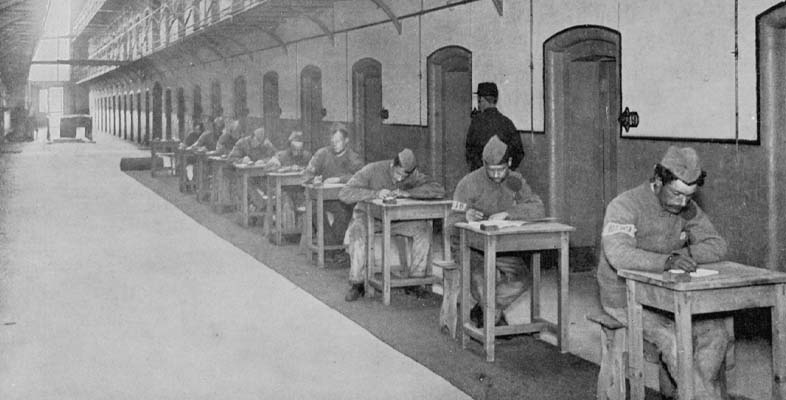
Figure 9: Male prisoners writing letters at Wandsworth Prison. Chronicle/Alamy Stock Photo.
Week 8
Images
Figure 1: Wormword Scrubs London: © unknown.
Figure 2: Prisoners in the exercise yard at Newgate, c.1872. Lebrecht Music & Arts/Alamy Stock Photo.
Figure 3: A view inside Oscar Wilde’s cell, at Reading Gaol: PA Images/Alamy Stock Photo
Figure 4: Exterior of Wandsworth Prison, London, opened in 1851: Derek Harper Wandsworth Prison - geograph.org.uk - 1030498 - HM Prison Wandsworth - Wikipedia https://creativecommons.org/ licenses/ by-sa/ 2.0/

Figure 6: Mothers and babies exercising during their allocated hour together: Hulton Archive/Stringer/Getty Images.
Figure 7: Schoolroom and pupils at the Rochester Borstal in Kent, c.1906: History and Art Collection/Alamy Stock Photo.
Figure 8: Reading Gaol, built in the mid 1840s and closed in 2014: Harry Harrison/Alamy Stock Photo.
Figure 9: Stephen Akpabio-Klementowski: © The Open University
Every effort has been made to contact copyright owners. If any have been inadvertently overlooked, the publishers will be pleased to make the necessary arrangements at the first opportunity.
Don't miss out
If reading this text has inspired you to learn more, you may be interested in joining the millions of people who discover our free learning resources and qualifications by visiting The Open University – www.open.edu/ openlearn/ free-courses.