2 DNA: Forensic Scientist
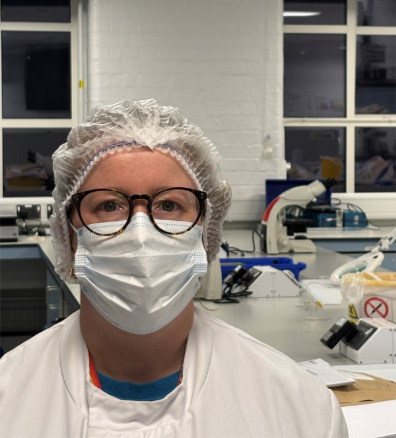
From Ana: image here Caption: Forensic BiologistForensic scientists specialise in different areas, using scientific methods to analyse traces recovered from crime scenes and items recovered from victims and suspects. They interpret the data produced from their analysis and evaluate their findings within the context of the specific case.
In this case, a Forensic Biologist (DNA), Fingerprint Expert and a Digital Forensic Expert would likely be involved. We will go through the DNA and digital expert roles.
Forensic Biologists examine biological traces like blood, other body fluids, and hair, as well as DNA swabs. They receive traces recovered from the crime scene, and they document these items in detail, often including diagrams and photographs. They may conduct tests to indicate whether (for example) a body fluid is present on the item, followed by sample collection, typically via swabbing. If the goal is then to generate a DNA profile from the collected samples, a number of lab processes are carried out:
- DNA is extracted from the cells.
- Copies of the DNA are made through a process called Polymerase Chain Reaction (PCR).
- DNA fragments are separated and visualised to produce a DNA profile.
- A DNA profile from a crime scene can then be compared to the profile of a victim or suspect to see if they are the same or different.
- Unknown DNA profiles may be loaded onto the National DNA Database to search for matches.
- Results of such analyses can be provided in a statement and presented in court.
In Dave’s case, the Forensic Biologist would examine the baseball bat and any clothing recovered from the victim / suspect, testing any red / brown staining for potential blood. A Blood Pattern Analyst may be able to interpret the distribution of staining on the baseball bat and in the locker room to reconstruct how the blood may have come to be where it was found. A sample of the blood on the baseball bat would be analysed for DNA. DNA analysis could also be performed on samples from the baseball bat handle.
Research has shown that it is possible for a person to handle an item and leave very little / no DNA behind, or for a person’s DNA to be transferred to an item / surface without direct contact – a process known as secondary or tertiary transfer (DNA Judicial Primer, 2025, van Oorschot et al, 2019).
A DNA profile generated from the swab taken of the blood on the baseball bat and from the baseball bat handle would be compared with a reference DNA profile from Dave.
In our case, the DNA profile obtained from the swab of the blood on the baseball bat was indistinguishable from Dave’s DNA profile. This would be reported as ‘the DNA profile matched the DNA profile from the victim Dave.
The DNA profile obtained from the swab of the handle of the baseball bat did not match Dave’s DNA profile and was unidentified. This DNA profile was then compared against DNA profiles held on the UK national DNA database, however no match was returned. The interpretation of these results will be covered in week 3.