
3 Research findings
From 2024–2026, a team of experts including forensic scientists, criminologists, and psychologists set out to tackle a deceptively simple question: what does it really mean to trust forensic science evidence?
The team, who are the authors of this course, focused on two types of evidence, DNA and digital data recovered from mobile phones, to examine if trust varies depending on who you are, your experiences, and your role in relation to the justice system. And they found that it does, somewhat.
Results of interviews with criminal justice stakeholders (forensic scientists, police officers, lawyers, magistrates, and civil servants) found that they
|
The general public (people across England and Wales) participated in an online survey and reported they
- trust forensic science and scientists, but are sceptical of the police and government that use forensic science
- were either ‘familiar’ or ‘very familiar’ with the term ‘forensic science’, with most learning about it from TV and popular media. 97% of a 300 person sample reported this
- have greater trust in private forensic laboratories than in police laboratories, reflecting lower trust in policing
- are unsure about their rights and what actions to take when asked to provide DNA or digital data that may be used as evidence.
Members of seldom heard communities (young people (16–17-year-olds), immigrants, people who are homeless, ethnic minorities, in recovery for addiction, those who have been convicted of crimes, who have suffered domestic abuse, or have low levels of literacy) reported
- variable and often lower levels of trust than the general public. These are shaped by general distrust of authorities and barriers to accessing clear, reliable information, e.g. what evidence must be provided, what happens to their DNA or phone if they agree to give it as evidence
- the lowest levels of confidence in the police, lawyers, how evidence is interpretated, and fairness in court procedures compared to other populations
- low levels of trust in both public versus private laboratories
- barriers to understanding rights about what forensic evidence ‘must’ vs ‘could’ be turned over to investigation teams
- greater reliance on community networks than police for advice and information
- a desire for clear, in-person guidance, particularly around what evidence must be provided and individuals’ rights
- commonly learning about forensic science through TV documentaries (preferred over fictional portrayals), but uncertainty about their accuracy.
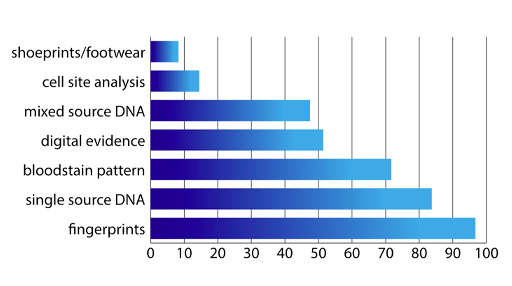
The chart shows that people from marginalised subgroups differentially trust in how police use DNA and digital evidence and differential trust in public and private labs. People are not confident about what evidence they are required to handover for a police investigation.