

 free course icon
level 1: introductory icon
free course icon
level 1: introductory icon
History & The Arts
Discovering music: the blues
This free course, Discovering music: the blues, will introduce you to a musical tradition with roots in the nineteenth century but which is still relevant to making music today. You will learn about how the lyrics of blues songs reflect the social environment in which they were created, and about the musical techniques that underpin the ...
 free course icon
level 1: introductory icon
free course icon
level 1: introductory icon
History & The Arts
An introduction to music theory
Gain an understanding of the basic building blocks of musical theory and notation. This free course, An introduction to music theory, will introduce you to music staves, clefs, rhythmic and pitch values, rhythmic metre and time signatures. This OpenLearn course provides an introduction to music theory pitched at a level equivalent to Grades 1–3 ...
 article icon
Science, Maths & Technology
The science of making musical instruments
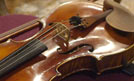
How can you take string or a tube and create a device to make music? Here's the science behind the tools of art.
 free course icon
level 2: intermediate icon
free course icon
level 2: intermediate icon
Languages
Cultures
In this free course, Cultures, you will address the question of traditional music and music from the francophone world, and you will examine the place they occupy in the world of artistic creation. The course is divided into three sections: 'Is traditional music, current music?', 'The musical heritage of Normandy' and 'Music of the francophone ...
 free course icon
level 3: advanced icon
free course icon
level 3: advanced icon
Languages
Advanced Spanish: Protest song
This course will develop your knowledge and understanding of the societies and cultures of Spain and Latin America and extend the practical skills of listening, speaking, reading and writing. The course focuses on protest song, a musical genre that has played an important role in Hispanic society.
 free course icon
level 2: intermediate icon
free course icon
level 2: intermediate icon
History & The Arts
Recording music and sound
This free course, Recording music and sound, provides an historical introduction to music and sound recording in the creative industries and offers some guidance about making your own recordings. Many of the processes that have been developed and the issues that have been raised in the first 150 years of recording are still relevant today, and a...
 free course icon
level 1: introductory icon
free course icon
level 1: introductory icon
History & The Arts
Understanding musical scores
This free course, Understanding musical scores, provides a general introduction to how to understand a musical score, and insights into what professional musicians do with the notation that these contain. You’ll learn how to connect the notation you see with the music you hear, from short familiar melodies to a full orchestral score.
 free course icon
level 1: introductory icon
free course icon
level 1: introductory icon
Science, Maths & Technology
Sound for music technology: An introduction
Whether you're a professional musician, play music with your friends on the weekends or just like to listen to CDs, music technology affects your life. In this free course, Sound for music technology: An introduction, you will learn some of the basics of music technology, starting with what sound is, how it is created and how it travels.
 free course icon
level 3: advanced icon
free course icon
level 3: advanced icon
Education & Development
Assessment in secondary music
This free course, Assessment in secondary music, will identify and explore some of the key issues around assessing music in secondary schools. Through coming to understand these issues and debates, you will reflect on and develop your assessment practice as a music teacher and develop a greater awareness of the implications of assessment ...
 free course icon
level 3: advanced icon
free course icon
level 3: advanced icon
Education & Development
Teaching secondary music
This free course, Teaching secondary music, will identify and explore some of the key issues around teaching music in secondary schools. Through coming to understand these issues and debates, you will reflect on and develop your practice as a music teacher and develop a greater awareness of the wider context of music education and how this ...
 free course icon
level 2: intermediate icon
free course icon
level 2: intermediate icon
History & The Arts
Schubert's Lieder: Settings of Goethe's poems
This free course, Schubert's Lieder: Settings of Goethe's poems, looks at the short poems in German that were set to music by Franz Schubert (17971828) for a single voice with piano, a genre known as 'Lieder' (the German for 'songs'). Once they became widely known, Schubert's Lieder influenced generations of songwriters up to the present day. ...
 free course icon
level 2: intermediate icon
free course icon
level 2: intermediate icon
Education & Development
Using film music in the classroom
There are many approaches to using film music in the classroom including: a focus on pupil experience; a focus on the structure of composition; a focus on the relationship between music and image. This free course, Using film music in the classroom, explores them all.