
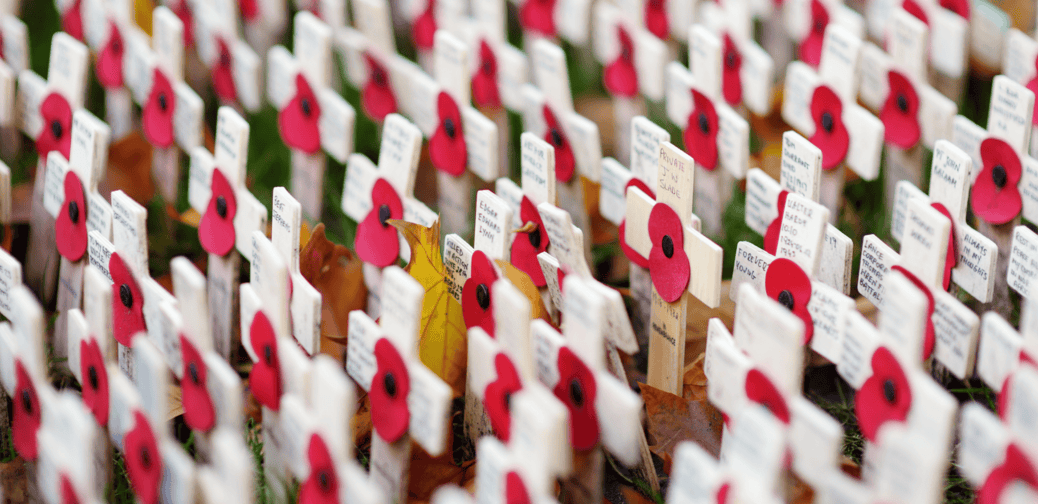
Despite being a relatively small organisation, the CWGC has a remarkable mission: to ensure that those who died in military service during the World Wars, are commemorated with dignity and respect. Through its work, the stories and sacrifices of the dead are preserved so that the human cost of war is never forgotten.
The origins of the CWGC can be traced to Fabian Ware, a commander with the British Red Cross during the First World War. Disturbed by the number of soldiers who were dying without any formal record of their burial places, Ware successfully lobbied for his unit to become a dedicated organisation responsible for caring for the war dead. This work involved locating missing bodies, recording burial sites, and where appropriate moving graves into permanent cemeteries where they could be properly maintained and visited.
Before the establishment of the CWGC in 1917, responsibility for remembering those who died in war largely rested with families and friends. The creation of the Commission transformed this approach. Like The Open University, the CWGC operates under a Royal Charter, although the Commission predates the University by many decades. The CWGC continue their work today through educational activities as well as their role in maintaining sites around the world.
Few organisations can claim such extensive expertise in preserving the memory of those who have died in conflict, or such a far-reaching global presence. Yet the work of the CWGC is rooted in something deeply personal: the human need to remember and honour those we have lost. For many people, memorials take the form of photographs, flowers, toys, religious symbols, or other personal items that help loved ones remember those who have died. The CWGC’s responsibility is to commemorate members of the armed forces through headstones, memorials, and markers, including those whose bodies were never recovered or whose burial locations remain unknown.
In addition to maintaining cemeteries and memorials, the CWGC preserves detailed historical records that can be searched by researchers, family historians, and members of the public. At the time of writing, the Commission cares for more than 1.1 million graves, ensuring that the human cost of war and conflict is remembered in perpetuity.
Every headstone tells a personal story. Whether commemorating those who died in conflict or remembering our own loved ones, having a place to reflect can play an important role in experiences of grief, loss, and bereavement. The CWGC's work reminds us that remembrance is not only about the past; it is also about how individuals, families, and communities respond to loss and maintain connections with those who have died.
Learn more about death, dying, loss, and grief...
-
Centre for Open Thanatology Hub
Learn more to access more details of Centre for Open Thanatology HubThe Open University’s interdisciplinary research centre dedicated to the study and education of death, dying, loss, and grief across the life course and in diverse contexts.

Discover more content like this
-
War Memorials
Read now to access more details of War MemorialsLearn the secrets of the past, revealed by clues on the high streets of today

-
Building peace through teaching Remembrance Sunday
Read now to access more details of Building peace through teaching Remembrance SundayLearn how teaching about Remembrance Sunday can support peace education in schools, helping children understand war, build empathy and create inclusive communities.

-
How did a Scottish golf club shape how we remember the First World War?
Read now to access more details of How did a Scottish golf club shape how we remember the First World War?A meeting at a convalescence hospital brought together three men whose war poetry shaped how we view the First World War.

Study a free course
-
Death and medicine: postponement and promise
Learn more to access more details of Death and medicine: postponement and promiseThis free course, Death and medicine: postponement and promise, helps you to explore the extent to which death and dying in western societies are medical events and what aspects of death and dying might be neglected as a consequence. The course covers the way that such things as medicine provide the context of the experiences associated with the...

-
An introduction to death, dying and grief
Learn more to access more details of An introduction to death, dying and griefExplore interesting and challenging ideas around death, dying and grief. This free course, An introduction to death, dying and grief, invites you to think more deeply about death and dying and encourages you to think about it in different ways. This course will introduce you to different perspectives on death; ethical issues related to dying and...

-
Caring for adults
Learn more to access more details of Caring for adultsCaring for adults is an introductory course for anyone in a caring role, either paid or unpaid. It builds on what you already know to give you a better understanding of your role as a carer. It also supports your own well-being by giving you some ideas and information about looking after yourself and dealing with stress.

Rate and Review
Rate this article
Review this article
Log into OpenLearn to leave reviews and join in the conversation.
Article reviews