
Find out more about the opportunity for three teachers to win a fully-funded place on EStars and The Open University's Business of Esports CPD qualification by heading over to CPD Competition.
Esports refers to competitive, organised video gaming. Players, either individually or in teams, compete against each other at local, national and international tournaments. Unlike casual gaming, which is done mainly for personal enjoyment, esports is structured more like traditional sports – with leagues, tournaments, coaching, sponsorship and professional teams.

Where did it begin?
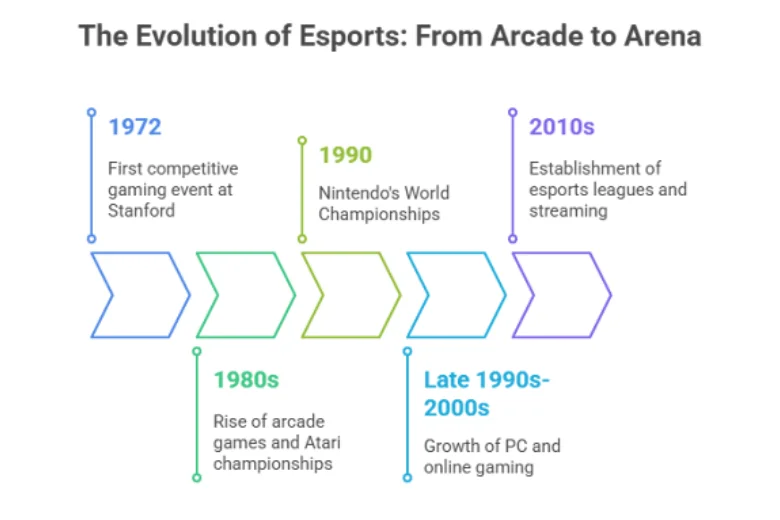
One of the first recorded competitive gaming events took place in 1972 at Stanford University, where students competed in a game called Spacewar! for a year’s subscription to Rolling Stone magazine. The scene gained momentum in the 1980s with the rise of arcade games like Pac-Man and Donkey Kong and the launch of competitions such as the Video Game World Championships hosted by Atari.
In 1990, Nintendo’s World Championships brought further attention to competitive gaming, but it was the growth of PC and online gaming in the late 1990s and early 2000s that truly transformed esports. Esports popular games such as StarCraft, Counter-Strike and Quake started international tournaments, while the rise of broadband internet enabled players to compete globally.
By the 2010s, the introduction of live streaming platforms like Twitch and the professionalisation of leagues for games such as League of Legends and Dota 2 firmly established esports as a major form of entertainment, attracting millions of viewers and substantial prize pools.
One of the first recorded competitive gaming events took place in 1972 at Stanford University, where students competed in a game called Spacewar! for a year’s subscription to Rolling Stone magazine. The scene gained momentum in the 1980s with the rise of arcade games like Pac-Man and Donkey Kong and the launch of competitions such as the Video Game World Championships hosted by Atari.
The growth of the esports Industry
Esports is no longer a niche hobby, it’s a global, multi-billion-dollar industry with millions of fans tuning in online and in sold-out arenas to watch teams compete. Key contributors to growth include:
- Streaming platforms like Twitch, YouTube Gaming and Kick.
- Game publishers investing in esports ecosystems (e.g., Riot Games with League of Legends).
- Corporate sponsorship from leading brands included the provision of merchandise, hydration products and even professional esports gaming equipment.
Career opportunities in esports
You don’t have to be a top-tier player to work in esports! The industry is made up of a wide range of careers.
Esports and education
Across the world governments and education systems are prioritising the development of future ready digital skills to prepare learners for new and emerging career pathways. Schools now recognise that esports offers powerful opportunities for student engagement, skills development and career exploration.
To support this growing demand, EStars, in partnership with The Open University, has launched a comprehensive 24-hour online CPD course for teachers. This badged qualification will equip educators with the knowledge, confidence and practical strategies needed to introduce esports and build meaningful esports education programmes in schools.
Find out more about EStars and The Open University's for-fee CPD course: EStars CPD Programme In Esports.
Rate and Review
Rate this article
Review this article
Log into OpenLearn to leave reviews and join in the conversation.
Article reviews