
1 Living in a moving world
The introduction explained two important ideas – society and the social world. Throughout this course, you’ll be encouraged to think of both as being fundamentally dynamic. This means that rather than being fixed, society and the social world are constantly changing, moving and evolving. The social world is shaped by our relationships, interactions and connections with people we know personally – like family, friends and colleagues. But it is also shaped by people we don’t know personally – like the wider community, country and world in which we live.
This changeability and interconnection make social science an interesting and exciting subject to study. But the same things that make social science interesting, can also make it potentially complicated and challenging. As you progress through this course, you will see that social scientists have developed a wide range of practices, ideas, methods and tools to aid them in their work.
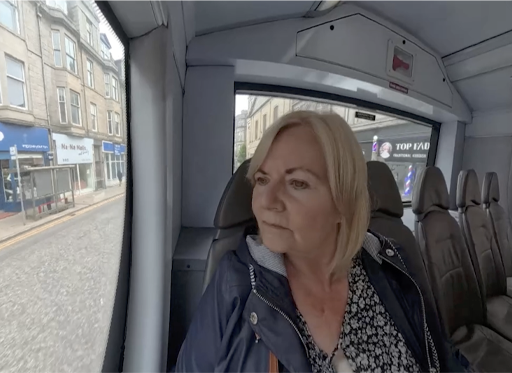
Video 1 provides some quick snapshots of some of the varied topics, issues and social situations that the social sciences explore. It’s intention is to stimulate your curiosity.
Transcript: Video 1 The social world
[Music playing]
[Text on screen]: The social world
[Text on screen]: How is it interconnected?
Cargo bike is going to lead to Langside.
[Music playing]
[Text on screen]: Where is inequality found?
May I get a bit of a push please?
[Text on screen]: If not, they’ll take my money, and there isn’t any money!
But it’s also a way of us gently protesting.
I’m getting emotional.
Video 1 shows you a number of very different, but also quite ordinary, everyday events that someone might come across or experience in daily life, for example:
- Someone waiting to catch a bus.
- Parents and kids organising a bike group to go to school.
- Someone giving a blood donation.
- Vegetables and flowers being transported to where they will be sold to people.
You might not immediately think that each of these actions are things that the social sciences are interested in, but they are.
Former Open University professor, social scientist and geographer, Doreen Massey, argued that people can take the familiar world around them for granted. The way you see the world might just feel ‘normal’ or ‘natural’ to you, but what happens when you start to question things that you have always seen as familiar? Massey encouraged social scientists to make the familiar unfamiliar. This means looking at everyday places, practices, or ideas in new ways. Video 1 hints at this, and the content in this brief course is intended to help you to do just that!