2.8 Researching Roles
1. Job Evolution (Pg 1/2)
📘 Going Deeper
The content on this page goes beyond what is covered in the main course material. It is here for students who want a deeper understanding —
particularly those who are actively planning their career or further education.
This is optional reading. Skip it for now if you prefer, and come back when the time feels right.
Job Evolution & Adaptability
Many jobs do not stay the same forever. As technology, tools, and ways of working evolve, job roles often change in their tasks, required skills, or even their existence. Some roles disappear completely, while others adapt or transform into new forms.
Understanding how and why jobs change can help you make better decisions about your education and career pathway. Instead of focusing only on job titles, it encourages you to think about skills, adaptability, and long-term learning.
In this section, you will first explore a real example of a job role that changed due to technology. You will then research a role of your choice to understand how technology has influenced its past, present, and possible future.
📻 Case Study: Evolution of a Role
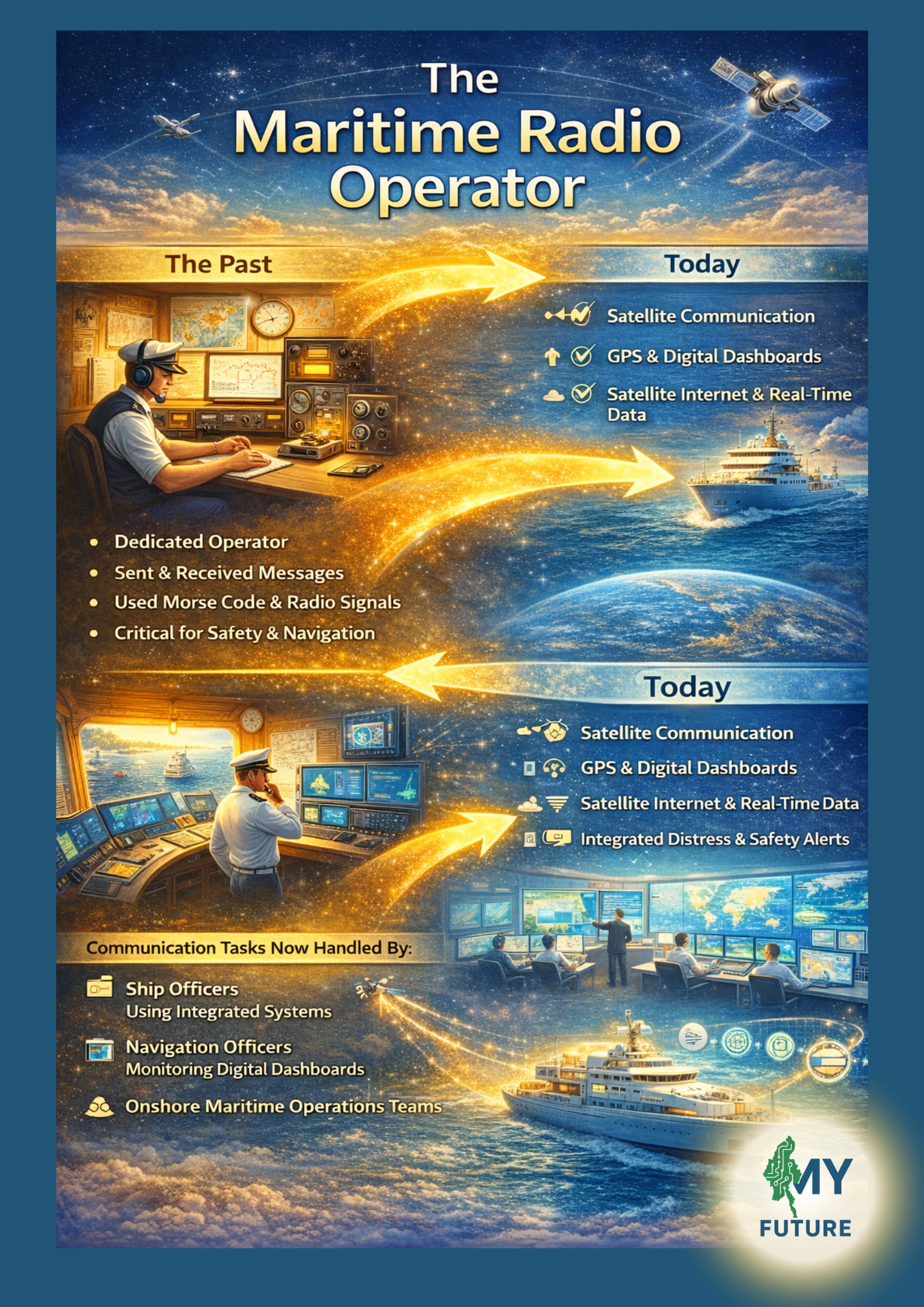
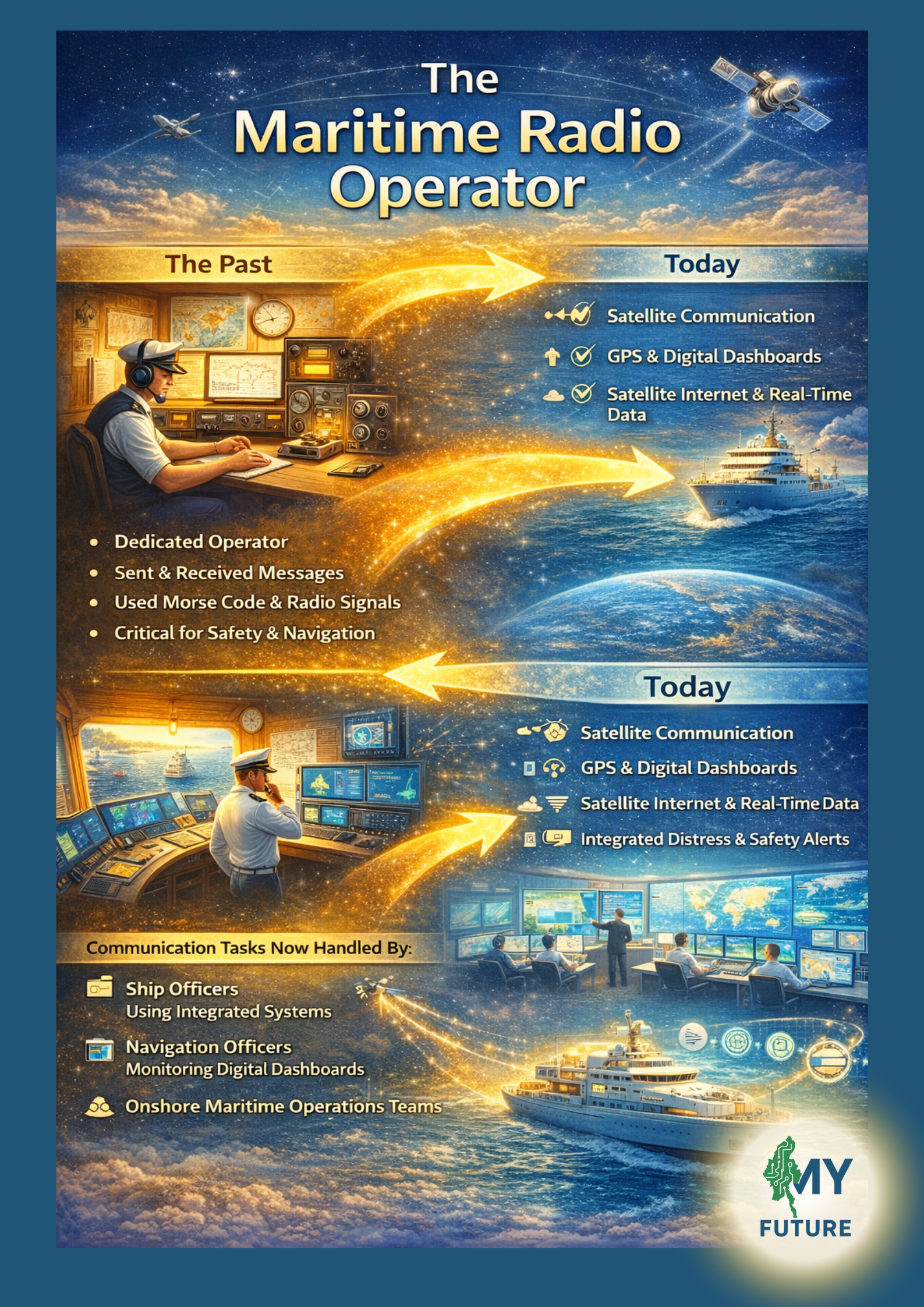
Maritime Radio Operator: An Example
In the past, ships relied on a dedicated maritime radio operator to communicate with ports, other vessels, and emergency services using radio signals and Morse code. This was a specialised and essential role for safety and coordination at sea.