Click the arrow, top left, to go to the previous page
Click the arrow, top right, to go to the next page
Click the link below the image to view it in full screen
Click your browser's back button, top left, to exit full screen
What Are Bridging Courses?
Pre-university preparation for international higher education
The Core Definition
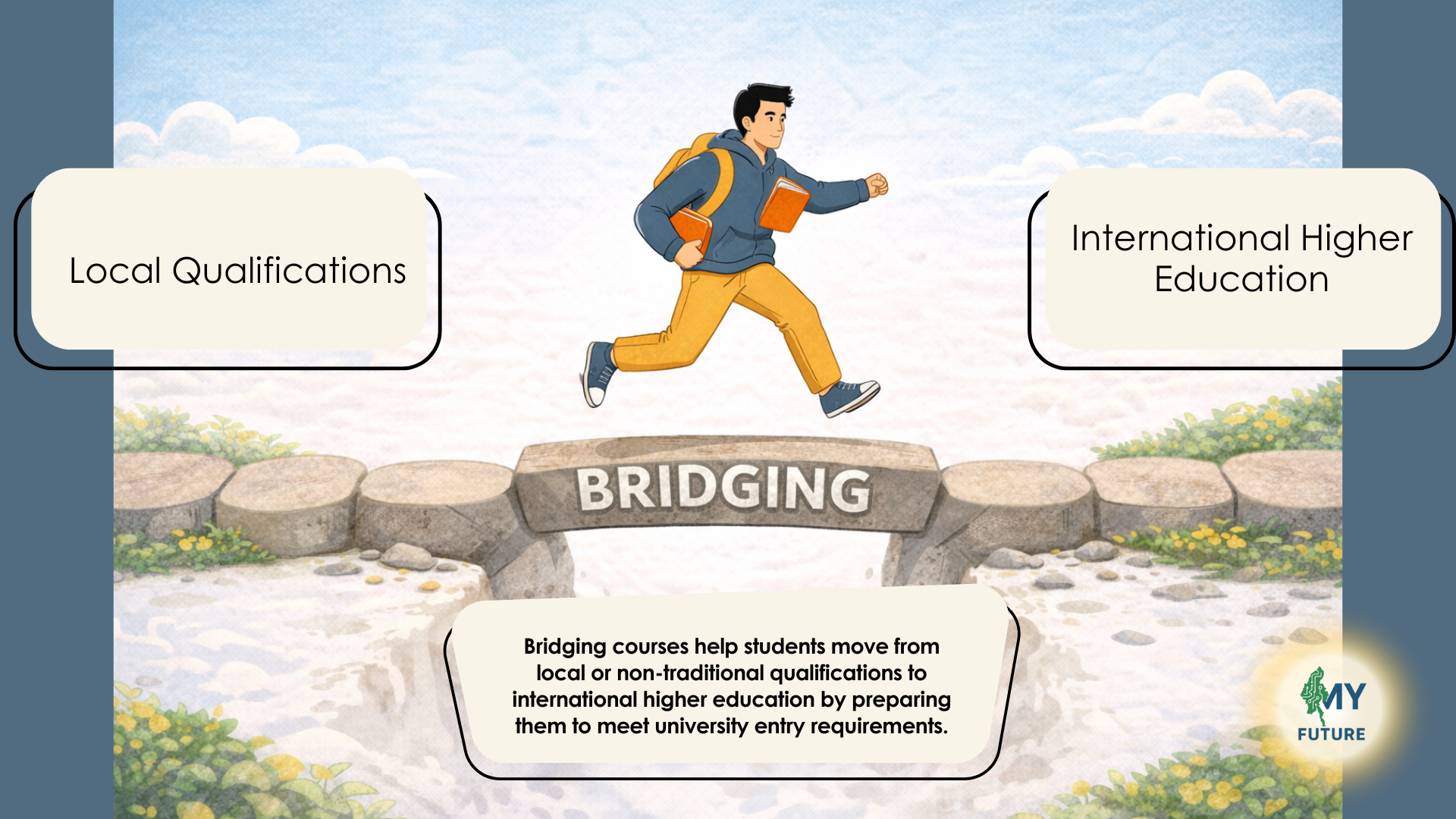
Bridging courses are pre-university preparation programmes. They help students move from local or non-traditional education systems into international higher education. Many students are capable and motivated, but their previous qualifications do not fully match international university entry requirements. Bridging courses exist to close this gap.
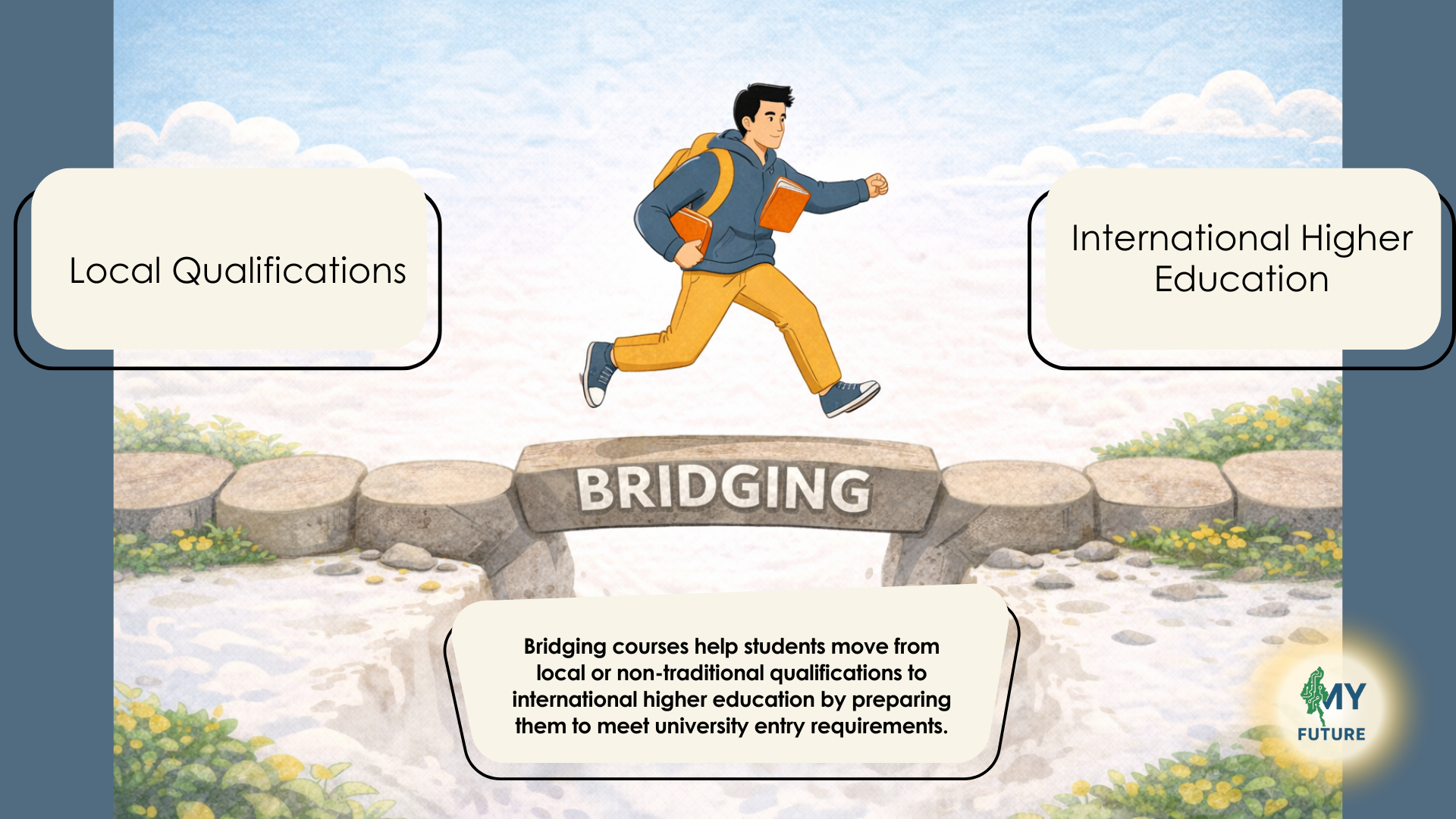
Click to view the image in full screen
Navigation Tips-Click on the back button the top left of your browser to exit full screen
❓ Why Are Bridging Courses Needed? Click to expand+
Education systems around the world are different. Some local high school certificates, General Education Development (GED) certifiicates, or vocational qualifications may not be directly accepted by international universities.
Bridging courses may help students by:
- Aligning their academic level with international standards
- Preparing them for university-style learning
- Reducing the risk of academic failure after admission
They act as a bridge between where students are now and where they want to go.
👥 Who Are Bridging Courses For? Click to expand+
Bridging courses are suitable for students who:
- Completed local high school but cannot enter an international university directly
- Hold a GED but some international universities don't directly admit the student
- Come from vocational or alternative education backgrounds
- Took non-traditional or interrupted learning paths
- Are capable but need academic or language preparation
🎓 What Do They Prepare Students For? Click to expand+
Bridging courses typically focus on:
- Academic English and communication
- Study skills and critical thinking
- Basic subject knowledge (e.g. business, science, IT)
- Understanding international academic culture and assessment methods
By the end of the course, students are ready to enter university-level study.
⚠️ It is important to understand what they are NOT:
- They are not high school programs like IGCSE, IB, or A-Levels
- They are not standardized tests like SAT or ACT
- They are not degree programs
Bridging courses are short, focused preparation programs, usually lasting 6–12 months.
🚀 What Happens After? Click to expand+
After successfully completing a bridging course, students can probably do one of the following:
- Enter an international undergraduate degree
- Progress to a partner university
- Continue along a clear higher education pathway
This is why bridging courses are often the first step into international higher education.
Click here to go to the next page
Note: part of the image shown has been AI generated with the prompt below
"Create a soft watercolor-style educational illustration showing a student carrying books and running across a stone bridge, symbolizing the transition from local qualifications to international higher education. Include two large, empty rounded rectangular text boxes on the left and right, and one smaller empty rounded text box at the bottom. Use plain cream-colored boxes with thin dark outlines. Pastel blue sky, soft clouds, greenery, and a warm, welcoming educational atmosphere. No text, letters, logos, or typography anywhere."
Last modified: Monday, 16 November 2026, 7:57 AM